
Today In History
August 11 in History
Your birthday shares the stage with stories that shaped the world.

Watts Riots Begin: LA Burns for 6 Days
Watts erupted into six days of violent unrest after police arrested a young Black motorist, leaving 34 people dead and over 1,000 injured. This explosion of anger forced the federal government to acknowledge deep-seated urban inequality, directly triggering the creation of the Kerner Commission to investigate the root causes of civil disorder in American cities.
Famous Birthdays
Gennadiy Nikonov
Gennadiy Nikonov designed the AN-94 assault rifle, which the Russian military adopted in 1994 to replace the AK-74. Born in 1950, he spent his career at the Izhmash weapons plant working on small arms. The AN-94 was technically sophisticated — a blowback shifted pulse system that fired the first two rounds before recoil registered. The military mostly kept using the AK anyway.
Davey von Bohlen
Davey von Bohlen co-founded Cap'n Jazz in Chicago in 1989, a band that broke up in 1995 but whose influence on American indie rock ran decades forward. Born in 1975, he went on to The Promise Ring and other projects. Cap'n Jazz sold modestly while active. After they broke up, everyone claimed to have been there.
Ben Gibbard
Ben Gibbard has been the voice of Death Cab for Cutie since the band formed in Bellingham, Washington in 1997. Born in 1976, he also records as The Postal Service, whose 2003 album Give Up spent a decade as Sub Pop's bestselling release. His lyrics are specific in the way that lets people feel them as their own. That's the only trick that works.
Christiaan Eijkman
Christiaan Eijkman discovered that beriberi resulted from a vitamin B1 deficiency rather than a bacterial infection. By observing that chickens fed polished rice developed the disease while those fed unpolished rice remained healthy, he identified the concept of vitamins. This breakthrough earned him the 1929 Nobel Prize and transformed modern nutritional science.
Gaston Doumergue
Gaston Doumergue steered France through the volatile political landscape of the 1920s as the only Protestant to serve as President of the Third Republic. His tenure stabilized a fractured government during the Ruhr occupation and established a precedent for executive authority that influenced the nation’s approach to parliamentary crises for the next decade.
Aaron Klug
He won the Nobel Prize in Chemistry, but Aaron Klug almost never became a scientist at all — he'd enrolled at the University of Witwatersrand to study medicine. A single crystallography paper changed his mind completely. He pivoted to physics, then biology, eventually developing crystallographic electron microscopy to reveal how viruses and DNA-protein complexes actually look in three dimensions. His 1982 Nobel recognized structures nobody had seen before. And that abandoned medical degree? It probably made him better at asking biological questions than most chemists ever could.
Izzy Asper
Izzy Asper transformed the Canadian media landscape by founding Canwest, a broadcasting empire that consolidated regional television stations into a national powerhouse. His aggressive acquisition strategy fundamentally altered how Canadians consumed news and entertainment, shifting the industry toward centralized corporate ownership that dominated the country’s airwaves for decades.
Mike Hugg
Mike Hugg co-founded the British Invasion group Manfred Mann, anchoring their jazz-inflected pop sound on drums and keyboards. His songwriting and arrangements helped propel hits like 5-4-3-2-1 to the top of the charts, defining the eclectic musical landscape of mid-1960s London. He remains a key figure in the enduring legacy of the band's sophisticated arrangements.
Jah Wobble
John Wardle, better known as Jah Wobble, redefined the role of the bass guitar in post-punk by anchoring Public Image Ltd with deep, dub-infused grooves. His departure from traditional rock structures forced a new sonic vocabulary onto the late 1970s London scene, influencing generations of musicians to prioritize atmosphere and rhythm over standard melodic hooks.
Ali Shaheed Muhammad
Ali Shaheed Muhammad redefined hip-hop production by blending jazz samples with boom-bap rhythms as a founding member of A Tribe Called Quest. His work on albums like The Low End Theory established a sophisticated, bohemian aesthetic that expanded the genre's sonic boundaries. He continues to influence modern producers through his meticulous ear for melody and texture.
István Türr
István Türr transformed Mediterranean commerce by co-designing the Corinth Canal, a feat that finally allowed ships to bypass the treacherous Peloponnese peninsula. Beyond his engineering legacy, he fought for Italian unification under Garibaldi, proving that a single life could bridge the gap between radical military service and the infrastructure that still powers modern maritime trade.
Floyd Curry
Floyd Curry secured his place in hockey history by winning four consecutive Stanley Cups with the Montreal Canadiens between 1953 and 1956. A reliable defensive forward, he played his entire professional career in Montreal, helping define the team's mid-century dynasty before transitioning into a successful front-office role as an assistant general manager.
Historical Events

Babe Ruth smashed his 500th career home run at League Park in Cleveland, instantly setting a statistical benchmark that defined power hitting for generations. This feat transformed the home run from a novelty into the central pillar of baseball strategy, shifting how teams built their lineups and how fans watched the game.

Hedy Lamarr and George Antheil secured a patent for their frequency-hopping spread spectrum system, a wartime anti-jumping device that directly enabled the development of modern Wi-Fi and cellular networks. Their invention transformed how we connect today by allowing signals to hop across frequencies faster than enemies could jam them, laying the technical foundation for every wireless conversation you make now.

Muhammad Ali Jinnah addressed the newly formed Constituent Assembly with a vision of religious tolerance that stands in stark contrast to the sectarian violence engulfing the subcontinent at the time. His insistence on equal rights for all citizens, regardless of faith, established a foundational ideal for Pakistan that remains fiercely debated by historians and politicians today.
Watts erupted into six days of violent unrest after police arrested a young Black motorist, leaving 34 people dead and over 1,000 injured. This explosion of anger forced the federal government to acknowledge deep-seated urban inequality, directly triggering the creation of the Kerner Commission to investigate the root causes of civil disorder in American cities.

Governor Mario Lemos Pires abandoned the capital Dili as a coup by the Timorese Democratic Union ignited civil war with the rival Fretilin movement. Portugal's collapse of authority created a power vacuum that Indonesia would exploit within months, launching a brutal 24-year occupation of East Timor.
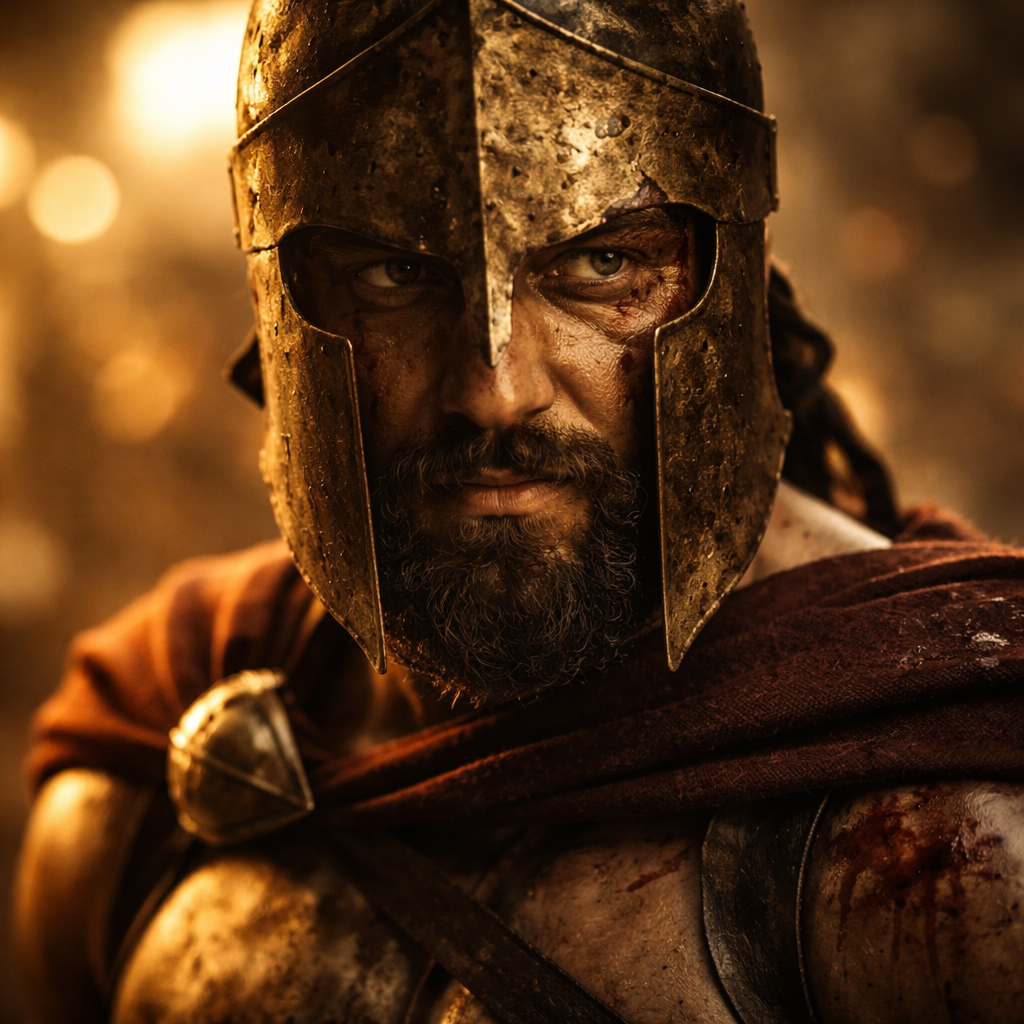
King Leonidas fell at Thermopylae leading roughly 300 Spartans and a small Greek rearguard against the massive Persian army of Xerxes I. His three-day stand bought critical time for the Greek fleet to regroup, and his sacrifice became the Western world's enduring symbol of courage against overwhelming odds.

The Mesoamerican Long Count calendar begins on a date corresponding to August 11, 3114 BCE in the Gregorian calendar. The Maya didn't choose this date at random — it corresponded to a mythological creation event they understood to be the start of the current world. The calendar cycles back to zero every 5,125 years. When it did in December 2012, nothing happened.

The Battle of Artemisium in 480 BCE lasted three days and ended in a draw that got called a Persian victory. The Greek fleet absorbed punishment, gave some back, and held the line long enough for news to arrive: the pass at Thermopylae had fallen. They withdrew. The fighting bought time, not territory. Sometimes that's enough.
The Goths under Theodoric the Great routed Odoacer's forces at the Battle of Adda, near Milan. The victory opened the road to Ravenna and effectively decided the fate of Italy — Theodoric would rule the peninsula for the next 33 years, establishing an Ostrogothic kingdom that preserved Roman administrative structures while governing through Germanic military power.
Edward Balliol's small English-backed force routed the larger Scottish army under the Earl of Mar at Dupplin Moor, using a narrow valley to negate the Scots' numerical advantage. The victory briefly placed Balliol on the Scottish throne and reignited the Wars of Scottish Independence that Edward III of England would exploit for decades.
The Ottoman army under Mehmed the Conqueror crushed the Aq Qoyunlu Turkmen confederation at Otlukbeli, ending Uzun Hassan's challenge to Ottoman dominance in Anatolia. The battle secured Ottoman control of eastern Turkey and eliminated the last serious rival to their expansion in the region for decades.
Imperial forces ambushed and routed a French army at Konzer Brucke near Trier, halting Louis XIV's advance along the Moselle River. The defeat forced France to abandon its offensive in the Rhineland and shifted momentum in the Franco-Dutch War back toward the allied coalition.
The Eiger — one of the most feared mountains in the Alps — was first summited by Irishman Charles Barrington with Swiss guides Christian Almer and Peter Bohren. They climbed the west flank, avoiding the infamous north face that would not be conquered for another 80 years and would kill dozens of climbers in the attempt.
Latvia and Soviet Russia signed the peace treaty that formally ended the Latvian War of Independence and forced Moscow to relinquish all claims to Latvian territory. The agreement secured Latvia's sovereignty after two years of fighting against both German and Bolshevik forces, establishing the new nation-state that would endure until the Soviet occupation of 1940.
The British government's refusal to release prisoners sparked a brutal standoff that claimed the life of Cork's Lord Mayor, Terence MacSwiney, after seventy-four days without food. His death galvanized global opinion against British rule in Ireland and forced the administration to negotiate with Sinn Féin leaders just months before the Anglo-Irish Treaty.
Fun Facts
Zodiac Sign
Leo
Jul 23 -- Aug 22
Fire sign. Creative, passionate, and generous.
Birthstone
Peridot
Olive green
Symbolizes power, healing, and protection from nightmares.
Next Birthday
--
days until August 11
Quote of the Day
“Either you deal with reality, or you can be sure reality is going to deal with you.”
Share Your Birthday
Create a beautiful birthday card with events and famous birthdays for August 11.
Create Birthday CardExplore Nearby Dates
See a specific year's pack
Born on August 11? Open your personalized history pack for that year.
Popular Dates
Explore more about August 11 in history. See the full date page for all events, browse August, or look up another birthday. Play history games or talk to historical figures.