
Today In History
December 27 in History
Your birthday shares the stage with stories that shaped the world.

Darwin Sails on the Beagle: The Voyage That Explains Life
Charles Darwin steps onto the HMS Beagle in 1831, launching a five-year voyage that forces him to confront nature's brutal variety across the globe. This expedition directly yields the observations needed to construct his theory of natural selection, fundamentally upending humanity's understanding of its own origins.
Famous Birthdays
Terry Bozzio Born: Zappa's Virtuoso Drummer
Terry Bozzio earned his reputation as one of rock's most inventive drummers through his work with Frank Zappa and later Missing Persons, where his polyrhythmic complexity expanded what audiences expected from a rock percussion section. His massive custom drum kits, sometimes containing over 100 pieces, became visual spectacles that matched his technical ambition.
Mike Pinder
Mike Pinder pioneered the use of the Mellotron in rock music, blending orchestral textures into the psychedelic soundscape of The Moody Blues. His innovative integration of the keyboard instrument defined the band’s symphonic style on albums like Days of Future Passed, bridging the gap between classical arrangements and progressive rock.
Mick Jones
Mick Jones defined the arena-rock sound of the late 1970s by co-founding Foreigner and penning massive hits like I Want to Know What Love Is. His precise production and melodic guitar work propelled the band to sell over 80 million records, establishing a blueprint for the polished, radio-friendly rock that dominated the decade.
Jerry Gaskill
Jerry Gaskill redefined the sound of progressive metal by anchoring King’s X with his intricate, gospel-inflected drumming. His rhythmic precision helped the band bridge the gap between heavy metal and soulful vocal harmonies, influencing a generation of musicians who sought to blend technical complexity with raw, melodic accessibility.
Guthrie Govan
Guthrie Govan redefined modern guitar virtuosity by blending flawless technical precision with an encyclopedic grasp of musical theory. His work with The Aristocrats and Asia pushed the boundaries of fusion and progressive rock, forcing a generation of players to rethink the possibilities of the instrument’s fretboard.
Terji Skibenæs
Terji Skibenæs brought the intricate, folk-infused melodies of the Faroe Islands to the global heavy metal scene as the longtime lead guitarist for Týr. His technical precision helped define the band’s signature Viking metal sound, blending traditional Nordic harmonies with aggressive riffs to secure the group a dedicated international following.
Hayley Williams
Hayley Williams moved to Franklin, Tennessee at 13 after her parents divorced. She met two guitarists at a homeschool co-op and started jamming in their garage. Three years later, Atlantic Records signed them. She was 16. The band was Paramore. She became the face of emo-pop's biggest breakout — orange hair, powerhouse lungs, and lyrics about anxiety she wrote between algebra homework. After Paramore sold 3 million copies of "Riot!" she stayed in Franklin. Still lives there. She's never left the town where it started.
Michael Andreas Barclay de Tolly
Michael Andreas Barclay de Tolly masterminded the scorched-earth retreat that lured Napoleon deep into Russia, exhausting the Grande Armée before the Battle of Borodino. As Governor-General of Finland and a decorated field marshal, he reorganized the Russian military command structure, ensuring the imperial forces could withstand the 1812 invasion and eventually march into Paris.
Larisa Latynina
She grew up in a war-torn Soviet port city where food was scarce and futures were scarcer. But Larisa Latynina found a gymnasium. And inside it, she found perfection — or as close as any human has come. Eighteen Olympic medals across three Games. Nine golds. Four silvers. Five bronze. She held the record for most Olympic medals of any athlete for 48 years until Michael Phelps finally passed her in 2012. Not bad for a girl who started gymnastics at 11, late by Soviet standards, because her family couldn't afford earlier training. She didn't just win. She rewrote what the human body could do on a mat, a beam, four inches wide.
Ernesto Zedillo
Born in a Mexico City boxcar to working-class parents, Zedillo spent his childhood in Mexicali before earning a Yale PhD in economics. He never planned on politics — he was designing economic policy from a desk when his party's presidential candidate was assassinated in 1994. Zedillo, the campaign manager, became the emergency replacement. Won the election. Inherited the worst financial crisis in Mexican history within weeks of taking office. The peso collapsed 50%. He stabilized it, opened Mexico's political system to real competition, and became the first PRI president in 71 years to peacefully transfer power to an opposition party. Left office more popular than he arrived.
Anne de Mortimer
She was five when her father died, leaving her the greatest heiress in England—lands stretching from Wales to Ireland. At fourteen, they married her to Richard of Conisburgh, a landless younger son desperate for her fortune. She gave him two children in three years. Then came the third pregnancy. September 1411: Anne died in childbirth at Conisburgh Castle, just twenty-one years old. The baby survived—a boy named Richard. Her bloodline would matter more than anyone imagined. That son grew up to claim the English throne, launching the Wars of the Roses. Every York king after him, including Edward IV and Richard III, descended from the heiress who died too young to see what her death made possible.
John I Albert
Born to a queen who ruled in all but name, John Albert spent his childhood watching his mother Casimir IV navigate Poland's fractious nobility. He learned early: power meant managing egos, not crushing them. When he finally claimed the crown at 33, he immediately tried to expand south into Moldavia — a catastrophic campaign that ended with his army trapped, starved, and forced to buy their way out. He never recovered politically. But John Albert left something unexpected: Poland's first codified criminal law, applied equally to nobles and commoners alike. A failed warrior-king who accidentally built a justice system that outlasted his reputation by centuries.
Historical Events
Charles Darwin steps onto the HMS Beagle in 1831, launching a five-year voyage that forces him to confront nature's brutal variety across the globe. This expedition directly yields the observations needed to construct his theory of natural selection, fundamentally upending humanity's understanding of its own origins.

Twenty-nine nations signed papers in a New Hampshire resort hotel, and money would never move the same way again. The Bretton Woods agreement created two institutions to prevent another Great Depression: one to lend for reconstruction, one to stabilize currencies. The U.S. held most of the gold, so the dollar became the anchor—every other currency pegged to it, and it pegged to gold at $35 an ounce. For three decades this system held. Then Nixon killed the gold standard in 1971, but the institutions survived, morphed, and now move hundreds of billions annually through economies the founders couldn't have imagined.

The KGB cut Kabul's phones at 7 PM sharp. Fifteen minutes later, Soviet commandos dressed as Afghan soldiers stormed the presidential palace and killed Hafizullah Amin — the man Moscow had installed just three months earlier. By morning, Radio Kabul announced Afghanistan had been "liberated" from Amin's rule and a new president installed, one who conveniently requested Soviet help the moment he took power. The charade lasted hours. The invasion lasted a decade. Over 100,000 Soviet troops poured across the border in two weeks, launching a war that would kill a million Afghans, birth the mujahideen, and ultimately help collapse the USSR itself.
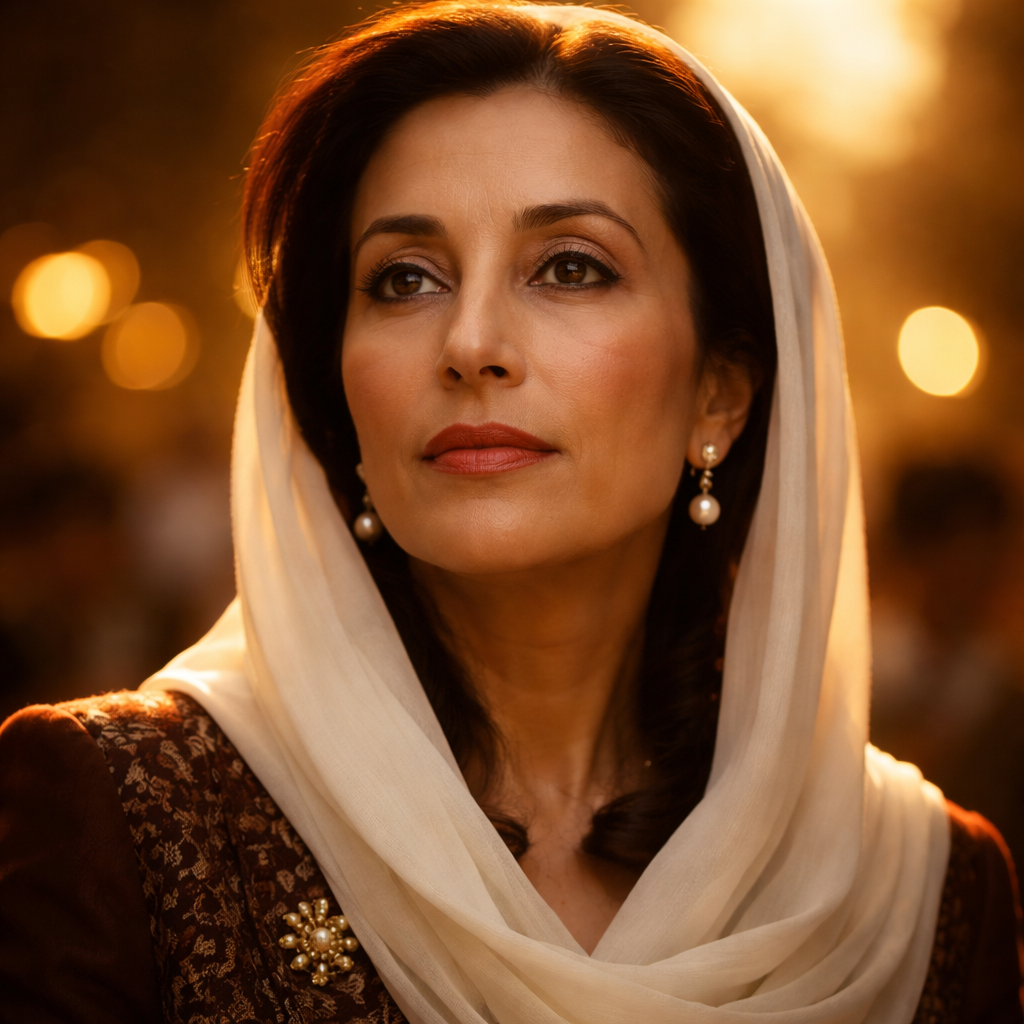
Benazir Bhutto was assassinated by a suicide bomber at a campaign rally in Rawalpindi, just weeks before Pakistan's general elections. The first woman to lead a Muslim-majority nation as prime minister, her murder destabilized Pakistani politics and deprived the country of its most prominent voice for democratic governance at a time of surging militancy.

Spain tried to legislate colonial conscience. The Laws of Burgos mandated that Spanish settlers couldn't overwork Indians, had to feed them meat three times weekly, and must allow rest on Sundays and feast days. Punishment for violations? A fine of one gold peso. The reality in mines and encomiendas: systematic forced labor continued unchecked, indigenous populations collapsed by millions, and colonial administrators routinely ignored enforcement. One peso couldn't buy a single day's worth of the gold Spain extracted. The Crown got to claim humanitarian concern. The colonists got their labor force. And the paper meant nothing to people dying in silver mines 4,000 miles from Burgos.
The Swedish army had already taken Warsaw and Kraków. Poland looked finished. But 70 monks and 160 soldiers held a hilltop monastery against 3,000 Swedes for forty days. They melted down church bells for ammunition. They repaired walls at night while cannonballs tore through the day. The prior, Augustyn Kordecki, refused every surrender offer. When the Swedes finally withdrew on Christmas Day, Poles saw it as divine intervention—the Black Madonna had saved them. What started as a desperate last stand became the turning point that rallied the entire country. Within months, Polish forces were counterattacking. The "Swedish Deluge" that had swallowed two-thirds of Poland began to recede, not because of any army, but because a handful of monks wouldn't open their gates.
Two merchants changed the map of European wine forever. John Methuen brokered a deal: England would slash tariffs on Portuguese wine to nothing if Portugal banned French cloth. The French were furious — they'd dominated English cellars for centuries. Port wine, barely known in London, flooded British taverns within months. By 1730, the English drank more Portuguese wine than all other countries combined. The treaty wasn't about taste. It was about bankrupting Louis XIV, one bottle at a time.

The British finally caught her. USS Carolina had spent weeks as a thorn in their side — a converted merchant schooner turned gunship, firing on British positions from the Mississippi River with whatever cannon Patterson could scrounge. On December 27, British artillery heated their shot red-hot and pumped it into her wooden hull until she caught fire. Her crew abandoned ship minutes before she exploded. Those weeks of harassment had done their job, though. The British advance stalled just long enough. Two weeks later, Jackson's ragtag defenders would slaughter the British regulars at New Orleans, winning a battle fought after the war had already ended. Carolina bought them the time they needed, one burning schooner at a time.
John L. O'Sullivan declared the United States possessed the right to claim the entire Oregon Country just months after coining "manifest destiny." This argument galvanized American expansionists, directly fueling the diplomatic pressure that forced Britain into the 1846 treaty establishing the current U.S.-Canada border west of the Rockies.

Crawford Long had already been using ether for surgeries since 1842 — removing tumors, amputating fingers — but nobody would believe him without witnesses. So when Fanny Long went into labor in January 1845, he tried it on his own wife. She inhaled the sweet-smelling vapor and delivered their second child without screaming, without the "natural punishment" clergy said women deserved. Long wrote it down in his records but didn't publish. Four years later, a Boston dentist would get credit for discovering ether anesthesia. Long had used it hundreds of times by then, starting with his wife and that January morning when he chose her comfort over his career.
The song wasn't even called "Jana Gana Mana" yet. Rabindranath Tagore wrote it as "Bharoto Bhagyo Bidhata" and performed it on December 27, 1911, at a Calcutta Congress session many believed honored King George V's visit to India. Tagore denied this for years — he meant the "dispenser of destiny" to be God, not the British monarch. The confusion stuck anyway. It took 36 years and independence before India officially adopted it as the national anthem in 1950, finally settling the debate. By then Tagore had won the Nobel Prize and died, never knowing his morning hymn would start every school day and cinema screening across a billion people.
The Radical Insurgent Army of Ukraine captures Yekaterinoslav and seizes seven airplanes from the UPRAF on December 27, 1918. This bold raid instantly creates the first Insurgent Air Fleet in history, granting the rebels a rare aerial advantage during their struggle for independence.
December 27, 1927. A Thursday night. The Ziegfeld Theatre goes dark, then lights up on a Mississippi riverboat — and Broadway changes forever. Jerome Kern and Oscar Hammerstein II did what nobody had: they made the songs *necessary*. "Ol' Man River" wasn't a showstopper inserted for applause. It was Paul Robeson singing the weight of an entire people. The plot didn't pause for music. The music *was* the plot. Critics called it impossible. A musical about racism, failed marriages, and gambling addiction? With a forty-year time span? The opening night ran until midnight. Nobody left. Three months later, every theater in New York was trying to copy it. They're still trying.
Stalin called them kulaks — better-off peasants, anyone with a cow and hired help at harvest. On this day he ordered their liquidation as a class. Not prosecution. Liquidation. Within months, Soviet officials were deporting entire families to Siberia in unheated freight cars, confiscating farms, executing resisters on sight. The quotas were explicit: each region had to deliver X number of kulaks, whether they existed or not. Villages that had already been "dekulakized" got raided again. Roughly 1.8 million were deported, half a million executed outright, millions more starved when collectivization destroyed harvests. Stalin eliminated the people who knew how to grow food, then blamed them for the famine that followed.
The doors opened at 8 PM sharp. Six thousand people filed into a palace that cost $10 million during the Great Depression — gilded lobbies, a stage 144 feet wide, the world's largest theater organ. But the opening night show ran until 2 AM. Vaudeville acts dragged on forever. Critics called it a "stunning bore." The whole thing lost $180,000 in two weeks. So impresario Samuel "Roxy" Rothafel got fired, and Radio City switched to movies. The first film? Frank Capra's "The Bitter Tea of General Yen" — which also flopped. Yet somehow the massive Art Deco gamble survived, hosting over 300 million visitors across nine decades. Turned out you could fix a bad show. You couldn't replicate that ceiling.
Fun Facts
Zodiac Sign
Sagittarius
Nov 22 -- Dec 21
Fire sign. Optimistic, adventurous, and philosophical.
Birthstone
Tanzanite
Violet blue
Symbolizes transformation, intuition, and spiritual growth.
Next Birthday
--
days until December 27
Quote of the Day
“Chance favors the prepared mind.”
Share Your Birthday
Create a beautiful birthday card with events and famous birthdays for December 27.
Create Birthday CardExplore Nearby Dates
See a specific year's pack
Born on December 27? Open your personalized history pack for that year.
Popular Dates
Explore more about December 27 in history. See the full date page for all events, browse December, or look up another birthday. Play history games or talk to historical figures.