Today In History logo TIH

Your Personalized History Pack

Born on February 14, 2005

On the day you were born,

What happened on February 14, 2005

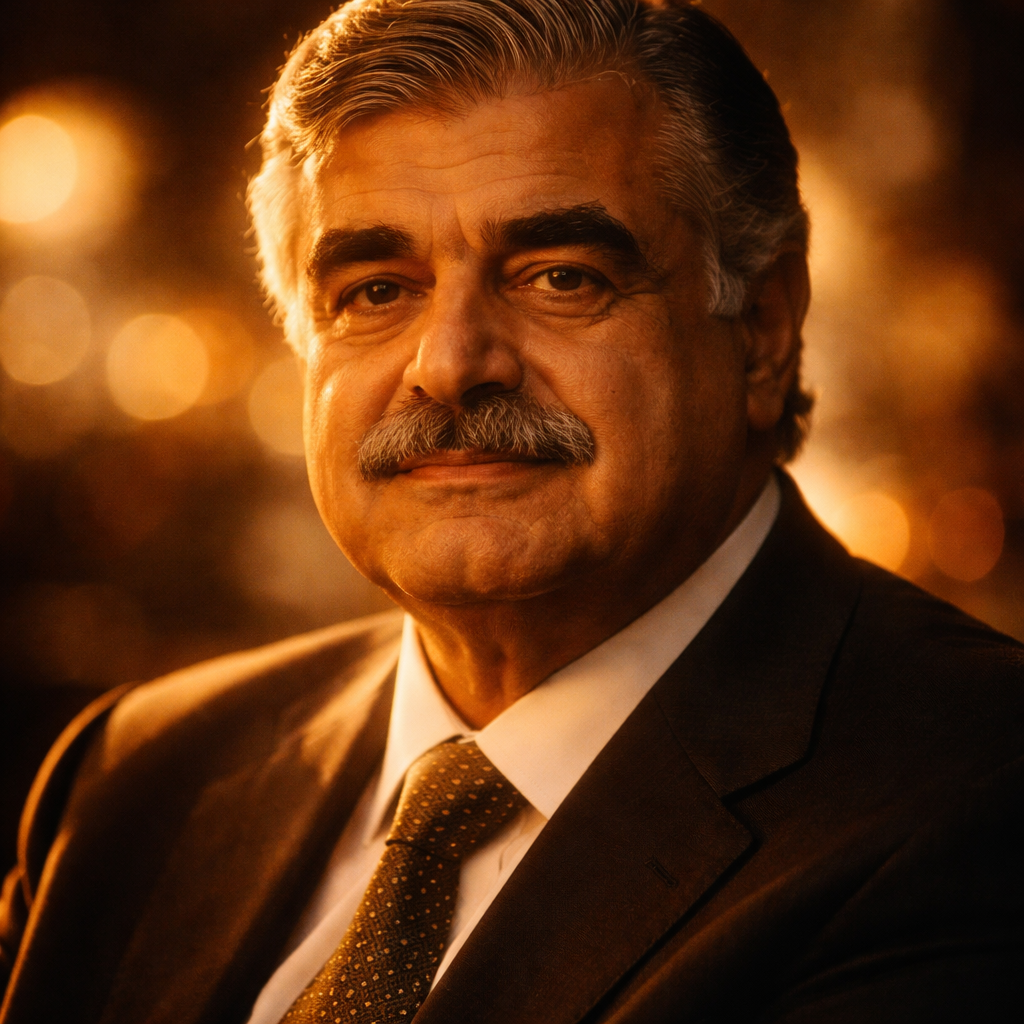
A 1,000-kilogram bomb detonated beneath the motorcade of former Lebanese Prime Minister Rafik Hariri as it passed the St. George Hotel on Beirut’s waterfront on February 14, 2005. The blast killed Hariri, 21 others, and wounded 226 people, leaving a crater ten meters wide in the street. The assassination triggered the largest political upheaval in Lebanon since the civil war and forced Syria’s military out of a country it had occupied for nearly thirty years.

Hariri was a self-made billionaire who had served as prime minister twice and spent hundreds of millions of his personal fortune rebuilding Beirut after the 1975-1990 civil war. He was the most prominent Sunni Muslim political figure in Lebanon and had recently broken with Syria over its insistence on extending the presidential term of its ally Emile Lahoud. Hariri was preparing to lead an anti-Syrian coalition in upcoming parliamentary elections when he was killed.

The assassination electrified Lebanon. Within weeks, over a million people gathered in central Beirut on March 14, demanding Syrian withdrawal and an international investigation. The Cedar Revolution, as it became known, succeeded: Syria withdrew its 14,000 troops by April 2005, ending a military presence that had begun in 1976. A United Nations Special Tribunal for Lebanon was established to investigate the killing.

The tribunal, working for over a decade, eventually convicted Salim Ayyash, a member of Hezbollah, in absentia for the assassination in 2020. Hezbollah denied involvement. Syria also denied any role, despite a UN investigation that found extensive evidence implicating Syrian and Lebanese intelligence officials. Ayyash was never apprehended.

Hariri’s murder removed the one figure with enough wealth, stature, and cross-sectarian appeal to potentially unify Lebanon — and the country has not found another since.

A 1,000-kilogram bomb detonated beneath the motorcade of former Lebanese Prime Minister Rafik Hariri as it passed the St. George Hotel on Beirut’s waterfront on February 14, 2005. The blast killed Hariri, 21 others, and wounded 226 people, leaving a crater ten meters wide in the street. The assassination triggered the largest political upheaval in Lebanon since the civil war and forced Syria’s military out of a country it had occupied for nearly thirty years. Hariri was a self-made billionaire who had served as prime minister twice and spent hundreds of millions of his personal fortune rebuilding Beirut after the 1975-1990 civil war. He was the most prominent Sunni Muslim political figure in Lebanon and had recently broken with Syria over its insistence on extending the presidential term of its ally Emile Lahoud. Hariri was preparing to lead an anti-Syrian coalition in upcoming parliamentary elections when he was killed. The assassination electrified Lebanon. Within weeks, over a million people gathered in central Beirut on March 14, demanding Syrian withdrawal and an international investigation. The Cedar Revolution, as it became known, succeeded: Syria withdrew its 14,000 troops by April 2005, ending a military presence that had begun in 1976. A United Nations Special Tribunal for Lebanon was established to investigate the killing. The tribunal, working for over a decade, eventually convicted Salim Ayyash, a member of Hezbollah, in absentia for the assassination in 2020. Hezbollah denied involvement. Syria also denied any role, despite a UN investigation that found extensive evidence implicating Syrian and Lebanese intelligence officials. Ayyash was never apprehended. Hariri’s murder removed the one figure with enough wealth, stature, and cross-sectarian appeal to potentially unify Lebanon — and the country has not found another since.

Three former PayPal employees registered the domain youtube.com on February 14, 2005 — Valentine’s Day — not because of any romantic impulse but because they wanted to build a video dating site where users could upload clips of themselves. The dating concept failed immediately. What replaced it was something far more consequential: a platform that would democratize video distribution, reshape global media, and make "going viral" a phrase understood in every language on earth.

Chad Hurley, Steve Chen, and Jawed Karim had worked together at PayPal and recognized that sharing video online was absurdly difficult in 2005. Emailing video files was impractical due to size limits. Hosting them required technical knowledge. There was no simple equivalent of what Flickr had done for photos. The three founders built a site where anyone could upload, share, and embed video with a few clicks.

The first video, "Me at the zoo" — a 19-second clip of Karim standing in front of elephants at the San Diego Zoo — was uploaded on April 23, 2005. The site launched in beta in May and publicly in December. Growth was explosive: by July 2006, YouTube was serving 100 million video views per day. Users uploaded everything from home movies to pirated television clips to original content that no traditional media company would have touched.

Google acquired YouTube on October 9, 2006, for $1.65 billion in stock — a price that seemed extravagant for an eighteen-month-old company that had never turned a profit. It proved to be one of the shrewdest acquisitions in business history. By the mid-2020s, YouTube generated over $30 billion in annual advertising revenue and had become the world’s second-largest search engine, second only to Google itself.

A failed dating site became the largest repository of human expression ever assembled, proving that when you give ordinary people the tools to broadcast, they will produce more content in a year than all of television history combined.

Three former PayPal employees registered the domain youtube.com on February 14, 2005 — Valentine’s Day — not because of any romantic impulse but because they wanted to build a video dating site where users could upload clips of themselves. The dating concept failed immediately. What replaced it was something far more consequential: a platform that would democratize video distribution, reshape global media, and make "going viral" a phrase understood in every language on earth. Chad Hurley, Steve Chen, and Jawed Karim had worked together at PayPal and recognized that sharing video online was absurdly difficult in 2005. Emailing video files was impractical due to size limits. Hosting them required technical knowledge. There was no simple equivalent of what Flickr had done for photos. The three founders built a site where anyone could upload, share, and embed video with a few clicks. The first video, "Me at the zoo" — a 19-second clip of Karim standing in front of elephants at the San Diego Zoo — was uploaded on April 23, 2005. The site launched in beta in May and publicly in December. Growth was explosive: by July 2006, YouTube was serving 100 million video views per day. Users uploaded everything from home movies to pirated television clips to original content that no traditional media company would have touched. Google acquired YouTube on October 9, 2006, for $1.65 billion in stock — a price that seemed extravagant for an eighteen-month-old company that had never turned a profit. It proved to be one of the shrewdest acquisitions in business history. By the mid-2020s, YouTube generated over $30 billion in annual advertising revenue and had become the world’s second-largest search engine, second only to Google itself. A failed dating site became the largest repository of human expression ever assembled, proving that when you give ordinary people the tools to broadcast, they will produce more content in a year than all of television history combined.

Rafik Hariri's fourteen-car motorcade was driving through central Beirut on February 14, 2005, when a truck bomb detonated with the force of approximately 1,000 kilograms of TNT. The blast carved a crater thirty feet wide in the road and killed Hariri along with twenty-one other people. Hariri had resigned as Prime Minister four months earlier in protest against Syria's continued military occupation of Lebanon and its manipulation of Lebanese politics. He had been building a political coalition to challenge Syria's proxies in upcoming parliamentary elections. Within days of his assassination, approximately one million Lebanese filled the streets of Beirut, nearly a quarter of the country's population, demanding that Syria end its twenty-nine-year military presence. They called it the Cedar Revolution. Flags flew from every balcony. Demonstrators of all sectarian backgrounds stood together in Martyrs' Square. Syria's allies in the Lebanese government tried to contain the protests. They couldn't. The pressure was overwhelming. Syria withdrew its 14,000 troops within three months, ending an occupation that had outlasted the civil war it was originally sent to manage. A United Nations tribunal later indicted members of Hezbollah, a Syrian ally, for the assassination, though the proceedings stretched over more than a decade. The assassination that was meant to silence the opposition to Syrian influence in Lebanon instead became the catalyst that ended it.

Rafic Hariri was Lebanon's richest man and its most powerful politician. He'd rebuilt Beirut after the civil war, literally — his construction company did it. He'd also just broken with Syria after fifteen years of cooperation. On February 14, 2005, a suicide bomber detonated a thousand kilograms of TNT as Hariri's motorcade passed the St. George Hotel. The blast left a crater ten feet deep. Twenty-three people died. Within weeks, a million Lebanese — a quarter of the country — filled the streets demanding Syria withdraw its troops. They did. Fourteen years of occupation ended because they killed the wrong man.

Three bombs exploded nearly simultaneously across three Philippine cities on February 14, 2005, killing seven people and wounding 151 in a coordinated attack that demonstrated the operational reach of Islamist militant networks in Southeast Asia. The first bomb detonated at a bus shelter in Makati, Manila's financial district, during Valentine's Day rush hour, just 200 meters from the United States Embassy. The second struck Davao City in the southern Philippines. The third hit General Santos City, over a thousand miles from Manila. The targets were deliberately chosen: all three cities had significant Christian populations in areas where Muslim insurgent groups operated. Philippine police identified the signature of Jemaah Islamiyah, al-Qaeda's primary affiliate in the region, which had established cells across the Philippine-Malaysian-Indonesian archipelago. The bombers used cellular phones as detonators, timed to within minutes of each other, proving that insurgent networks could coordinate attacks across the country's seven thousand islands with precision. The simultaneous strikes forced the Philippine military to recalculate its assessment of the militant threat, which had previously been treated as a localized problem in the Mindanao region. The bombings showed that groups with roots in the southern insurgency could project violence into the economic and political heart of the country. Security spending increased dramatically in the aftermath, and intelligence cooperation with Australian and American agencies expanded.

Rafic Hariri made his fortune building for Saudi royalty, then spent it rebuilding Beirut. He personally guaranteed loans to reconstruct the city center after fifteen years of civil war. On February 14, 2005, a bomb containing 1,000 kilograms of TNT killed him and twenty-one others on the Beirut waterfront. The explosion left a crater ten feet deep. Two million people — half of Lebanon — attended his funeral. Syria withdrew its troops five weeks later after twenty-nine years of occupation.

Rafic Hariri made his fortune building for Saudi royalty, then spent it rebuilding Beirut. He personally guaranteed loans to reconstruct the city center after fifteen years of civil war. On February 14, 2005, a bomb containing 1,000 kilograms of TNT killed him and twenty-one others on the Beirut waterfront. The explosion left a crater ten feet deep. Two million people — half of Lebanon — attended his funeral. Syria withdrew its troops five weeks later after twenty-nine years of occupation.

Ronnie Burgess captained Tottenham Hotspur for twelve years and Wales for eleven. He never got sent off. Not once. In 764 professional matches — through tackles that would end careers today, through the mud-pit pitches of post-war England — he never saw red. He played wing-half, the position that did all the dirty work. His teammates called him "The Iron Man." He died in 2005 at 87. The record still stands.

Rafik Hariri died in a massive car bomb in Beirut on February 14, 2005. The blast left a crater 30 feet wide. Twenty-one others died with him. He'd resigned as Prime Minister four months earlier after Syria forced through a constitutional change he opposed. He was planning a political comeback. The assassination triggered the Cedar Revolution — a million people, a quarter of Lebanon's population, filled the streets. Syria withdrew its troops after 29 years. The UN investigation that followed would reshape Middle Eastern politics for a generation. He'd rebuilt downtown Beirut after the civil war using his own fortune. The city he reconstructed became the site of his funeral.

The world on this day

Famous birthday today

Michael Bloomberg

Your full 2005 pack

Page 1 above is yours free. The full 5-page pack continues with a cultural snapshot, top baby names, your day across history, and the economy of 2005.

Unlock full pack

$39.99 - one-time

Unlock full pack

$39.99 - one-time

Unlock full pack

$39.99 - one-time

Unlock full pack

$39.99 - one-time

$29.99 for Yearly members — save $10 on every pack. Sign up Yearly $59.99 →

"It has appeared that from the inevitable laws of our nature, some human beings must suffer from want. These are the unhappy persons who, in the great lottery of life, have drawn a blank."

— Thomas Malthus