
Today In History
March 23 in History
Your birthday shares the stage with stories that shaped the world.

Patrick Henry: Give Me Liberty or Give Me Death
Patrick Henry delivered his "Give me liberty, or give me death" speech at St. John's Church in Richmond, Virginia, persuading the Virginia Convention to commit troops to the radical cause. His declaration became the most quoted line of the American Revolution and crystallized the colonists' willingness to choose armed conflict over submission to British authority.
Famous Birthdays
Epic Soundtracks
His real name was Kevin Paul Godfrey, but he earned "Epic Soundtracks" at age fourteen when his older brother Nikki Sudden needed a drummer for their art-punk band Swell Maps. The kid couldn't really play — he'd bash away at a cheap drum kit in their Solihull bedroom, all raw energy and zero technique. But that's exactly what made Swell Maps matter in 1977. Those deliberately messy recordings influenced everyone from Sonic Youth to Pavement. He later became a hauntingly delicate pianist for Crime and the City Solution, proving he'd been a real musician all along. The teenage nickname stuck for life because sometimes the joke name turns out to be the truest one.
Dietrich Eckart
Dietrich Eckart fueled the early rise of the Nazi Party by blending virulent antisemitism with occultist mysticism in his publication, Auf gut Deutsch. As a mentor to Adolf Hitler, he refined the future dictator’s oratorical style and introduced him to influential Munich elites. His ideological obsession with a Jewish conspiracy provided the foundational framework for the party’s later platform.
Emilio Aguinaldo
He lived long enough to see the country he fought to free from Spain become America's ally in World War II—then watched that same America grant the independence he'd declared back in 1898. Emilio Aguinaldo proclaimed the First Philippine Republic at just 29, led guerrilla warfare against two empires, and spent three years in the mountains resisting U.S. occupation after American forces captured him through an elaborate spy operation in 1901. But here's the twist: he survived to age 94, dying in 1964, which meant the man who declared independence in the 19th century lived to see the Beatles, space exploration, and the Vietnam War. The revolution's young firebrand became its oldest living memory.
Blessed Józef Cebula
Józef Cebula defended his faith against Nazi persecution, ultimately dying in the Mauthausen concentration camp for continuing his priestly duties in secret. Pope John Paul II beatified him in 1999, cementing his status as a symbol of spiritual resistance against the systematic erasure of Polish clergy during the Second World War.
Philip Zimbardo
He was supposed to run the experiment for two weeks. Six days in, Philip Zimbardo had to shut down the Stanford Prison basement after his own girlfriend — psychologist Christina Maslach — walked in and asked what kind of person he'd become. The guards he'd randomly assigned were forcing prisoners to clean toilets with bare hands. One student had a breakdown so severe they released him after 36 hours. Zimbardo himself had gotten so absorbed playing "superintendent" that he'd forgotten he was a scientist studying evil, not creating it. Born today in 1933 in a South Bronx tenement, this son of Sicilian immigrants would spend decades explaining how good people commit atrocities — but his most cited finding came from losing himself in his own research.
Phil Keaggy
Phil Keaggy redefined the possibilities of the electric guitar, blending intricate fingerstyle technique with spiritual lyricism to become a foundational figure in contemporary Christian music. Since his early days with the power trio Glass Harp, his virtuosic loop-pedal performances and prolific solo output have influenced generations of musicians across both secular and religious genres.
Eldon Hoke
Eldon Hoke gained notoriety as the abrasive frontman of The Mentors, a band that weaponized shock rock to challenge the boundaries of free speech and public decency. His confrontational stage persona and raw, punk-infused drumming defined the underground scene, forcing a lasting debate over the limits of artistic expression in American music.
Damon Albarn
Damon Albarn formed Blur in 1988 with guitarist Graham Coxon and led the band to Britpop dominance in the mid-1990s. 'Song 2' — the 'woo-hoo' song — became ubiquitous at every sporting event on earth, which is probably not what he intended. He also co-created Gorillaz, the animated band, with artist Jamie Hewlett, as an experiment in virtual identity that became one of the best-selling acts of the 2000s. He has written an opera, released solo albums, and collaborated with musicians across Africa and the Middle East. Born March 23, 1968, in Whitechapel, London. The Blur/Oasis chart battle of 1995 — which Blur won commercially — is still debated by people who were teenagers then. He and Coxon reunited with Blur in 2023. It still worked.
John Humphrey
John Humphrey anchors the driving, heavy percussion behind post-grunge staples like The Nixons and Seether. His precise, high-energy drumming style defined the aggressive sound of the late nineties and early two-thousands, helping propel Seether to multi-platinum success and cementing his reputation as a powerhouse of the American rock scene.
Margaret of Anjou
She arrived in England at fifteen to marry a king who'd soon descend into catatonic madness, leaving her to command armies herself. Margaret of Anjou led Lancastrian forces through seventeen battles of the Wars of the Roses, personally rallying troops at Tewkesbury while her husband Henry VI sat vacant-eyed in his chambers. She raised funds, negotiated with France, and once escaped a battlefield ambush by wading through a forest so thick her guards got lost. Her son Edward died at seventeen in combat. After her final defeat in 1471, she spent five years imprisoned in the Tower before Louis XI ransomed her home to France, where she died penniless. The meek medieval consort who was supposed to bear heirs and embroider became the fiercest military commander of her generation.
Michael Joseph Savage
He arrived in New Zealand with seven shillings in his pocket and a union organizer's reputation that had already gotten him blacklisted in Australia. Michael Joseph Savage worked as a brewery drayman, a flax-cutter, anything that paid while he built the Labour Party from waterfront meetings and workers' kitchens. When he became Prime Minister in 1935, he didn't just promise a welfare state—he personally signed the pension checks, thousands of them, because he wanted every pensioner to know the government saw them. His photo hung in living rooms across the country, next to the King's. They called him "Mickey the Saint," and when he died in 1940, 150,000 people—one in ten New Zealanders—lined the streets of his funeral route. The brewery worker had become the man who made social security feel personal.
Joseph Boxhall
He miscalculated the distress position by 13 miles, and it haunted him for 83 years. Joseph Boxhall, fourth officer on Titanic, fired those desperate rockets into the black Atlantic night and transmitted coordinates that sent rescue ships to empty water. The Carpathia found survivors only because Captain Rostron ignored Boxhall's numbers and steamed toward where he'd last seen the liner on his charts. Boxhall spent the rest of his life defending his navigation, testifying at inquiries, corresponding with researchers, insisting the math was right. When he died in 1967, his ashes were scattered at 41°46'N 50°14'W—the wrong coordinates, the ones he'd sent that night.
Historical Events
Patrick Henry spearheaded Virginia's committee of correspondence in 1773 alongside Thomas Jefferson and Richard Henry Lee, creating the communication network that directly birthed the First Continental Congress the following year. His fiery March 23, 1775, speech at Saint John's Church galvanized an undecided House of Burgesses to mobilize against British forces, sealing his legacy with the immortal call for liberty or death.

Lewis and Clark turn their Corps of Discovery toward home after conquering the western expanse of the Louisiana Purchase and touching the Pacific shores. This reversal of direction secured American claims to the Oregon Country and mapped a viable overland route that would fuel westward expansion for decades.

Benito Mussolini launches the Fascist movement in Milan, transforming a fringe group into a powerful force that soon topples Italian democracy and reshapes global geopolitics. This radical organization establishes the blueprint for totalitarian rule, inspiring similar regimes across Europe and setting the stage for World War II.
Japanese forces seize the Andaman Islands in the Indian Ocean, extending their naval reach and threatening Allied supply lines to India. This strategic foothold allowed Tokyo to monitor British movements across the eastern theater while compelling the Royal Navy to divert resources from other critical fronts.

Pakistan adopted a new constitution on March 23, 1956, transforming itself into the world's first Islamic republic and establishing a unique blend of parliamentary democracy with Islamic principles. This shift immediately redefined the nation's legal framework, mandating that all future laws conform to Quranic injunctions while simultaneously setting a precedent for other Muslim-majority states seeking to integrate religious identity with modern statehood.

Court official Ho Quy Ly deposed the Tran Dynasty after 175 years of rule, seizing the Vietnamese throne and establishing the short-lived Ho Dynasty. His ambitious reforms to land ownership, taxation, and the civil service modernized the state but alienated the aristocracy, leaving Vietnam vulnerable to the Ming Chinese invasion that followed within seven years.
Patrick Henry delivered his "Give me liberty, or give me death" speech at St. John's Church in Richmond, Virginia, persuading the Virginia Convention to commit troops to the radical cause. His declaration became the most quoted line of the American Revolution and crystallized the colonists' willingness to choose armed conflict over submission to British authority.
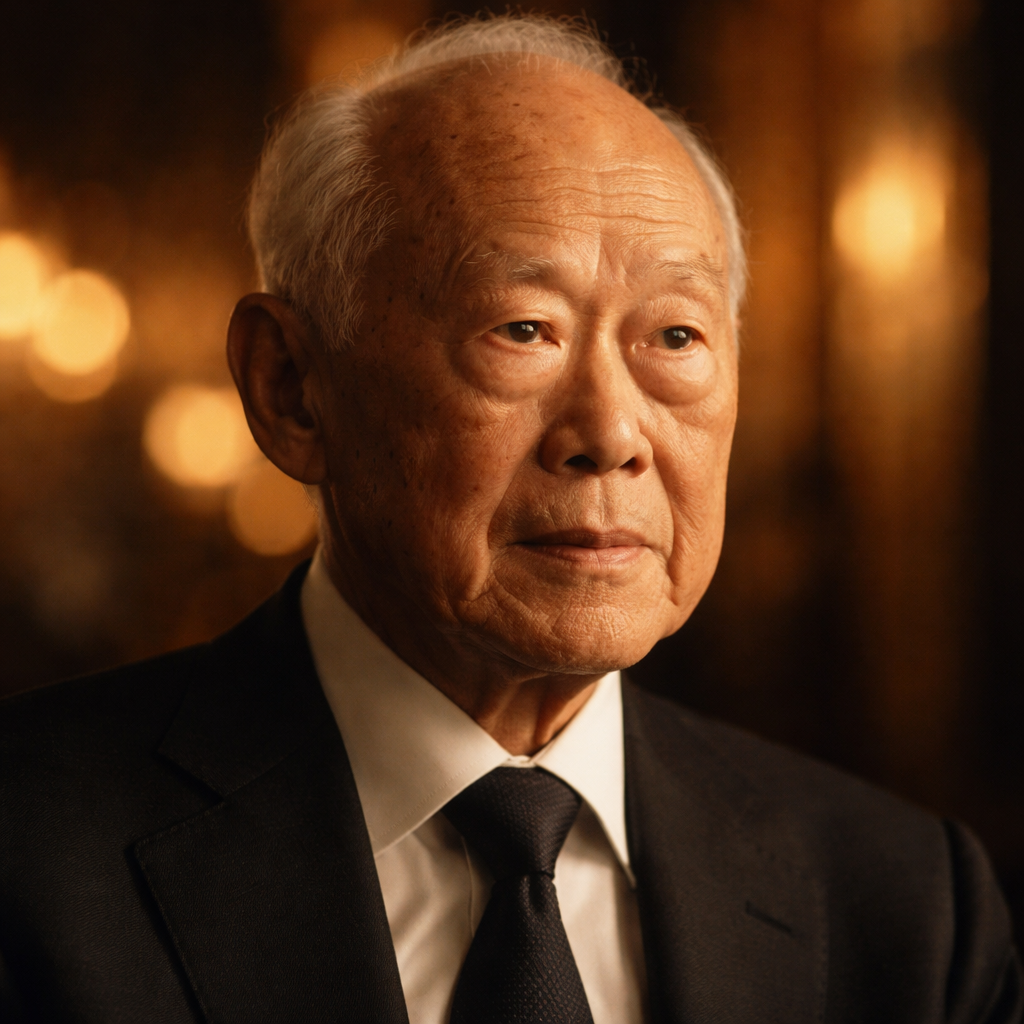
Lee Kuan Yew died at 91 after transforming Singapore from a resource-poor colonial trading post into one of the world's wealthiest and most efficient city-states. His authoritarian governance model delivered extraordinary economic growth, near-zero corruption, and world-class infrastructure while drawing persistent criticism for suppressing press freedom and political opposition.
Muhammad's archers abandoned their posts to collect battlefield spoils, and that single decision cost the Muslims their certain victory at Uhud. The Prophet had positioned fifty archers on a hill with explicit orders: hold position no matter what. But when the Quraysh appeared to retreat, most archers rushed down for plunder. Khalid ibn al-Walid—who'd later become Islam's greatest general—was still fighting for Mecca that day, and he seized the moment, circling behind to attack from the undefended hill. Seventy Muslims died, including Muhammad's uncle Hamza. The Prophet himself was wounded, his tooth broken, blood streaming down his face. What looked like catastrophic defeat became Islam's most taught lesson about discipline and obedience—the battle they lost on purpose taught more than the ones they won.
The last monk to surrender didn't go quietly. Robert Fuller, abbot of Waltham Abbey, held out until March 23, 1540—outlasting 800 other monasteries that Henry VIII had already seized. He'd watched the king's men strip lead from roofs across England, turning 12,000 monks and nuns into the road. When Fuller finally handed over the keys, Henry owned one-quarter of England's land. The abbey's bells, which legend said were rung by angels, were melted down for cannons. What began as Henry's divorce became the largest property grab in English history—and those displaced monks flooding the countryside helped create the vagrant crisis that would haunt England for generations.
The peace treaty lasted six months. Catherine de' Medici and her teenage son Charles IX granted French Protestants freedom of conscience and the right to worship anywhere except Paris—massive concessions that enraged Catholic nobles who'd just spent a year fighting. But Catherine wasn't being generous. She was buying time. Her real strategy was to split the Huguenot leadership, and she'd already begun secret negotiations with Spain's Philip II about a Catholic alliance. When fighting resumed that September, it would spark the St. Bartholomew's Day Massacre four years later, killing thousands. The "peace" was just an intermission in a forty-year religious war that wouldn't end until a Protestant convert took the throne.

Discontented Russian nobles stormed Tsar Paul I's bedroom in St. Michael's Castle, striking him with a sword, strangling him, and trampling him to death. His son Alexander I ascended the throne the same night, and though he publicly attributed the death to natural causes, the palace coup established a pattern of violent succession that haunted the Romanov dynasty.
They named their new city after Edinburgh's Gaelic name before they'd even seen the land. The John Wickliffe's 247 Scottish Free Church passengers spent 108 days at sea clutching plans for street names like Princes Street and George Street, determined to build "the Edinburgh of the South" in a place they knew only from surveyor maps. Captain Thomas Wing had navigated them to Port Chalmers, where they'd establish Dunedin and Otago province with such fierce Presbyterian discipline that pubs would be banned on Sundays for the next century. The irony? They'd sailed halfway around the world to escape religious persecution, only to immediately impose their own.
The first battle lasted twenty minutes. At Topáter on March 23, 1879, 135 Chilean soldiers faced off against 548 Bolivian and Peruvian troops over something nobody could drink: sodium nitrate deposits in the Atacama Desert. Chile's commander, Colonel Emilio Sotomayor, charged uphill against fortified positions and won anyway. The victory gave Chile control of Calama and its critical water sources. Bolivia lost its entire coastline by war's end—434 kilometers of Pacific access, gone. Today, Bolivia's navy still trains on Lake Titicaca, practicing for an ocean they haven't touched in 145 years.
Funston disguised his soldiers as prisoners, marching them into Aguinaldo's remote jungle headquarters with fake Tagalog-speaking guards. The American general even forged letters from other Filipino commanders to make the ruse believable. When they reached Palanan on March 23, 1901, Aguinaldo welcomed what he thought were reinforcements. Within minutes, he was in American custody. The capture didn't end Filipino resistance—guerrilla fighting continued for another year, and some regions fought until 1913. But Washington got what it wanted: the face of Philippine independence silenced, replaced with a colonial governor who'd rule from Manila for the next four decades. The republic's president spent his first weeks of captivity in the same palace where he'd once declared independence.
Fun Facts
Zodiac Sign
Aries
Mar 21 -- Apr 19
Fire sign. Courageous, energetic, and confident.
Birthstone
Aquamarine
Pale blue
Symbolizes courage, serenity, and clear communication.
Next Birthday
--
days until March 23
Quote of the Day
“Love is a fire. But whether it is going to warm your hearth or burn down your house, you can never tell.”
Share Your Birthday
Create a beautiful birthday card with events and famous birthdays for March 23.
Create Birthday CardExplore Nearby Dates
See a specific year's pack
Born on March 23? Open your personalized history pack for that year.
Popular Dates
Explore more about March 23 in history. See the full date page for all events, browse March, or look up another birthday. Play history games or talk to historical figures.