
Today In History
March 28 in History
Your birthday shares the stage with stories that shaped the world.

Three Mile Island Melts Down: America's Worst Nuclear Accident
Stuck valves and confused operators triggered a partial nuclear meltdown at Pennsylvania's Three Mile Island plant, releasing radioactive gases into the environment. This disaster crystallized public fear, sparked new federal regulations, and effectively halted the construction of new reactors in the United States for decades. Cleanup eventually cost $1 billion, yet studies found no causal link between the release and increased cancer rates nearby.
Famous Birthdays
Miranda Born: Precursor of Latin American Freedom
Francisco de Miranda spent decades lobbying European courts and the young United States for support to liberate Spanish America, earning the title "The Precursor" of Latin American independence. His military campaigns in Venezuela and his strategic vision provided the intellectual and logistical groundwork that Simon Bolivar would later use to achieve continental liberation.
Christian Herter
Christian Herter navigated the height of the Cold War as the 53rd U.S. Secretary of State, managing the fallout of the U-2 spy plane incident. His diplomatic experience helped stabilize relations during the transition between the Eisenhower and Kennedy administrations, ensuring continuity in American foreign policy during a period of intense global tension.
Lester R. Brown
Lester R. Brown pioneered the field of environmental analysis by founding the Worldwatch Institute and the Earth Policy Institute. His data-driven reports forced global leaders to confront the ecological limits of economic growth, shifting the international conversation from mere conservation to the systemic integration of sustainability into global food and energy policies.
Rodrigo Duterte
The mayor sang love songs at karaoke bars until 2 AM, then woke at dawn to personally patrol Davao City's streets on a motorcycle. Rodrigo Duterte spent 22 years running what became known as the "world's safest city" — murder rates dropped 82% under his watch. But those numbers came with a cost: vigilante death squads that left bodies in alleyways, a pattern he'd later scale to a national "war on drugs" that killed thousands within months of his 2016 presidency. The crooner who serenaded crowds and cursed at the Pope in the same breath didn't just govern — he dared an entire nation to look away.
Henry Paulson
Henry Paulson steered the American financial system through the 2008 global economic collapse as the 74th Secretary of the Treasury. He orchestrated the Troubled Asset Relief Program, a $700 billion government intervention that prevented the total disintegration of the nation's banking sector during the height of the credit crisis.
Melchior Ndadaye
Melchior Ndadaye became the first democratically elected president of Burundi in 1993, ending decades of military-led rule. His victory signaled a shift toward multi-party governance, though his assassination just months later by Tutsi extremists triggered a brutal civil war that claimed hundreds of thousands of lives and destabilized the Great Lakes region for years.
John Alderdice
John Alderdice steered Northern Ireland’s fragile peace process as the first Speaker of the newly formed Assembly in 1998. By facilitating dialogue between historically bitter political rivals, he helped stabilize the power-sharing government established under the Good Friday Agreement. His leadership transformed the Assembly from a theoretical concept into a functioning legislative body.
José Maria Neves
José Maria Neves rose from a modest background to become the President of Cape Verde, steering the nation through a period of democratic consolidation and economic modernization. By prioritizing institutional stability and regional cooperation, he transformed the archipelago into one of Africa’s most reliable models of governance and peaceful political transition.
Jon Lee
Jon Lee provided the propulsive, high-energy percussion that defined the sound of the Welsh rock band Feeder throughout the late 1990s. His driving rhythms on tracks like Buck Rogers helped propel the band into the mainstream, cementing their place in the Britpop-adjacent alternative rock scene before his untimely death in 2002.
Shanna Moakler
Shanna Moakler redefined the trajectory of beauty pageant winners by pivoting from the Miss USA crown into a high-profile career in reality television and tabloid culture. Her transition helped normalize the modern celebrity-influencer archetype, proving that pageant titles could function as a launchpad for sustained media visibility rather than a singular career peak.
Dave Keuning
Dave Keuning defined the shimmering, synth-heavy guitar sound of the 2000s as the lead guitarist and co-founder of The Killers. His riff for Mr. Brightside helped propel the band to global stardom, transforming them from Las Vegas outsiders into one of the most successful rock acts of the modern era.
Daniel Cardoso
Daniel Cardoso bridges the gap between atmospheric rock and progressive metal through his work as a keyboardist, songwriter, and producer. His tenure with Anathema refined the band’s melancholic soundscapes, while his contributions to Head Control System showcased a sharper, industrial edge that expanded the technical boundaries of modern European rock music.
Historical Events
Stuck valves and confused operators triggered a partial nuclear meltdown at Pennsylvania's Three Mile Island plant, releasing radioactive gases into the environment. This disaster crystallized public fear, sparked new federal regulations, and effectively halted the construction of new reactors in the United States for decades. Cleanup eventually cost $1 billion, yet studies found no causal link between the release and increased cancer rates nearby.

France and Britain declare war on Russia, dragging the Ottoman Empire into a brutal conflict that exposes the crumbling state of European diplomacy. This escalation forces the great powers to confront their military obsolescence, directly triggering the first modern use of trench warfare and telegraphic news reporting in Europe.

Francisco Franco's forces stormed Madrid to end the three-year siege, instantly imposing his dictatorship and plunging Spain into nearly four decades of authoritarian rule. This victory also signaled a dangerous shift in European power dynamics by proving that fascist aggression could succeed without immediate intervention from democratic nations.
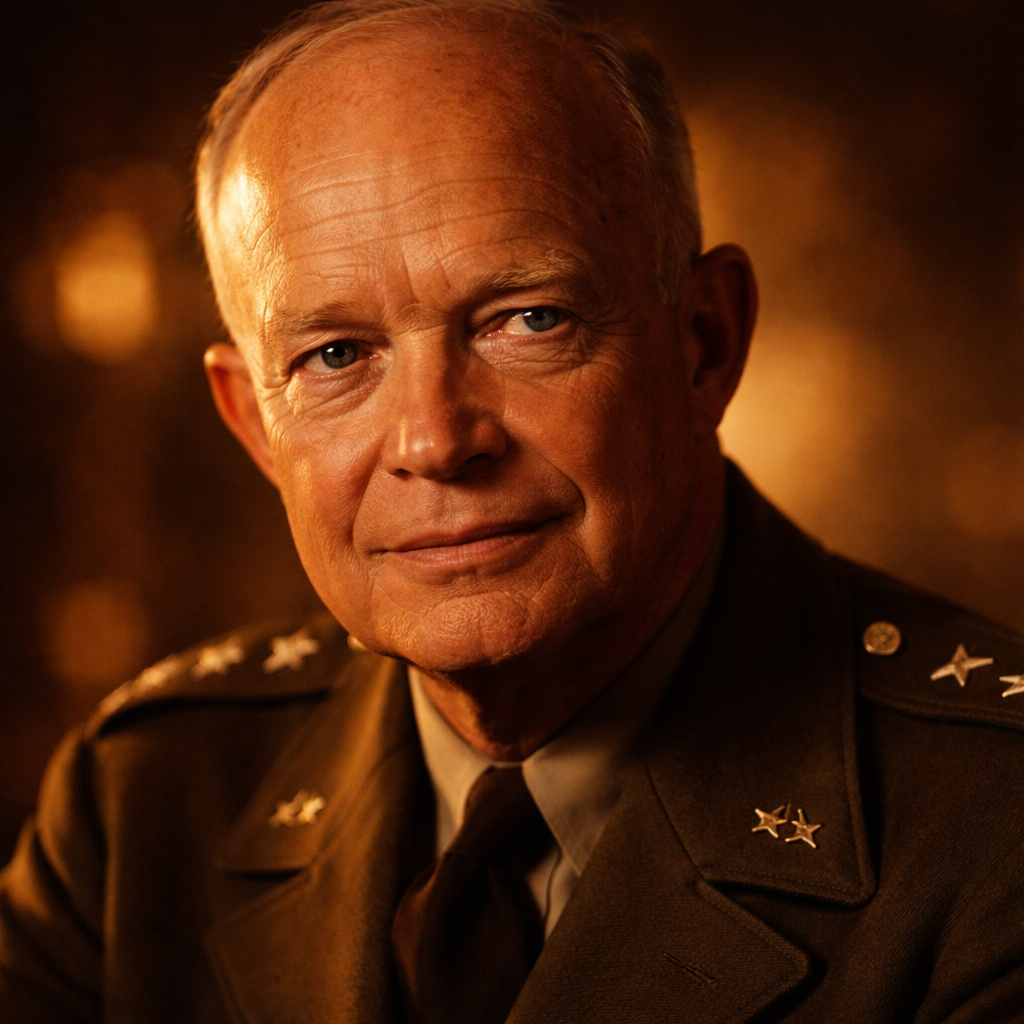
Dwight Eisenhower commanded the largest military operation in history — the D-Day landings of June 1944 — and wrote a letter taking full personal responsibility in case it failed, which he kept in his pocket all day. The letter was found in his papers decades later. As president from 1953 to 1961, he ended the Korean War, oversaw postwar prosperity, and warned in his farewell address against the 'military-industrial complex' — a phrase he coined. People didn't believe he meant it. He was born in Denison, Texas, in 1890, grew up in Abilene, Kansas, and died in Washington on March 28, 1969, from congestive heart failure. His last words: 'I want to go. God, take me.'

A single bullet over the price of student meals brought 50,000 Brazilians into Rio's streets. Edson Luís de Lima Souto, just 18, was protesting for cheaper food at Calabouço restaurant when military police opened fire on March 28, 1968. His body lay in state at Rio's Legislative Assembly while students stood guard. The funeral procession stretched for miles. What started as a demand for affordable rice and beans became Brazil's first mass demonstration against the dictatorship — priests marched alongside communists, housewives beside union workers. The regime responded with AI-5 that December, the harshest crackdown yet. Turns out authoritarian governments fear hungry students more than armed revolutionaries.

The Roman throne went to the highest bidder. After murdering Emperor Pertinax in March 193, the Praetorian Guards literally auctioned off the empire from their barracks walls, with two senators shouting competing bids. Didius Julianus won at 25,000 sesterces per guard—roughly five years' salary each. He ruled for exactly 66 days before being executed. The guards who'd made him emperor didn't lift a finger to save him. Turns out you can't buy loyalty, only a transaction.
The Praetorian Guards literally auctioned the Roman Empire to the highest bidder. After murdering Emperor Pertinax in March 193 CE, they stood on their camp walls and invited wealthy senators to shout out bids. Didius Julianus offered 25,000 sesterces per guard—roughly five years' salary each. He won. The guards opened the gates, proclaimed him emperor, and collected their payment. Sixty-six days later, rival general Septimius Severus marched into Rome, executed Julianus, and disbanded the Praetorian Guard entirely. The empire's most elite military unit had sold the one thing they were sworn to protect, and it cost them everything.

Charles the Bald paid 7,000 pounds of silver to make the Vikings go away. The Frankish king watched Ragnar Lodbrok's 120 longships sail up the Seine on Easter Sunday, torch monasteries along the way, and lay siege to Paris for weeks. Rather than fight, Charles opened his treasury. The ransom worked — the Norsemen left. But word spread fast across Scandinavia: these Franks would pay you to stop hitting them. Within decades, Viking fleets multiplied along every European coast, each chieftain knowing the secret. The raid didn't just sack a city — it advertised a business model.
Seven thousand German pilgrims, starving and dying of thirst after three days of Bedouin raids near Caesarea, watched a Muslim army approach across the desert. They braced for death. Instead, the Fatimid governor of Ramla, Mu'tamin al-Khilafa, attacked the bandits and escorted the Christians safely to Jerusalem. He even waived the customary gate fee. This act of protection should've been remembered as proof that Muslim authorities welcomed Christian pilgrims. But when these same Germans returned home with horror stories about the journey's dangers, their accounts helped fuel the very crusading fever that would turn Jerusalem into a battlefield thirty years later. The rescue that saved them inspired the invasion that destroyed the peace.
De Valette was 72 years old when he laid Valletta's foundation stone, still recovering from wounds he'd personally sustained defending Malta against 40,000 Ottoman troops just months earlier. The elderly warrior had fought sword-in-hand on the ramparts during the Great Siege, refusing to retreat. He designed his new capital city as a fortress—every street a firing line, every corner a defensive position. The grid layout wasn't aesthetic; it was tactical genius that let crossfire cover every approach. Five months after breaking ground, de Valette died, never seeing his city completed. Malta built the world's first planned Baroque city not as a monument to victory, but as preparation for the next invasion.
The last duke didn't even live in his own duchy. Peter von Biron spent his final years in his German estates while Catherine the Great's armies marched into Courland—a Baltic territory that had been semi-independent for 240 years. When Russia formally annexed it in 1795, the duchies of Courland and Semigallia vanished from maps without a single battle. The 500,000 people who lived there woke up Russian subjects overnight. This wasn't conquest—it was paperwork. Three empires had just carved up Poland-Lithuania like a feast, and Courland was the side dish nobody remembered ordering.
The furthest battle of the War of 1812 happened 5,000 miles from American shores, in neutral Chilean waters. Captain David Porter had sailed the USS Essex around Cape Horn to terrorize British whalers in the Pacific—he'd captured twelve vessels and cost Britain millions. But on March 28, 1814, two British warships cornered him in Valparaíso's harbor. Porter tried to make a run for it. His ship was shredded. Fifty-eight Americans died, many drowning while trying to swim to shore as Chilean crowds watched from the beach. The battle that ended America's only Pacific campaign of the war became a spectator sport for a country that wasn't even fighting.
The Senate had never censured a sitting president before, and Jackson was furious. When he defunded the Second Bank by pulling federal deposits in September 1833, Henry Clay gathered enough votes to formally condemn him on March 28, 1834. Jackson fired back with a blistering protest message, calling the censure unconstitutional—which the Senate refused to even enter into their records. He spent his final three years in office fighting to expunge that black mark. His allies finally succeeded in 1837, physically drawing black lines through the censure in the Senate journal. The president who expanded executive power beyond anything the Founders imagined couldn't stand one paragraph of criticism in a ledger book.
The Confederates won the battle but lost the war in New Mexico — because a Union spy destroyed their entire supply train while the fighting raged miles away. Major John Chivington led 400 soldiers on a forced march through canyon trails on March 28, 1862, bypassing the main battle at Glorieta Pass entirely. They torched 80 wagons, bayoneted 500 horses and mules, and burned every supply the Texan invaders owned. The Confederate commander, Henry Sibley, technically held the battlefield that day but couldn't feed his men. Within weeks, his starving army retreated 1,000 miles back to Texas, abandoning dreams of capturing Colorado's gold mines and California's ports. Sometimes the real battle happens where no one's looking.

He'd never flown before. Henri Fabre, a self-taught engineer with no pilot's license, strapped himself into his own invention—a seaplane called the Hydravion—and lifted off from the Étang de Berre lagoon near Martigues. The flight lasted 800 meters at an altitude of two meters. Barely cleared the water. But it worked. Within three years, every major navy wanted seaplanes for reconnaissance, and by World War I, they'd become essential military tools. The Wright brothers had conquered land, but Fabre proved you didn't need a runway at all—just courage and three-quarters of the planet's surface.
Fun Facts
Zodiac Sign
Aries
Mar 21 -- Apr 19
Fire sign. Courageous, energetic, and confident.
Birthstone
Aquamarine
Pale blue
Symbolizes courage, serenity, and clear communication.
Next Birthday
--
days until March 28
Quote of the Day
“Happiness always looks small while you hold it in your hands, but let it go, and you learn at once how big and precious it is.”
Share Your Birthday
Create a beautiful birthday card with events and famous birthdays for March 28.
Create Birthday CardExplore Nearby Dates
See a specific year's pack
Born on March 28? Open your personalized history pack for that year.
Popular Dates
Explore more about March 28 in history. See the full date page for all events, browse March, or look up another birthday. Play history games or talk to historical figures.