
Today In History
May 1 in History
Your birthday shares the stage with stories that shaped the world.

Bin Laden Killed: Navy SEALs Raid the Compound in Abbottabad
U.S. Navy SEALs stormed a compound in Abbottabad, Pakistan, and killed Osama bin Laden, ending a decade-long manhunt for the architect of the September 11 attacks. President Obama's late-night announcement delivered a symbolic closure to victims' families while reshaping the global counterterrorism strategy that defined American foreign policy after 2001.
Famous Birthdays
S. M. Krishna
His father was a wealthy sugarcane farmer who'd never finished high school. Somanahalli Mallaiah Krishna grew up in a Karnataka village where electricity arrived only sporadically, yet he'd eventually stand before the United Nations as India's voice to the world. Born in 1932, he'd govern his home state during its tech boom, then Maharashtra during its most volatile years, finally becoming External Affairs Minister at seventy-seven. The village boy became the statesman. But he always kept his farmland, visiting between diplomatic summits, walking the same fields his father worked.
Carson Whitsett
Carson Whitsett learned piano in a Mississippi juke joint his mother owned, where he'd practice between sets of bluesmen passing through. By twenty, he'd written "Disco Lady" for Johnnie Taylor—a track that became the first certified platinum single in R&CA history, selling over two million copies. He'd go on to replace Booker T. Jones in the M.G.'s, playing on sessions at Stax when the studio needed someone who could sight-read charts and improvise Memphis soul in the same session. Started with his mother's upright. Ended up defining what a million radios played.
Nikolai Yezhov
Nikolai Yezhov orchestrated the Great Purge as head of the NKVD, overseeing the mass arrests and executions that decimated the Soviet Communist Party and military leadership. His brutal efficiency during the late 1930s terrorized the entire nation, though he eventually fell victim to the same lethal machinery he refined before his execution in 1940.
Yiannis Ritsos
Yiannis Ritsos transformed modern Greek poetry by weaving the struggles of the working class into haunting, lyrical verse. His prolific output, spanning over 100 collections, gave a voice to the political prisoners of his era and helped secure his place as one of the most translated poets of the twentieth century.
Tim Hodgkinson
Tim Hodgkinson expanded the boundaries of experimental music by co-founding the radical avant-rock group Henry Cow. His work as a composer and multi-instrumentalist pushed free improvisation into new territories, influencing generations of musicians to reject traditional song structures in favor of complex, intellectually rigorous soundscapes.
Jim Clench
Jim Clench anchored the rhythm sections of Canadian rock staples April Wine and Bachman-Turner Overdrive, defining the heavy, melodic sound of 1970s arena rock. His steady bass lines and vocal contributions helped propel these bands to international chart success, cementing his status as a foundational figure in the evolution of the Canadian rock scene.
Ray Parker
Ray Parker Jr. defined the sound of 1980s pop-funk with his sharp guitar work and the inescapable, chart-topping theme to Ghostbusters. Before his solo success, he mastered the studio as a session musician for Stevie Wonder and Barry White, eventually bringing that polished, rhythmic precision to his own band, Raydio.
D'arcy Wretzky
D’arcy Wretzky defined the brooding, atmospheric sound of 1990s alternative rock as the original bassist for The Smashing Pumpkins. Her melodic, driving basslines anchored the band’s multi-platinum albums, helping bridge the gap between heavy metal textures and dream pop sensibilities that dominated the era’s radio airwaves.
Johnny Colt
Johnny Colt defined the low-end groove for some of rock’s most prominent acts, anchoring the Black Crowes during their multi-platinum rise and later touring with Lynyrd Skynyrd. His versatile bass work bridged the gap between Southern rock grit and modern pop-rock polish, earning him a reputation as a reliable, high-energy session and touring powerhouse.
Bernard Butler
Bernard Butler defined the jagged, melodic guitar sound of 1990s Britpop as the founding guitarist of Suede. His intricate arrangements and production work later shaped the sound of artists like Duffy and The Libertines, cementing his reputation as a master of textured, emotive rock composition.
Kellie Crawford
Kellie Crawford defined the childhoods of millions as a founding member of the children’s musical group Hi-5. Her transition from the pop duo Teen Queens to global television success helped establish the Australian entertainment export as a dominant force in international preschool media throughout the early 2000s.
Patrick Eaves
Patrick Eaves carved out a fourteen-season career in the NHL, proving his value as a reliable forward for teams like the Ottawa Senators and Detroit Red Wings. His persistence through recurring injuries earned him the respect of teammates and coaches, ultimately leading to a transition into professional scouting after his retirement from the ice.
Historical Events

The Act of Union merges the separate parliaments of England and Scotland into a single legislative body, creating the Kingdom of Great Britain. This political consolidation ends centuries of rivalry and establishes a unified state that dominates global trade and naval power for the next two centuries.

Francis Gary Powers' U-2 spyplane crumbles over Sverdlovsk after Soviet surface-to-air missiles bring it down, instantly shattering the fragile thaw between Washington and Moscow. The incident forces President Eisenhower to abandon planned summit talks with Nikita Khrushchev and exposes the depth of American aerial surveillance, turning a single crash into a permanent stain on Cold War diplomacy.
U.S. Navy SEALs stormed a compound in Abbottabad, Pakistan, and killed Osama bin Laden, ending a decade-long manhunt for the architect of the September 11 attacks. President Obama's late-night announcement delivered a symbolic closure to victims' families while reshaping the global counterterrorism strategy that defined American foreign policy after 2001.

He was Hitler's Minister of Propaganda and shot his wife and six children before shooting himself in the Reich Chancellery garden on May 1, 1945. Joseph Goebbels was born in Rheydt in 1897, had a clubfoot, and built the Nazi propaganda apparatus from a small party department into a ministry that controlled all German media. He was present at the Wannsee Conference. He burned books. He kept a diary that documented Nazi decision-making with disturbing clarity. He was Chancellor of Germany for one day. Then he killed himself and his family.
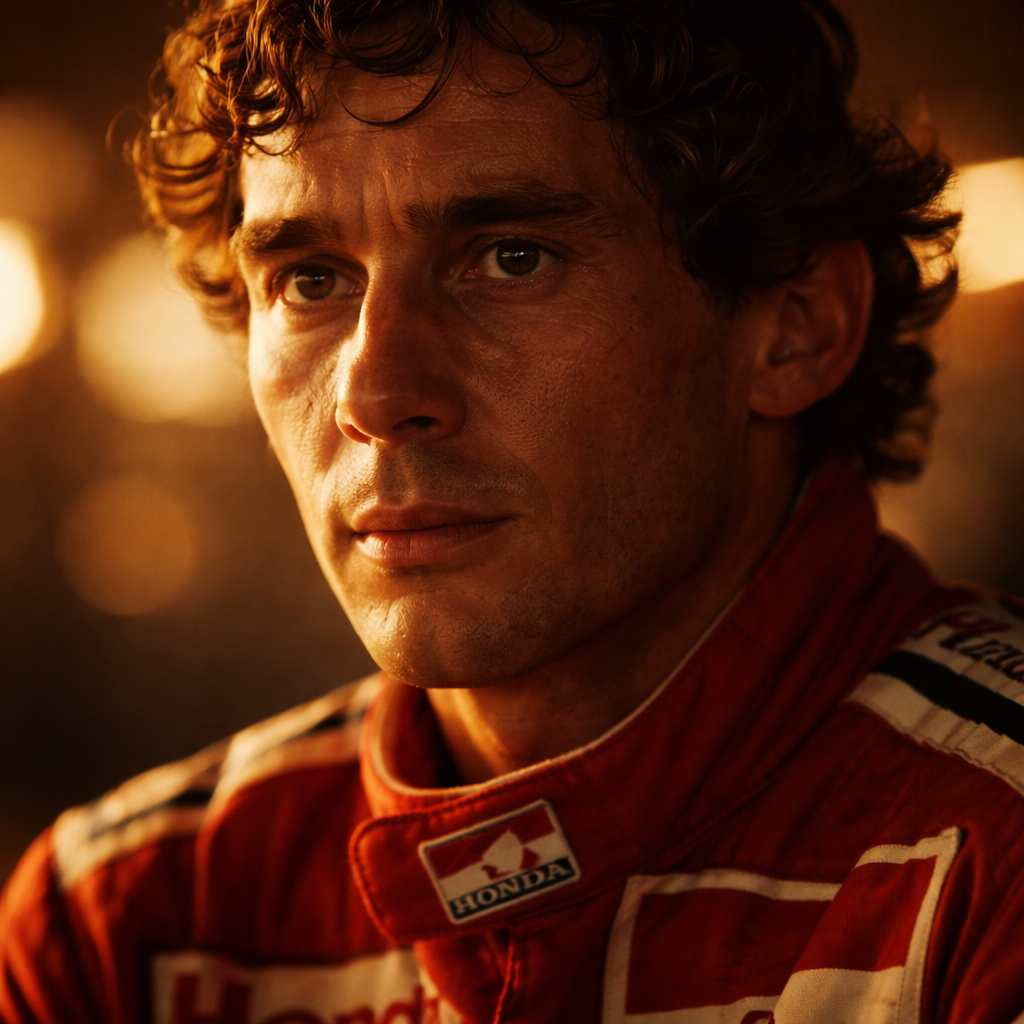
He was leading the San Marino Grand Prix when his steering column cracked. Ayrton Senna had won 41 races, three world championships, and the admiration of every driver on the grid. He died on May 1, 1994, at Tamburello corner, at a track where Roland Ratzenberger had died the day before. Brazil declared three days of national mourning. Three million people lined the streets of São Paulo for his funeral. No Formula One driver has come close to his hold on the public imagination.

The explosion happened at 10:28 a.m., exactly four minutes after the day shift entered the mine. Two hundred men and boys—some as young as twelve—were working Winter Quarter Mine No. 4 when 450 kegs worth of blasting powder ignited at once. The blast didn't kill most of them. Carbon monoxide did, over the next several hours, in total darkness. Scofield's population was 2,000. Every single family lost someone. Utah passed its first mine safety law eight months later, requiring two exits from every working area underground. The second exit clause still exists in federal code today.

Kim Il-sung had been in the Soviet Union since 1940, leading a Korean battalion in the Red Army. When Soviet forces rolled into northern Korea in August 1945, they brought him along—a 33-year-old officer most Koreans had never heard of. Three years later, on September 9, 1948, he stood as president of the Democratic People's Republic of Korea. The Soviets had found their man. South Korea had declared independence three weeks earlier under Syngman Rhee. One peninsula, two governments, both claiming the whole thing. Neither would back down.
Philippine President Gloria Macapagal-Arroyo declared a state of rebellion after thousands of supporters of her jailed predecessor Joseph Estrada stormed toward the presidential palace during the EDSA III uprising. Her swift declaration enabled mass arrests and restored order within days, but deepened political divisions that haunted Philippine democracy for years.

Magda Goebbels poisoned her six children in the Fuhrerbunker before taking her own life, choosing to destroy her family rather than allow them to survive National Socialism's collapse. Her final act remains a chilling evidence of the total ideological capture within Hitler's inner circle, ending the lives of children she had paraded as propaganda symbols.
Sigismund drowned his own son in a well years earlier, pushed by his second wife's accusations of treason. The boy was innocent. When Sigismund tried to flee after losing his kingdom, Frankish forces caught him and dragged him to Orléans. Eight years as king of Burgundy, ended with an executioner's blade in 524. His brother Godomar took the throne but lasted only a decade before the Franks absorbed Burgundy entirely. The kingdom Sigismund murdered his heir to protect didn't even survive a generation. Sometimes paranoia doesn't just destroy families—it destroys nations.

The roof alone took twelve tons of gold leaf. Basil I wanted something impossible: a church large enough to hold relics from seventeen saints, built on a foundation that couldn't support it. Engineers said no. He built it anyway, propping the whole thing on a network of underground cisterns and lead-reinforced arches. The Nea Ekklesia didn't just look different from the old basilicas—it was structurally different, a Greek cross under four supporting domes. And when it didn't collapse, every Orthodox architect for the next thousand years copied the blueprint. Sometimes stubbornness is indistinguishable from vision.
Three ships. Thirty knights. Sixty men-at-arms in rusted mail. That's all it took to crack Ireland open. Diarmait Mac Murchada hired them because his own countrymen had kicked him out of Leinster. The Normans waded ashore at Bannow Bay on May 1st, 1169, not as conquerors but as mercenaries collecting a debt. They brought longbows, cavalry tactics, and castle-building expertise the Irish had never seen. Within two years, they'd stopped taking orders from Diarmait. Sometimes an invasion starts because someone couldn't let go of a crown.

Robert the Bruce got everything he wanted, but he'd been excommunicated for fourteen years when England finally signed. The Treaty of Edinburgh-Northampton in 1328 recognized Scotland as independent—not through negotiation, really, but because Edward II was dead and his teenage son needed peace. Bruce paid £20,000 for it. Called the "Shameful Peace" in England, celebrated in Scotland. Four years of truce. Then Bruce died, his son was five, and Edward III tore up the treaty the moment he could. Independence recognized. Just not respected.
The signatures were still wet when Jews started selling their homes for a donkey, their vineyards for a bolt of cloth. Ferdinand and Isabella gave Spain's 200,000 Jews exactly four months—not to convert, but to leave. Anyone baptized could stay with full rights. Anyone who refused forfeited everything: property, gold, even the right to take currency across the border. Most fled to Portugal, only to be expelled again five years later. Christopher Columbus, funded by the same monarchs with confiscated Jewish wealth, set sail for the Americas the day after the final deadline.
Anna Jagiellon was thirty-two and unmarried—practically unheard of for a Jagiellonian princess. She'd watched three elected kings come and go. Then Poland's nobles chose her husband for her: Stephen Báthory, a Transylvanian military commander thirteen years younger who'd never set foot in Warsaw. The wedding happened in Kraków on May 1st. She brought legitimacy and a crown. He brought an army and a talent for war against Ivan the Terrible. Within a decade, he'd tripled Commonwealth territory eastward. Turns out arranged marriages sometimes work when both sides need something desperately.
Fun Facts
Zodiac Sign
Taurus
Apr 20 -- May 20
Earth sign. Patient, reliable, and devoted.
Birthstone
Emerald
Green
Symbolizes rebirth, fertility, and good fortune.
Next Birthday
--
days until May 1
Quote of the Day
“Books are the legacies that a great genius leaves to mankind, which are delivered down from generation to generation as presents to the posterity of those who are yet unborn.”
Share Your Birthday
Create a beautiful birthday card with events and famous birthdays for May 1.
Create Birthday CardExplore Nearby Dates
See a specific year's pack
Born on May 1? Open your personalized history pack for that year.
Popular Dates
Explore more about May 1 in history. See the full date page for all events, browse May, or look up another birthday. Play history games or talk to historical figures.