
Today In History
September 18 in History
Your birthday shares the stage with stories that shaped the world.

Patty Hearst Arrested: The Heiress-Turned-Fugitive Caught
FBI agents captured Patty Hearst in a San Francisco apartment after nineteen months on the Most Wanted List, ending a saga that began with her kidnapping by the Symbionese Liberation Army and her bewildering transformation into an armed radical. Her trial became a national spectacle that forced courts and psychologists to grapple with the legal boundaries of brainwashing and coerced participation.
Famous Birthdays
Emperor Trajan Born: Rome's Greatest Expansionist
Trajan was born in the Roman province of Hispania Baetica — in what is now southern Spain — in 53 AD, making him the first Roman emperor born outside Italy. He was a career soldier who worked his way up through the legions and was adopted as successor by the aging Nerva in 97 AD. His two Dacian campaigns between 101 and 106 AD are depicted in continuous relief on Trajan's Column in Rome, the most detailed record of Roman military operations that survives. The column shows every step: river crossings, fort construction, supply chains, battles. He pushed the empire's borders farther than they'd ever reached, and farther than they'd ever reach again.
Jada Pinkett Smith
She auditioned for Baltimore's High School for the Performing Arts at thirteen and got in — same school that produced Tupac Shakur. Jada Pinkett Smith spent years building a career in Hollywood before fronting a metal band, Wicked Wisdom, where she screamed her own lyrics to genuinely skeptical crowds. Critics expected a gimmick. She toured anyway. The girl from Baltimore who shared hallways with Tupac ended up fronting a metal band nobody saw coming.
George Read
George Read helped secure American independence by signing both the Declaration of Independence and the U.S. Constitution. As a Delaware delegate, he fought to protect the interests of smaller states during the Constitutional Convention, ensuring they received equal representation in the Senate. His legal expertise shaped the foundational structure of the federal government.
Kate Booth
Kate Booth pioneered the Salvation Army’s expansion into France and Switzerland, earning the nickname La Maréchale for her fierce leadership. As the eldest daughter of William and Catherine Booth, she navigated intense police opposition and social hostility to establish the movement’s first continental missions, transforming a British religious organization into a global humanitarian force.
Kerry Livgren
Kerry Livgren defined the sound of 1970s progressive rock by penning Kansas anthems like Carry On Wayward Son and Dust in the Wind. His intricate, classically-influenced compositions transformed the band from a regional act into a global powerhouse, securing their place in the rock canon through complex arrangements and philosophical, often spiritual, lyrical depth.
Keith Morris
Keith Morris defined the frantic, snarling sound of West Coast hardcore punk as the original frontman for Black Flag and the Circle Jerks. His gravelly delivery and relentless energy helped codify the genre’s DIY ethos, influencing decades of underground music through his continued work with the band Off! and his uncompromising approach to performance.
Mark Olson
Mark Olson defined the alt-country sound as a founding member of The Jayhawks, blending folk sensibilities with rock grit. His songwriting partnership with Gary Louris revitalized roots music in the 1990s, influencing a generation of Americana artists to prioritize raw, acoustic-driven storytelling over polished studio production.
John Mann
John Mann fronted the folk-rock band Spirit of the West, blending Celtic instrumentation with sharp, socially conscious lyrics that defined the Canadian pub-rock sound. His gravelly delivery and relentless energy turned anthems like Home for a Rest into unofficial national staples, cementing his reputation as one of the country’s most charismatic and enduring live performers.
Ricky Bell
Ricky Bell defined the New Jack Swing era as a founding member of New Edition and the lead voice of the trio Bell Biv DeVoe. His fusion of R&B melodies with hard-hitting hip-hop beats helped transition 1980s pop into the dominant urban sound of the 1990s, influencing decades of boy band choreography and vocal production.
Cappadonna
Darryl Hill, known to hip-hop fans as Cappadonna, brought a gritty, street-level lyricism to the Wu-Tang Clan’s expansive soundscape. His contributions to the group’s sophomore album, Wu-Tang Forever, helped cement the collective's dominance in 1990s rap, proving that the Staten Island ensemble could successfully integrate new voices into their intricate, collaborative mythology.
Seewoosagur Ramgoolam
Seewoosagur Ramgoolam steered Mauritius toward independence from British colonial rule in 1968, serving as the nation’s first Prime Minister. His leadership established the country’s foundational welfare state, securing free healthcare and education for all citizens. These policies transformed the island into a stable, multi-ethnic democracy that remains a model for post-colonial development today.
John McAfee
John McAfee wrote the first commercial antivirus software, made a fortune, sold his stake in the company in 1994, and then spent the next three decades becoming increasingly difficult to categorize. He lived in Belize, was questioned in connection with his neighbor's murder, ran for US president twice, and was arrested in Spain in 2020. He died in a Barcelona prison cell in 2021. He left behind software that still runs on millions of computers — and a life that no antivirus could have protected.
Historical Events
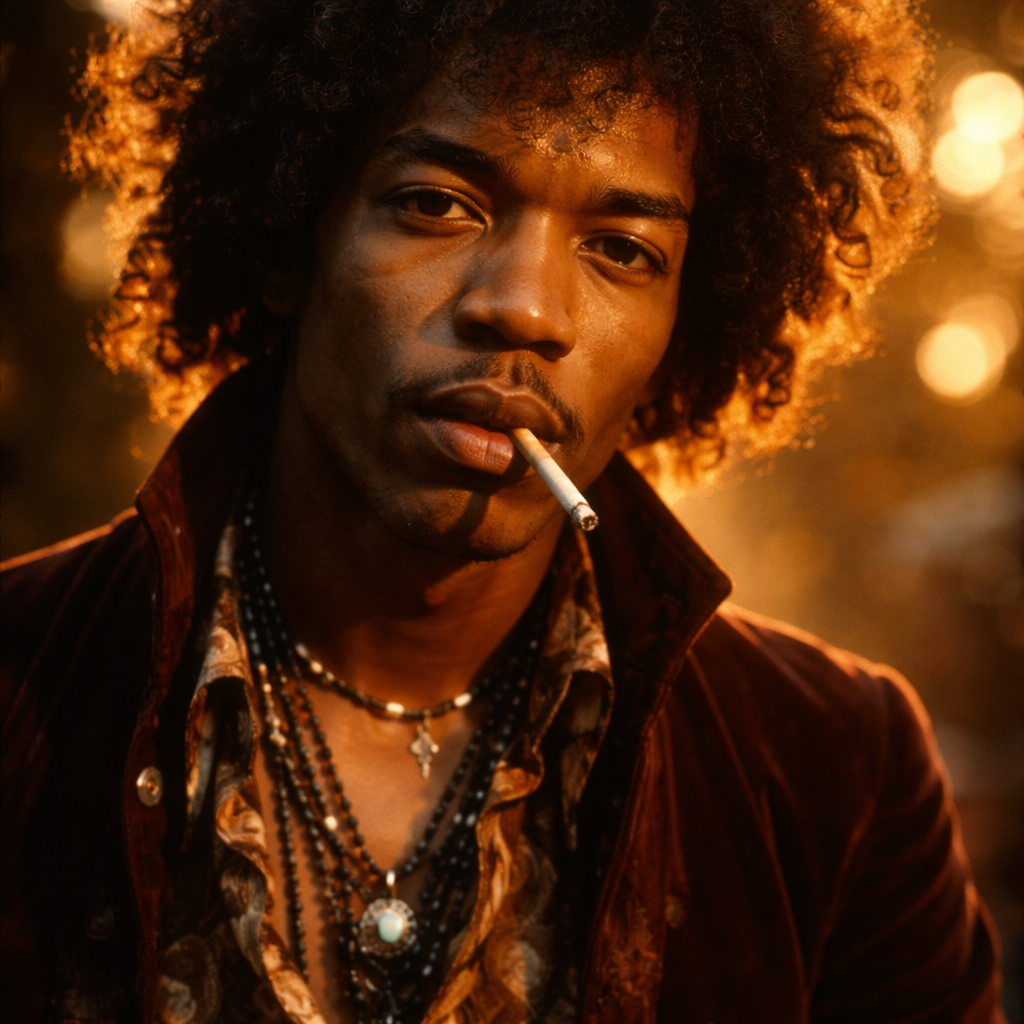
Jimi Hendrix died in London on September 18, 1970, 27 years old, from asphyxiation after taking a sleeping pill in a girlfriend's apartment. He'd been awake for three days. He died the same year Janis Joplin and Jim Morrison died, all three at 27, all three of drug-related causes, which created the '27 Club' mythology. He'd been playing guitar for eight years. In those eight years he'd changed what the electric guitar could do, using feedback and distortion and the whammy bar as compositional tools rather than accidents. He learned by listening to records at 78 rpm because that was the speed at which the machine ran. He didn't read music. He recorded 'Purple Haze,' 'All Along the Watchtower,' and 'The Wind Cries Mary' within his first year of fame. He had four more years after that.

British forces conquered Quebec after General Wolfe's troops scaled the cliffs of the Plains of Abraham and defeated the French garrison in under thirty minutes, a victory that sealed the fate of New France. The fall of Quebec transferred control of North America's most strategic waterway to Britain and created conditions for the eventual American Revolution.

TV Tupi Difusora began broadcasting on Channel 3 in Sao Paulo, making Brazil the fourth country in the world to establish regular television service. The station's launch transformed Brazilian media and culture, creating a national appetite for televised entertainment that would eventually produce the telenovela industry, Latin America's most influential cultural export.

U.S. Eighth Army and United Nations forces smashed through North Korean lines and broke out of the Pusan Perimeter, linking up with MacArthur's Inchon landing force to trap the overextended enemy. The coordinated offensive reversed the war's momentum within days, liberating Seoul and pushing the shattered North Korean army back across the 38th parallel.
FBI agents captured Patty Hearst in a San Francisco apartment after nineteen months on the Most Wanted List, ending a saga that began with her kidnapping by the Symbionese Liberation Army and her bewildering transformation into an armed radical. Her trial became a national spectacle that forced courts and psychologists to grapple with the legal boundaries of brainwashing and coerced participation.
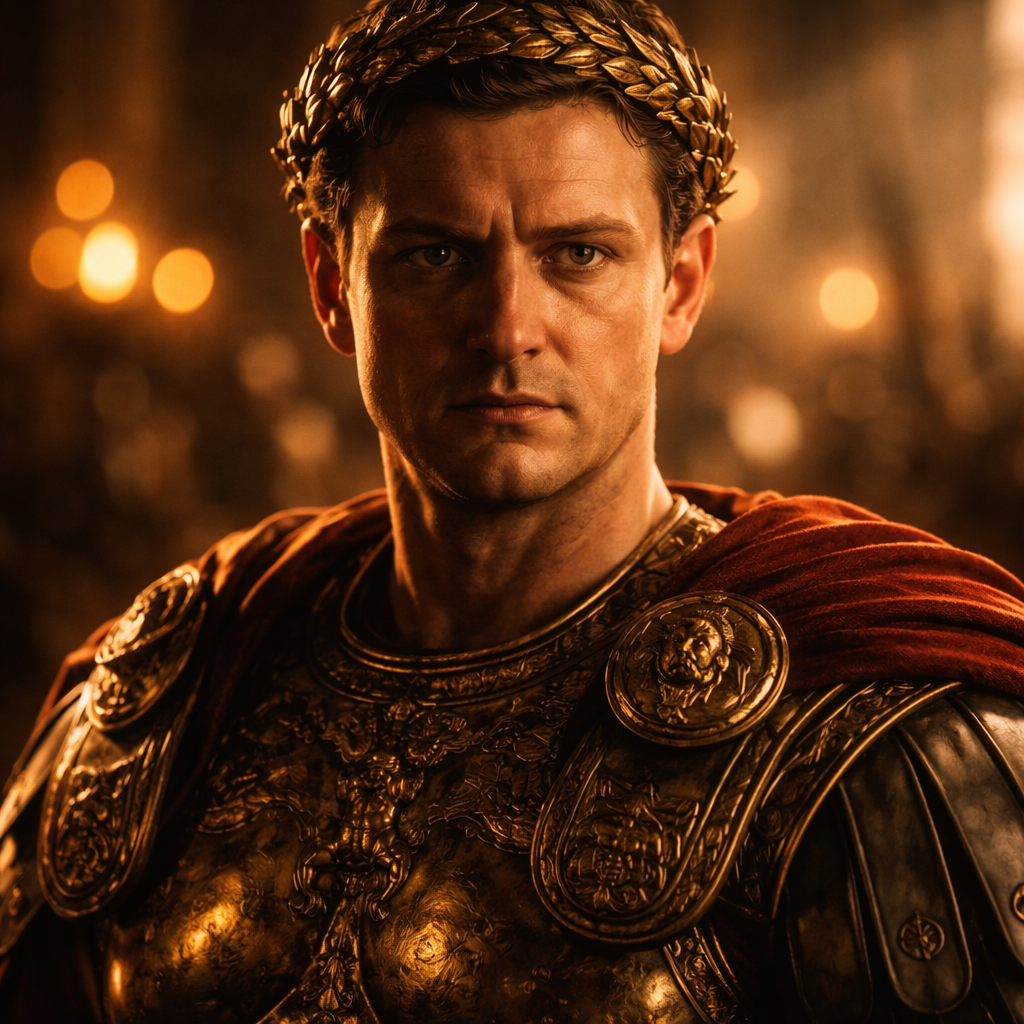
Emperor Domitian was assassinated by court officials after fifteen years of increasingly autocratic rule that terrorized the Roman Senate through treason trials and executions. His death ended the Flavian dynasty and ushered in the reign of Nerva, inaugurating the era of the Five Good Emperors that would represent Rome's greatest period of stability and prosperity.

Ruth Bader Ginsburg was rejected by every law firm she applied to after graduating first in her class from Columbia Law School in 1959. She was a woman, she was Jewish, and she was a mother — three strikes. She ended up teaching law instead. Her strategy for dismantling gender discrimination in the courts was deliberate: she selected cases involving men discriminated against by gender-based laws, calculating that male judges would find those easier to sympathize with. It worked. By the time she joined the Supreme Court in 1993, the legal architecture of sex discrimination had been fundamentally altered by her earlier work. She died in September 2020, six weeks before a presidential election.

Licinius had ruled the eastern half of the Roman Empire for years, but Constantine had been closing the distance. The Battle of Chrysopolis on September 18, 324 was the final reckoning — roughly 130,000 of Licinius's men against Constantine's force near modern Üsküdar in Turkey. Licinius surrendered, was exiled to Thessalonica, and was executed within a year despite a personal promise from Constantine to spare him. Constantine then ruled the entire empire alone. He'd convert to Christianity and move the capital east to Byzantium — a city he would rename after himself.
Teutonic Knights routed the Polish army at Chojnice, capturing thousands of soldiers including several nobles in a crushing defeat early in the Thirteen Years' War. The loss forced Poland to rely on mercenary forces and urban militias for the remainder of the conflict, reshaping the military balance in the Baltic region.
Juan Bautista Pastene's expedition dropped anchor in San Pedro Bay, formally claiming southern Chile for Spain. This landing established the first permanent Spanish foothold south of the Maule River, triggering decades of conflict with the Mapuche people as the empire pushed its borders further into indigenous territory.

The men who formed Chile's first governing junta in 1810 were careful to say the right thing: they were simply holding power in trust for the Spanish king, imprisoned by Napoleon. They wore loyalty like a disguise. But they immediately began trading independently, building local institutions, and squeezing out Spanish-born officials. Spain saw through it immediately. What started as a polite legal fiction on September 18 became a declaration of independence six years later — and Chileans celebrate this date as their national day.

The great fire of Moscow finally subsided after destroying over three-quarters of the city, leaving Napoleon's Grande Armee sheltering in ruins without food, fodder, or winter supplies. The devastation forced Napoleon to abandon his plans to winter in Moscow, beginning the catastrophic retreat that would destroy his army and shatter his aura of invincibility.
When Charles Lewis Tiffany opened his store in New York City in 1837, he made $4.98 in sales on the first day and called it a success. The shop sold stationery, porcelain, and glass — not jewelry. Tiffany didn't pivot to gems until years later. The signature blue color came before the diamonds: that particular robin's-egg shade appeared on the cover of their first catalog in 1845. Nobody knows exactly who chose it. The color is now trademarked, and the shade is literally called "Tiffany Blue."
The Fugitive Slave Act of 1850 didn't just apply to the South — it required Northern citizens to actively assist in capturing and returning escaped enslaved people or face fines and jail time. Federal commissioners were paid $10 for every person returned to slavery, $5 if they ruled in favor of the accused. It was, in effect, a law that made complicity mandatory. Abolitionists called it the "Bloodhound Bill." It radicalized thousands of Northerners who'd stayed neutral — and helped fill the ranks of the Underground Railroad.
Royal Sardinian troops crush Papal forces at Castelfidardo, snatching Umbria and Marche from the Pope's grasp. This decisive victory shatters the last major barrier to Italian unification, allowing the Kingdom of Italy to claim central territories and move closer to a single nation-state.
Fun Facts
Zodiac Sign
Virgo
Aug 23 -- Sep 22
Earth sign. Analytical, kind, and hardworking.
Birthstone
Sapphire
Blue
Symbolizes truth, sincerity, and faithfulness.
Next Birthday
--
days until September 18
Quote of the Day
“Every one of us lives his life just once; if we are honest, to live once is enough.”
Share Your Birthday
Create a beautiful birthday card with events and famous birthdays for September 18.
Create Birthday CardExplore Nearby Dates
See a specific year's pack
Born on September 18? Open your personalized history pack for that year.
Popular Dates
Explore more about September 18 in history. See the full date page for all events, browse September, or look up another birthday. Play history games or talk to historical figures.