

Kepler Publishes Laws of Planetary Motion: The Solar System Makes Sense
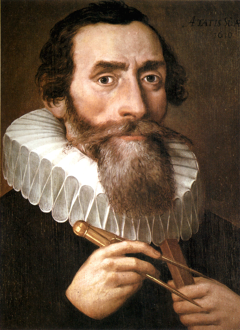
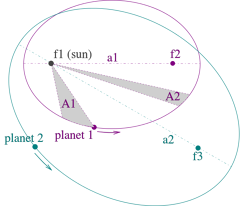
Mars wouldn't cooperate. Johannes Kepler spent five years wrestling with its orbit, filling 900 pages with calculations that kept failing because he assumed circles. Perfect circles — that's what the heavens demanded, what 2,000 years of astronomy insisted upon. But Mars deviated by just eight arc minutes, a difference so tiny most astronomers would've blamed their instruments. Kepler didn't. He torched his circular models and tried ellipses instead. It worked. That eight-arc-minute discrepancy — thinner than the width of a human hair held at arm's length — shattered the ancient belief that celestial motion had to be geometrically pure. Newton wouldn't explain why planets moved in ellipses for another 69 years, but Kepler had already proven they did. Sometimes the universe whispers its secrets in the smallest inconsistencies.
March 8, 1618
408 years ago
Key Figures & Places
What Else Happened on March 8
Ferdowsi finished his monumental epic, the Shāhnāmeh, after thirty years of meticulous labor. By recording the myths and history of ancient Persia in pure Persi…
élection de l'antipape Grégoire VIII.
His mother ruled for seventeen years while nobles tried to replace her with every available man — her husband, her ex-husband, even her teenage son. But Urraca …
Da der Sohn des verstorbenen Kaisers Heinrich VI., Friedrich II., zu diesem Zeitpunkt erst drei Jahre alt ist, wird sein Onkel Philipp von Schwaben von der stau…
They entered through the latrine chute. That's how Philip II's soldiers finally breached Richard the Lionheart's supposedly impregnable fortress after six month…
The butchers and bakers won. On the frozen fields of Hausbergen, Strasbourg's shopkeepers and guild members—armed with pikes they'd forged themselves—faced down…
Talk to History
Have a conversation with historical figures who witnessed this era. Ask questions, explore perspectives, and bring history to life.