

Valdivia Wins at Penco: Spanish Expand South
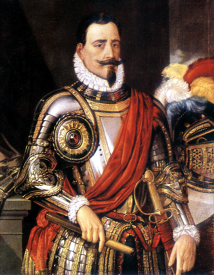
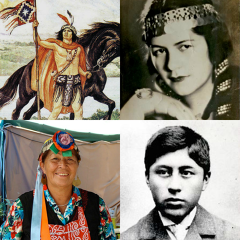
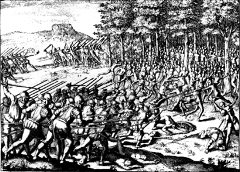
Pedro de Valdivia's force of roughly 200 Spanish soldiers and several thousand indigenous allies defeated a large Mapuche army at the Battle of Penco on March 12, 1550, in what is now the Biobio Region of Chile. The Mapuche, who had been resisting Spanish expansion for years, attacked with overwhelming numbers but were repelled by Spanish cavalry, steel weapons, and the tactical advantage of fighting from a fortified position. Valdivia founded the city of Concepcion nearby shortly after the battle. His victory did not end Mapuche resistance. The Araucanians, as the Spanish called them, fought continuously for over 300 years, making the Arauco War the longest sustained military conflict in the Americas. Valdivia himself was captured and killed by Mapuche forces under the toqui Lautaro in 1553, just three years after Penco. The Mapuche were never fully conquered and maintained effective independence south of the Biobio River until Chile's military subjugation campaigns of the 1880s.
March 12, 1550
476 years ago
Key Figures & Places



What Else Happened on March 12
Belisarius held Rome with just 5,000 men against an Ostrogothic army of 150,000. For over a year, Vitiges surrounded the city, cutting aqueducts and starving th…
The French monk elected pope in 1088 couldn't even enter Rome for a year — his rival already occupied the papal throne. Odo of Châtillon, who took the name Urba…
Holy Roman Emperor Friedrich I officially recognized Munich in the Augsburg arbitration, granting the settlement legal standing as a site for trade and tolls. T…
Konrad von Wallenrode assumed leadership of the Teutonic Order, inheriting a state embroiled in constant border skirmishes with the Grand Duchy of Lithuania. Hi…
The Spanish commander gave the city one chance to surrender before the siege. Maastricht refused. What followed was four months of hell — Alexander Farnese's 20…
Pope Gregory XV elevated Ignatius of Loyola and Francis Xavier to sainthood, formalizing the status of the Society of Jesus within the Catholic hierarchy. This …
Talk to History
Have a conversation with historical figures who witnessed this era. Ask questions, explore perspectives, and bring history to life.