

Galileo Condemned by Inquisition: Science vs Church
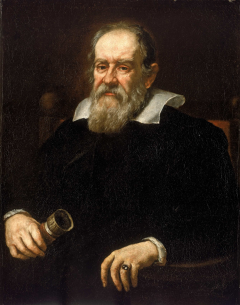
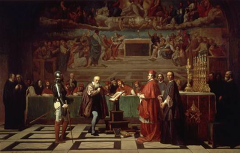
Galileo Galilei stood before the Roman Inquisition in April 1633 to answer charges of heresy for advocating the Copernican model of a sun-centered solar system in his Dialogue Concerning the Two Chief World Systems, published the previous year. Pope Urban VIII, who had been Galileo's friend and patron, felt personally mocked by the character Simplicio, a naive Aristotelian in the dialogue who parroted arguments the Pope had actually made. Under threat of torture, Galileo recanted his support for heliocentrism and was sentenced to house arrest for life. The legend that he muttered 'Eppur si muove' (and yet it moves) after recanting is almost certainly apocryphal. What is true is that Galileo spent his remaining nine years under house arrest writing his most important scientific work, Two New Sciences, which laid the foundations for modern physics. The Church did not formally acknowledge its error until 1992, 359 years late.
February 13, 1633
393 years ago
Key Figures & Places
What Else Happened on February 13
Emperor Otto I and Pope John XII formalized their alliance by signing the Diploma Ottonianum, which granted the papacy sovereignty over vast territories in cent…
The Mongols destroyed Baghdad in seven days. Hulegu Khan's army killed somewhere between 200,000 and a million people — the chronicles can't agree because the s…
The central tower of Ely Cathedral collapsed in 1322. Nobody died. The monks were asleep when 400 tons of Norman stonework came down at 2 a.m. They woke to rubb…
Genoese warships crushed a combined Venetian, Aragonese, and Byzantine fleet during a violent storm in the Bosporus. This tactical victory secured Genoese domin…
Edward IV signed a treaty with the Lord of the Isles in 1462 that technically made half of Scotland an English vassal state. John MacDonald controlled the weste…
Brussels buried its river. The Zenne ran through the city center for centuries — open, filthy, carrying sewage and industrial waste. By the 1860s, cholera outbr…
Talk to History
Have a conversation with historical figures who witnessed this era. Ask questions, explore perspectives, and bring history to life.