

Lithuania Declares Independence: Freedom From Empire
The Council of Lithuania unanimously adopted the Act of Independence on February 16, 1918, declaring Lithuania a sovereign democratic republic free from all previous political ties with other nations. The twenty signatories knew the declaration was largely symbolic: German troops still occupied the country, and neither Russia nor Germany recognized Lithuanian sovereignty. The declaration drew its legitimacy from the Lithuanian National Council's claim to represent the will of the people, expressed through a congress held in Vilnius in September 1917. Independence became a practical reality only after Germany's collapse in November 1918, when Lithuania formed its own army and government. The new state survived a Polish seizure of Vilnius in 1920 and a Bolshevik invasion, establishing itself as a functioning republic before Soviet occupation in 1940 extinguished its sovereignty for fifty years. Lithuania re-declared independence in 1990, explicitly citing the 1918 Act as its legal foundation.
February 16, 1918
108 years ago
Key Figures & Places

Lithuania
Wikipedia
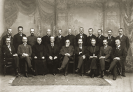
Council of Lithuania
Wikipedia
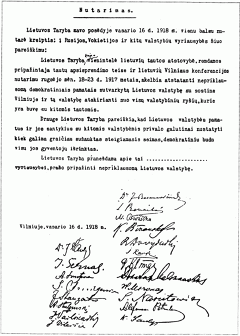
Act of Independence of Lithuania
Wikipedia

Council of Lithuania
Wikipedia

Act of Independence of Lithuania
Wikipedia

Lithuania
Wikipedia

National day
Wikipedia

Independence
Wikipedia
1918
Wikipedia
11 de marzo
Wikipedia

Histoire de la Lituanie
Wikipedia

Reich alemán
Wikipedia

Russian history
Wikipedia

List of national independence days
Wikipedia
What Else Happened on February 16
Trajan sent laurel-wrapped letters to the Senate in 116 CE announcing he'd conquered Parthia. Rome's eastern frontier had been a problem for 150 years. Augustus…
Louis IX sent a friar to the Mongol Empire in 1249. Not a general, not a diplomat — a Dominican monk named Andrew of Longjumeau. The mission: convince the Mongo…
Lithuanian forces crushed the Livonian Order on the frozen surface of the Baltic Sea, killing the Grand Master Otto von Lutterberg. This victory halted the Orde…
Hendrick Lonck and his Dutch West India Company fleet seized the sugar-rich port of Olinda, dismantling Portuguese control over the Brazilian coastline. This bo…
Parliamentary forces crushed the Royalist army at the Battle of Torrington, shattering the King’s last significant field force in the West Country. This decisiv…
The Holy Roman Emperor issued the Leopoldine Diploma in 1699, making Greek Catholic priests equal to Roman Catholics in Transylvania. Sounds bureaucratic. It wa…
Talk to History
Have a conversation with historical figures who witnessed this era. Ask questions, explore perspectives, and bring history to life.