

Potsdam Conference Opens: Allies Decide Germany's Fate
Truman, Churchill, and Stalin gathered at Cecilienhof Palace in Potsdam, outside the bombed ruins of Berlin, on July 17, 1945, to decide the future of defeated Germany. During the conference, Truman told Stalin about the atomic bomb; Stalin already knew from his spies. Churchill lost the British election mid-conference and was replaced by Clement Attlee. The leaders agreed to divide Germany into four occupation zones, prosecute war criminals at Nuremberg, and extract reparations primarily from the Soviet zone. The Potsdam Declaration also demanded Japan's unconditional surrender, warning of "prompt and utter destruction" without specifying the atomic bomb. Japan initially rejected the ultimatum.
July 17, 1945
81 years ago
Key Figures & Places
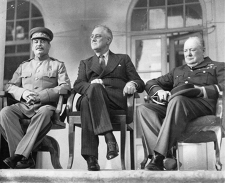
Allies of World War II
Wikipedia
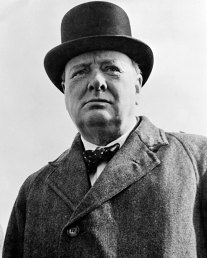
Winston Churchill
Wikipedia
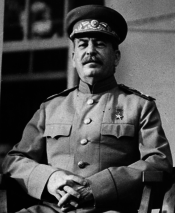
Joseph Stalin
Wikipedia
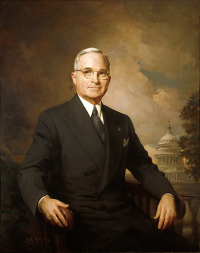
Harry S. Truman
Wikipedia
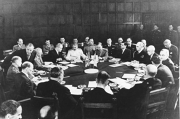
Potsdam Conference
Wikipedia
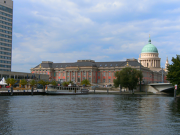
Potsdam
Wikipedia

Allies of World War II
Wikipedia

Winston Churchill
Wikipedia

Harry S. Truman
Wikipedia

Joseph Stalin
Wikipedia

Potsdam Conference
Wikipedia

Potsdam
Wikipedia

Germany
Wikipedia

Cecilienhof
Wikipedia
What Else Happened on July 17
Twelve people refused to sacrifice to Roman gods. That's it. That's what got them killed in Scillium, North Africa, on July 17, 180 AD. The proconsul Saturninus…
Twenty-three days. That's how long Damasus II held the papacy before dying in Palestrina, just outside Rome. Born Poppo of Brixen, he'd been handpicked by Emper…
The Crusaders weren't supposed to be there at all. They'd borrowed 85,000 silver marks from Venice to reach Egypt, couldn't pay, and got rerouted to Constantino…
A prince burned his nephew's palace to the ground and took the throne by force. Zhu Di had spent three years waging civil war against the Jianwen Emperor, his o…

Joan of Arc had lifted the siege of Orleans, opened a path through English-held territory, and personally accompanied the reluctant Dauphin Charles to Reims, wh…
Jean Bureau positioned 300 cannons in a fortified camp outside Castillon and waited. The English commander John Talbot, Earl of Shrewsbury, charged anyway—73 ye…
Talk to History
Have a conversation with historical figures who witnessed this era. Ask questions, explore perspectives, and bring history to life.