

Han Dynasty Rises: Liu Bang Crowned Emperor of China
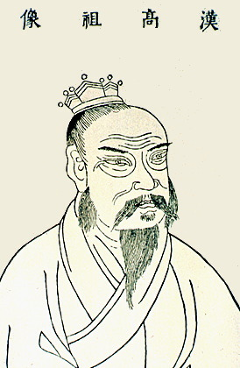
Liu Bang, a former village headman and petty criminal who had risen through the chaos of the Qin dynasty's collapse, defeated his rival Xiang Yu and crowned himself Emperor Gaozu at Luoyang in 202 BC, establishing the Han Dynasty that would govern China for over four centuries. Liu Bang was the first commoner to become emperor, proving that the Mandate of Heaven could pass to anyone regardless of birth. He consolidated power by gradually eliminating his former allies and replacing them with family members, establishing a pattern of centralized authority balanced by feudal kingdoms. His government adopted Confucian principles for administration while maintaining Legalist practices for enforcement. The Han Dynasty oversaw the opening of the Silk Road, the invention of paper, the establishment of the civil service examination system, and the creation of a cultural identity so enduring that ethnic Chinese still call themselves Han people today.
February 28, 202 BC
Key Figures & Places


What Else Happened on February 28
Liu Bang ascended the throne as Emperor Gaozu, unifying China after the chaotic collapse of the Qin dynasty. By establishing the Han dynasty, he institutionaliz…
Kavadh II ordered the execution of his father, Khosrau II, ending the reign of the last great Sasanian King of Kings. This regicide shattered the stability of t…
The Fourth Council of Constantinople closed after ten sessions. It had one job: decide whether Photius or Ignatius was the legitimate Patriarch of Constantinopl…
Ferdinand III of Castile secured the surrender of Jaén, dismantling the last major defensive stronghold protecting the Nasrid Kingdom of Granada. This victory f…

Hernan Cortes ordered the execution of Cuauhtemoc, the last Aztec emperor, on February 28, 1525, during an expedition through the jungles of Honduras. Cuauhtemo…
Cuauhtémoc held out for 93 days during the siege of Tenochtitlán. After capture, the Spanish tortured him — burned his feet trying to find gold. He didn't break…
Talk to History
Have a conversation with historical figures who witnessed this era. Ask questions, explore perspectives, and bring history to life.