

Tesla Lights Up St. Louis: The Birth of Radio
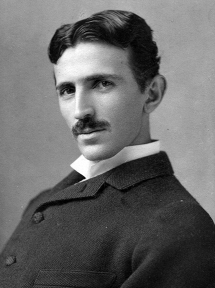
Nikola Tesla demonstrated wireless radio transmission to a St. Louis audience in 1893, showing that electromagnetic signals could carry information through the air without physical wires. His patents, filed between 1897 and 1900, described the fundamental components of radio: tuned circuits, antennas, and transmission methods that could send signals across vast distances. Guglielmo Marconi, who is often credited as radio's inventor, built his first successful devices using Tesla's oscillator patents without authorization. The US Patent Office initially awarded key radio patents to Tesla but reversed the decision in 1904, granting them to Marconi, whose business connections and lobbying efforts proved more effective than Tesla's. The Supreme Court restored Tesla's priority in 1943, months after his death in a New York hotel room, penniless. Tesla's wireless demonstration in St. Louis predated Marconi's famous 1901 transatlantic transmission by eight years, yet Marconi's name became synonymous with radio while Tesla's contributions were largely forgotten for decades.
March 1, 1893
133 years ago
Key Figures & Places





What Else Happened on March 1
The first military parade in Roman history was thrown by a man who'd just won a war caused by kidnapping his neighbors' daughters. Romulus needed wives for his …
Publicola earned his nickname—"friend of the people"—by tearing down his own house. After defeating Rome's last king at Silva Arsia, the consul faced a differen…
Sulla's soldiers were so starving they'd resorted to boiling leather belts and shoes, but the Athenians had it worse — they were eating grass from the city wall…
King Denis of Portugal officially chartered the University of Coimbra, anchoring the institution in the royal capital before its eventual permanent move to the …
Diocletian elevated his colleague Maximian to the rank of Caesar, splitting the Roman Empire into a formal diarchy. By sharing administrative and military burde…
Four men to rule an empire that one couldn't hold. Diocletian knew Rome was crumbling under its own weight—barbarian invasions on every frontier, twenty-six emp…
Talk to History
Have a conversation with historical figures who witnessed this era. Ask questions, explore perspectives, and bring history to life.