

UN Proposes Partition: Palestine Divided into Two States
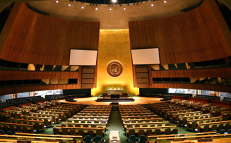
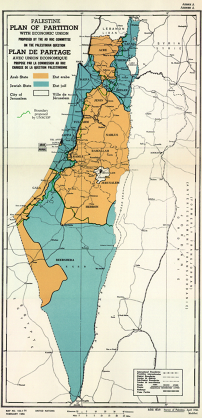
The United Nations General Assembly passed Resolution 181 on November 29, 1947, recommending the partition of the British Mandate of Palestine into separate Arab and Jewish states, with Jerusalem under international administration. The vote was 33 to 13 with 10 abstentions. Jewish leaders, including David Ben-Gurion, accepted the plan. Arab leaders unanimously rejected it, arguing it violated the principle of self-determination by imposing a state on a population that opposed it. Palestinians constituted roughly two-thirds of the mandate's population and owned the majority of the land. The resolution had no enforcement mechanism. Violence erupted immediately. By the time Israel declared independence on May 14, 1948, a civil war was already underway. Five Arab armies invaded the next day. The partition plan was never implemented as written.
November 29, 1947
79 years ago
Key Figures & Places

What Else Happened on November 29
Antioch suffered its second devastating earthquake in just two years, killing thousands and reducing most of the city's remaining structures to rubble. The once…
Chlothar I spent decades clawing his kingdom back together — reuniting the fractured Franks under one crown for the first time in a generation. Then he died at …
Li Shimin's forces crush Xue Rengao's rebellion at the Battle of Qianshuiyuan, shattering the last major obstacle to his rise. This decisive victory clears the …
He didn't come to crown a pope. He came to put one on trial. Pope Leo III had been accused of adultery and perjury by his own Roman clergy — serious enough that…
Muhammad ibn Sulayman al-Katib crushed the Qarmatian forces at the Battle of Hama, halting their expansion into the Levant. This victory secured the Abbasid Cal…
A massive earthquake on November 29, 1114, shattered Crusader strongholds across the Levant, leveling key cities like Antioch, Mamistra, Marash, and Edessa. Thi…
Talk to History
Have a conversation with historical figures who witnessed this era. Ask questions, explore perspectives, and bring history to life.