

Sakharov Wins Nobel: Voice Against Nuclear Arms
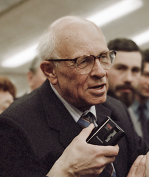
Andrei Sakharov designed the Soviet hydrogen bomb in the 1950s, then spent the rest of his life trying to stop anyone from using it. The physicist became the Soviet Union's most prominent dissident, publicly opposing nuclear testing, defending political prisoners, and calling for democratic reforms. The Nobel Committee awarded him the 1975 Peace Prize on October 9 for his 'fearless personal commitment in upholding the fundamental principles of peace.' The Soviet government refused to let him travel to Oslo. His wife Elena Bonner accepted on his behalf. In 1980, the Kremlin exiled Sakharov to the closed city of Gorky, where he was kept under constant KGB surveillance for six years. Gorbachev personally called him in December 1986 to invite him back to Moscow. Sakharov died three years later, still fighting.
October 9, 1975
51 years ago
Key Figures & Places

What Else Happened on October 9
Pepin the Short died in 768 and split his kingdom between his two sons. Carloman got the center. Charlemagne got a crescent of territory wrapping around it — ha…

Leif Erikson sailed west from Greenland around 1000 AD and established a Norse settlement at a place he called Vinland. The sagas describe three areas he explor…
James I of Aragon captured the city of Valencia from the Almohad Caliphate, ending five centuries of Islamic rule in the region. By establishing the Kingdom of …
Alfonso X of Castile captured the strategic city of Jerez, ending over five centuries of Muslim rule in the region. This victory dismantled a key stronghold of …
The Prague astronomical clock was first mentioned in 1410, making it the oldest working clock of its kind. It displays Babylonian time, Old Czech time, German t…
King Sejong published hangul, an alphabet designed from scratch for Korean. The writing system before that was Chinese characters, which took years to master an…
Talk to History
Have a conversation with historical figures who witnessed this era. Ask questions, explore perspectives, and bring history to life.