

Dayton Accords Signed: Balkan Peace After War
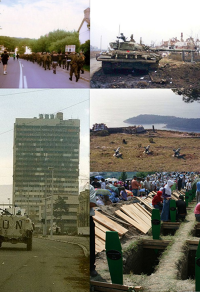
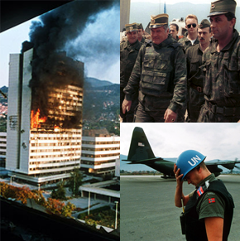
The presidents of Bosnia, Croatia, and Serbia initialed the Dayton Accords on November 21, 1995, at Wright-Patterson Air Force Base in Ohio, ending three and a half years of war that killed roughly 100,000 people and displaced over two million in the former Yugoslavia. Richard Holbrooke, the chief American negotiator, confined the three leaders in the same building for 21 days until they agreed. The accords divided Bosnia into two entities: the Bosniak-Croat Federation and the Republika Srpska, governed by a rotating three-member presidency. NATO deployed 60,000 troops to enforce the peace. The agreement stopped the killing but preserved ethnic divisions and created one of the world's most complex governance structures. Bosnia remains divided along ethnic lines, and the Dayton framework is widely criticized as unsustainable.
November 21, 1995
31 years ago
Key Figures & Places

What Else Happened on November 21
Judas Maccabeus cleanses and rededicates the Jerusalem Temple after years of desecration, sparking a three-day celebration that evolved into the annual festival…

Judas Maccabeus led his fighters into Jerusalem and rededicated the Second Temple on the 25th of Kislev, 164 BCE, three years after the Seleucid king Antiochus …
He served 43 days. That's it. Pope Anterus became the nineteenth pope in 235 AD and was dead before anyone could blink — martyred under Emperor Maximinus Thrax'…
Edward wasn't even in England. He was thousands of miles away, crusading in the Holy Land, when his father Henry III died and the crown became his. No coronatio…
Bagrat V watched his capital burn. Timur hadn't just raided Tbilisi — he'd humiliated a king who'd ruled for decades, dragging him back to Samarkand in chains. …
Forty-one male passengers aboard the Mayflower established a self-governing body by signing a compact to ensure the survival of their fledgling colony. This doc…
Talk to History
Have a conversation with historical figures who witnessed this era. Ask questions, explore perspectives, and bring history to life.