

Mendeleev Presents the Periodic Table: Chemistry Gets Organized
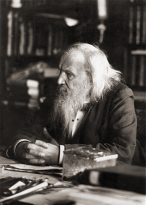
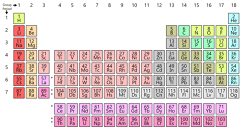
He'd been playing chemical solitaire for days, writing each element's properties on individual cards and shuffling them obsessively. Dmitri Mendeleev finally cracked the pattern on February 17, 1869, presenting his periodic table to the Russian Chemical Society with a wild claim: there were gaps. Elements nobody had discovered yet. He left blank spaces for gallium, scandium, and germanium, predicting their exact weights and properties years before chemists found them. The first—gallium—turned up in 1875, matching his predictions so precisely that skeptics had to admit the Siberian professor wasn't guessing. But here's the thing: Mendeleev arranged elements by atomic weight, which was actually wrong. Modern tables use atomic number instead. His system worked anyway, organizing nature's building blocks despite being built on faulty math—like stumbling onto the right address with the wrong map.
March 6, 1869
157 years ago
Key Figures & Places
What Else Happened on March 6

Augustus assumed the title of Pontifex Maximus in 12 BC, merging supreme religious authority with imperial power to cement his control over Rome's spiritual lif…
النبي محمد يُلقي خطبة حجة الوداع.
exécution de quarante-deux martyrs après une expédition en Amorium.
Seven years in a dungeon, and the Caliph still thought they'd break. The 42 Byzantine officers captured when Amorium fell in 838 weren't tortured — they were gi…
Nikephoros Phokas shattered the Emirate of Crete by capturing its capital, Chandax, after a grueling ten-month siege. This victory dismantled the base for Medit…
victoire byzantine lors du siège de Chandax, ce qui met fin à l'émirat de Crète.
Talk to History
Have a conversation with historical figures who witnessed this era. Ask questions, explore perspectives, and bring history to life.