

Ponce de León Lands in Florida: Spain Claims New World
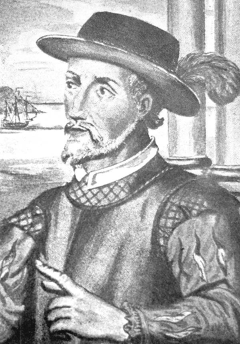
Juan Ponce de Leon made landfall near present-day St. Augustine on April 2, 1513, naming the land "La Florida" because he arrived during Pascua Florida, the Spanish Feast of Flowers celebrated at Easter. The fountain of youth legend was attached to his name only after his death, by a rival chronicler named Gonzalo Fernandez de Oviedo. Ponce de Leon was actually seeking new lands to govern and exploit after being removed as governor of Puerto Rico. The Timucua and Calusa peoples he encountered were sophisticated coastal societies with complex trade networks. His second expedition in 1521 ended when Calusa warriors wounded him with a poison arrow near Charlotte Harbor. He died in Havana shortly after.
April 2, 1513
513 years ago
Key Figures & Places


What Else Happened on April 2
Mehmed II positioned his massive bronze cannons before the walls of Constantinople, initiating a siege that shattered the final remnants of the Byzantine Empire…
Juan Ponce de León waded ashore on the Florida coast, claiming the peninsula for the Spanish Crown under the name La Florida. This expedition initiated centurie…
He thought he'd found an island full of gold and youth springs, not a swampy peninsula. Ponce de León's men suffered scurvy and heatstroke while mapping a land …
J. S. Bach premiered his cantata "Bleib bei uns, denn es will Abend werden" (BWV 6) in Leipzig on Easter Monday, weaving a luminous oboe melody through a medita…
Commodore William James shattered the perceived invincibility of the Maratha Navy by capturing the fortress of Suvarnadurg with a small squadron. This victory d…

The Coinage Act of 1792 did more than create the US Mint. It established a decimal currency system based on the Spanish dollar, defined precise silver and gold …
Talk to History
Have a conversation with historical figures who witnessed this era. Ask questions, explore perspectives, and bring history to life.