

Beethoven Premieres Third Symphony: The Eroica Arrives
Beethoven's Symphony No. 3 in E-flat major, the "Eroica," premiered on April 7, 1805, at the Theater an der Wien in Vienna, and nothing in orchestral music was the same afterward. At nearly 50 minutes, it was roughly twice the length of any previous symphony. The first movement alone lasted longer than many complete symphonies by Haydn or Mozart. The emotional range was unprecedented: the opening chords exploded with an energy that announced a new aesthetic, and the second movement was a funeral march of devastating power. Audiences were bewildered. Some walked out. Those who stayed witnessed the birth of Romantic music. Beethoven had originally dedicated the symphony to Napoleon Bonaparte, whom he admired as the embodiment of revolutionary ideals and meritocratic achievement. The story of Beethoven scratching Napoleon's name from the title page upon learning that Napoleon had crowned himself Emperor in December 1804 is among the most famous anecdotes in musical history. Whether it happened exactly as Ferdinand Ries described it decades later is uncertain, but the title page of the manuscript does show a violently scratched-out dedication, and Beethoven renamed the work "Sinfonia Eroica, composed to celebrate the memory of a great man." The symphony broke rules that composers had followed for decades. The first movement presented its main theme and then systematically dismantled it, subjecting the musical material to a process of fragmentation and reconstruction that was closer to dramatic narrative than to the balanced formal architecture of classical style. The development section was twice the expected length and introduced a new theme, something that simply was not done. The funeral march of the second movement deployed a grief so monumental that it elevated the symphony from entertainment to existential statement. Contemporary reactions were divided. One critic wrote that the symphony "loses itself in lawlessness." Another called it "a daring and wild fantasia." The length alone was physically demanding for orchestral musicians accustomed to shorter works. Beethoven's patron, Prince Lobkowitz, hosted private performances to prepare audiences for the public premiere, which suggests that even Beethoven's supporters recognized the work needed introduction. The Eroica expanded what music could contain and what audiences could expect from a symphonic experience, and every symphony written since exists in its shadow.
April 7, 1805
221 years ago
Key Figures & Places
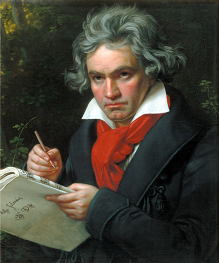
Ludwig van Beethoven
Wikipedia
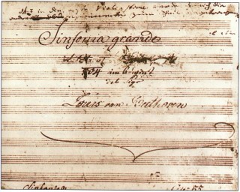
Symphony No. 3 (Beethoven)
Wikipedia
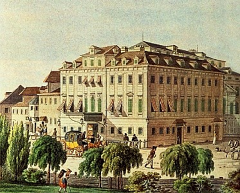
Theater an der Wien
Wikipedia
Vienna
Wikipedia

Ludwig van Beethoven
Wikipedia

Symphony No. 3 (Beethoven)
Wikipedia

Theater an der Wien
Wikipedia

Vienna
Wikipedia

Concerto pour piano no 24 de Mozart
Wikipedia

Catalogue Köchel
Wikipedia

Burgtheater
Wikipedia

Missa solemnis (Beethoven)
Wikipedia
Oratorio
Wikipedia

Saint Petersburg
Wikipedia
What Else Happened on April 7

Attila the Hun sacked the Roman city of Metz on April 7, 451 AD, burning it so thoroughly that only a single chapel reportedly survived the destruction. The att…
Attila the Hun razed the city of Metz, slaughtering its inhabitants and incinerating the structures in a brutal display of force. This devastation forced the Ro…

Emperor Justinian I commissioned the Corpus Juris Civilis in 529 AD, ordering the jurist Tribonian to compile, organize, and reconcile over a thousand years of …
King Uneh Chan of Calakmul shattered the defenses of Palenque, plunging the rival city-state into a period of political chaos and architectural stagnation. This…
She didn't just wear a crown; she marched into London with her brother-in-law's head in a basket. In 1141, after crushing King Stephen at Lincoln, Matilda decla…
Charles IV established the University of Prague, creating the first institution of higher learning in Central Europe. By granting students and faculty legal aut…
Talk to History
Have a conversation with historical figures who witnessed this era. Ask questions, explore perspectives, and bring history to life.