

Tsar Liberator Assassinated: Alexander II Falls to Bomb
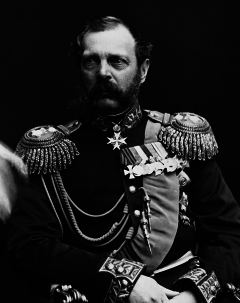
A bomb thrown by Ignacy Hryniewiecki exploded at Tsar Alexander II's feet on the Catherine Canal embankment in St. Petersburg on March 13, 1881, fatally wounding the emperor who had liberated Russia's serfs two decades earlier. It was the seventh assassination attempt against him. The first bomb, thrown by Nikolai Rysakov moments earlier, had damaged the imperial carriage and killed a bystander. Alexander, against his guards' urging, stepped out to check on the wounded. Hryniewiecki threw the second bomb from just three feet away, killing himself and mortally wounding the Tsar, who died at the Winter Palace ninety minutes later. The assassins belonged to Narodnaya Volya (People's Will), a revolutionary organization that believed killing the Tsar would trigger a popular uprising. It did the opposite. Alexander's son Alexander III reversed every liberal reform and imposed repressive authoritarian rule. The assassination proved that political violence rarely achieves its intended political goals and often produces exactly the opposite outcome.
March 13, 1881
145 years ago
Key Figures & Places

What Else Happened on March 13
The Praetorian Guard dragged both bodies through Rome's streets before dumping them in the Tiber River. Elagabalus was eighteen when soldiers murdered him in th…
The Roman Senate chose him — not the clergy. Felix III became pope in 483 because Gothic King Odoacer, who'd deposed the last Western Roman emperor seven years …

A small Muslim force of roughly 313 men under Muhammad's command defeated a Meccan army of approximately 1,000 at the wells of Badr on March 13, 624 CE. The bat…
Three hundred thirteen men faced a thousand. Muhammad's followers were outnumbered three-to-one at Badr's wells, seventy miles from Medina, but they'd seized th…
The remains of Saint Nicephorus returned to Constantinople, finding their final resting place in the Church of the Holy Apostles. This ceremonial reburial signa…
Cardinal Gregorio Conti assumed the title of Victor IV, challenging the legitimacy of Pope Innocent II after the death of Anacletus II. This schism deepened the…
Talk to History
Have a conversation with historical figures who witnessed this era. Ask questions, explore perspectives, and bring history to life.