

Daguerre Captures First Image: Photography Born
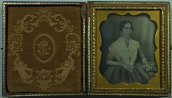
Louis Daguerre had spent years trying to fix images onto copper plates coated with silver iodide, and when the French Academy of Sciences unveiled his process in 1839, the world suddenly had a way to freeze time. The French government purchased the patent and released it as a gift to humanity, though Daguerre shrewdly retained his English patent. Within months, portrait studios appeared across Europe and America. Sitting for a daguerreotype required holding perfectly still for up to fifteen minutes in bright sunlight, which is why nobody smiled in early photographs. The process democratized portraiture overnight. Before Daguerre, only the wealthy could commission painted likenesses. After him, a factory worker could sit for a portrait that cost a fraction of an artist's fee, fundamentally changing how humanity preserved memory.
January 9, 1839
187 years ago
Key Figures & Places



What Else Happened on January 9
A classroom without walls. Where kids design their own learning paths and adults are more like collaborative guides than lecturers. Mont-Libre launched with jus…
Aelia Eudoxia ascended the throne as Augusta of the Eastern Roman Empire, wielding unprecedented political influence for a woman of her era. She leveraged this …

Dowager Empress Verina orchestrated a riot in Constantinople that forced her son-in-law Emperor Zeno to flee the capital, aiming to install her lover Patricius …
He ran in the night, silk imperial robes bunched in his fists. Zeno—an Isaurian outsider who'd clawed his way to the Byzantine throne—suddenly found himself a r…

Basiliscus had spent two decades in the shadow of Emperor Leo I before seizing the Byzantine throne in a palace coup that sent Emperor Zeno fleeing to his nativ…
King Erwig wasn't content with mere political power—he wanted total religious conformity. In a brutal legislative session, he forced Jews to convert or face bru…
Talk to History
Have a conversation with historical figures who witnessed this era. Ask questions, explore perspectives, and bring history to life.