

Bloody Sunday: Imperial Guards Fire on Petitioners
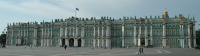
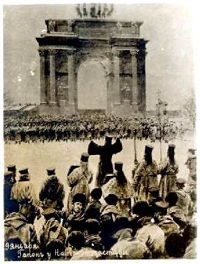
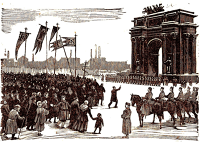
Father Gapon led over 100,000 workers and their families toward the Winter Palace carrying icons and portraits of the Tsar, petitioning for better wages and an eight-hour workday. They believed Nicholas II would hear them. Imperial Guard soldiers opened fire without warning, killing estimates ranging from several hundred to over a thousand people across multiple locations in St. Petersburg. The massacre obliterated the deeply held Russian belief that the Tsar was a benevolent father figure who would protect his people if only he knew their suffering. Strikes erupted across the empire within days, and the mutiny aboard the battleship Potemkin five months later showed the unrest had infected the military. Nicholas was forced to issue the October Manifesto creating Russia's first parliament, but the damage was irreversible. Twelve years later, his dynasty collapsed entirely.
January 9, 1905
121 years ago
Key Figures & Places


What Else Happened on January 9
A classroom without walls. Where kids design their own learning paths and adults are more like collaborative guides than lecturers. Mont-Libre launched with jus…
Aelia Eudoxia ascended the throne as Augusta of the Eastern Roman Empire, wielding unprecedented political influence for a woman of her era. She leveraged this …

Dowager Empress Verina orchestrated a riot in Constantinople that forced her son-in-law Emperor Zeno to flee the capital, aiming to install her lover Patricius …
He ran in the night, silk imperial robes bunched in his fists. Zeno—an Isaurian outsider who'd clawed his way to the Byzantine throne—suddenly found himself a r…

Basiliscus had spent two decades in the shadow of Emperor Leo I before seizing the Byzantine throne in a palace coup that sent Emperor Zeno fleeing to his nativ…
King Erwig wasn't content with mere political power—he wanted total religious conformity. In a brutal legislative session, he forced Jews to convert or face bru…
Talk to History
Have a conversation with historical figures who witnessed this era. Ask questions, explore perspectives, and bring history to life.