

Chaucer Notes April Fools: A Tradition of Jest Begins
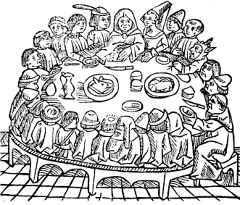
Geoffrey Chaucer's Canterbury Tales contains a passage in the Nun's Priest's Tale referencing "syn March bigan thritty dayes and two," which scholars have long debated as the earliest literary allusion to April foolery. Whether Chaucer intended the joke or scribes mangled the date, the association stuck. By the 1500s, French "poisson d'Avril" pranks were common, and in 1698 Londoners received printed invitations to watch the annual "washing of the lions" at the Tower of London. Hundreds showed up. There were no lions to wash. The tradition of organized public hoaxes on April 1 had become self-sustaining, fed by the human appetite for believing something too absurd to question.
April 1, 1392
634 years ago
Key Figures & Places


What Else Happened on April 1
He handed over half an empire to his friend Maximian, splitting Rome's control between East and West in 286. That wasn't just a new boss; it was a desperate gam…
A four-year-old named Jin Chengdi sat on a throne that felt too big, his small hands gripping wood while eunuchs whispered in his ear. His father, Mingdi, had d…
Soldiers dragged Majorian from the mud of Placentia and shouted his name until the sun set. He wasn't a senator or a general's son; he was just a common soldier…
Justinian I ascended to co-emperor alongside his uncle, Justin I, securing a transition that consolidated imperial power in Constantinople. This partnership all…
She sat on the throne for exactly one day, wearing her father's crown while her mother, Empress Dowager Hu, pretended the world hadn't just exploded. In 528, Yu…
Three days of looting turned Constantinople's grand streets into a chaotic river of stolen silver and weeping merchants before Alexios I Komnenos finally took h…
Talk to History
Have a conversation with historical figures who witnessed this era. Ask questions, explore perspectives, and bring history to life.