

Galileo's Inquest Begins: The Church Confronts Science
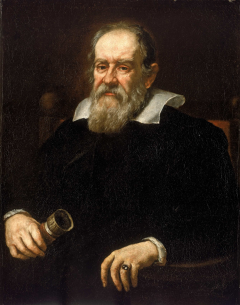
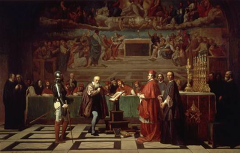
The Roman Inquisition summoned Galileo Galilei on April 12, 1633, to answer charges of heresy for defending the Copernican heliocentric model in his Dialogue Concerning the Two Chief World Systems. Pope Urban VIII, once a supporter, felt personally mocked by a character in the book. Galileo was 69, ill, and under no illusion about the stakes. After months of interrogation, he formally abjured heliocentrism on June 22, reportedly murmuring "Eppur si muove" (And yet it moves), though this is likely apocryphal. He spent the remaining eight years of his life under house arrest in Arcetri, where he went blind and wrote his greatest scientific work, Discourses on Two New Sciences. The Church formally acknowledged his correctness in 1992.
April 12, 1633
393 years ago
Key Figures & Places
What Else Happened on April 12
A Numidian legion turned its spears against Rome's own governors, slaughtering Gordian II in the streets of Carthage. His father, Gordian I, couldn't bear the n…
Shapur I ascended to the Sasanian throne as co-emperor alongside his father, Ardashir I, consolidating power within the young dynasty. This transition ensured a…
He stepped onto the throne at Ctesiphon not with a whisper, but with a roar that shook the Persian Gulf coast. Shapur I didn't just inherit a crown; he inherite…
The Eastern Emperor sent a warship loaded with gold to Rome, not peace. Anthemius accepted this bribe and climbed into a crumbling throne he could barely afford…
King Edwin of Northumbria accepted baptism from Bishop Paulinus on Easter Sunday, officially aligning his powerful Anglo-Saxon kingdom with the Roman Church. Th…
Duke Oldřich seized the Bohemian throne by ambushing and blinding his brother, Jaromír, forcing the deposed ruler into exile in Poland. This brutal consolidatio…
Talk to History
Have a conversation with historical figures who witnessed this era. Ask questions, explore perspectives, and bring history to life.