

Japan Invades Tulagi: Coral Sea Battle Begins
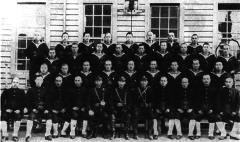
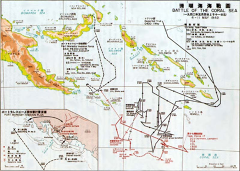
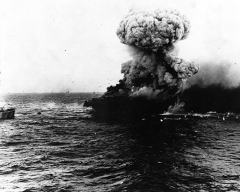
Japanese naval troops seized Tulagi in the Solomon Islands on May 3, 1942, as part of Operation Mo, the plan to capture Port Moresby in New Guinea and isolate Australia from American supply lines. American codebreakers at Station Hypo in Hawaii had decrypted enough Japanese naval communications to anticipate the operation. Admiral Chester Nimitz dispatched the carriers Lexington and Yorktown to intercept. The resulting Battle of the Coral Sea on May 4-8 was the first naval battle in history where the opposing ships never came within visual range of each other, fighting entirely through carrier aircraft. The US lost the Lexington but damaged the carrier Shokaku and depleted Zuikaku's air group, preventing both from participating in the crucial Battle of Midway a month later.
May 3, 1942
84 years ago
Key Figures & Places
United States
Wikipedia
Australia
Wikipedia
World War II
Wikipedia
Empire of Japan
Wikipedia
Invasion of Tulagi (May 1942)
Wikipedia
Solomon Islands
Wikipedia
Operation Mo
Wikipedia
Battle of the Coral Sea
Wikipedia
1942
Wikipedia

World War II
Wikipedia

Japanese
Wikipedia

Invasion of Tulagi (May 1942)
Wikipedia

Solomon Islands
Wikipedia

Operation Mo
Wikipedia

Battle of the Coral Sea
Wikipedia

Extermination camp
Wikipedia

SS Cap Arcona
Wikipedia

SS Thielbek (1940)
Wikipedia

Neustädter Bucht
Wikipedia

SS Deutschland (1923)
Wikipedia

Bay of Lübeck
Wikipedia

Pacific War
Wikipedia

Tulagi
Wikipedia

Germany
Wikipedia

Royal Air Force
Wikipedia
What Else Happened on May 3
Ethnic violence erupted between the Meitei and Kuki Zo communities in Manipur, triggered by disputes over land rights and affirmative action status. This confli…
Bird Jaguar IV ascended the throne of Yaxchilan, ending a ten-year interregnum that had paralyzed the city-state’s leadership. By aggressively commissioning mon…
The ground shook three times in 24 hours, but it was the third quake that dropped Rhodes into the sea. Thirty thousand people died when the city's limestone bui…
The monarch took a new name, João, and ordered his entire court to follow him into baptism. Nkuwu Nzinga of Kongo wasn't conquered—he invited the Portuguese pri…
Columbus had already mapped 700 miles of Cuban coastline when his crew spotted mountains rising from turquoise water. May 5, 1494. He named it Santiago, convinc…
The French called it "Matanzas" too—the same name the Spanish had used for their massacre site, which meant "slaughters." Dominique de Gourgues led 150 Frenchme…
Talk to History
Have a conversation with historical figures who witnessed this era. Ask questions, explore perspectives, and bring history to life.