

Hoover Takes FBI Helm: Five Decades of Power
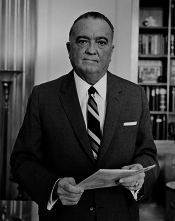
J. Edgar Hoover was appointed director of the Bureau of Investigation (renamed the Federal Bureau of Investigation in 1935) on May 10, 1924, at age 29. He immediately professionalized the agency, requiring agents to have law or accounting degrees and establishing fingerprint files, forensic laboratories, and the FBI National Academy for training. He also built a vast domestic surveillance apparatus, maintaining secret files on politicians, civil rights leaders, journalists, and celebrities. The FBI's COINTELPRO operations targeted Martin Luther King Jr., the Black Panthers, the American Indian Movement, and antiwar groups through illegal wiretapping, infiltration, and disinformation campaigns. Hoover served 48 years as director, through eight presidents, dying in office on May 2, 1972. Congress subsequently limited future directors to ten-year terms.
May 10, 1924
102 years ago
Key Figures & Places



What Else Happened on May 10
The Han astronomers didn't call it a sunspot. They recorded a black vapor within the sun—specific enough to measure its position, detailed enough to date: 28 BC…

The Third Wall was unfinished—still under construction when Titus arrived with four legions and 80,000 men. Jerusalem's defenders had been arguing for months ab…
Scottish nobles gathered at Norham to acknowledge Edward I as their feudal overlord, hoping he would settle the chaotic succession crisis following the death of…
Temür Khan ascended the throne as the second Yuan emperor, securing his power after a brief succession struggle following Kublai Khan’s death. His reign stabili…
Amerigo Vespucci departed Cádiz on his first expedition across the Atlantic, aiming to map the coastlines of the Americas. His subsequent letters describing the…
Columbus sailed past two small Caribbean islands and couldn't stop talking about the turtles. Thousands of them. Maybe tens of thousands crawling across beaches…
Talk to History
Have a conversation with historical figures who witnessed this era. Ask questions, explore perspectives, and bring history to life.