

Spanish Armada Defeated: England's Naval Supremacy Secured
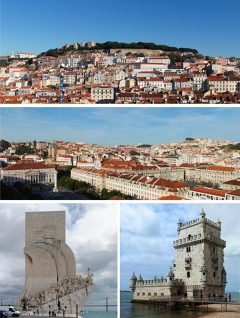
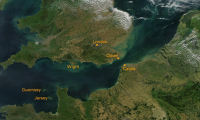
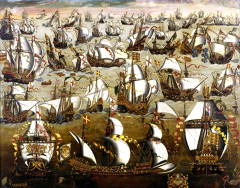
The popular narrative of the Spanish Armada's defeat in 1588 oversimplifies what was actually a drawn-out campaign. The Armada sailed from Lisbon on May 28, 1588, with 130 ships carrying 30,000 men. The plan was to escort the Duke of Parma's army across the English Channel from the Netherlands. English fireships scattered the Armada's formation at Gravelines, and a running battle up the Channel prevented the rendezvous with Parma. The Armada was forced to return to Spain by sailing north around Scotland and Ireland, where autumn storms wrecked dozens of ships on the rocky coasts. Approximately 15,000 Spaniards died. The defeat ended Spain's plan to invade England but did not immediately end its naval power; Spain rebuilt its fleet and remained a formidable maritime force for decades.
May 28, 1588
438 years ago
Key Figures & Places
What Else Happened on May 28
The sun went dark mid-battle, and both armies dropped their weapons. Thales of Miletus had predicted it—the first recorded solar eclipse forecast in history, Ma…
Li Shimin had 3,500 cavalry. Dou Jiande brought 100,000 men to Hulao Pass in Henan. The numbers didn't matter. Shimin's father had just founded the Tang Dynasty…
They murdered the inquisitors in their sleep. William Arnaud and eleven companions were hunting heretics in Languedoc when Cathars stormed their lodgings at Avi…
They called it "everlasting." James IV of Scotland married Margaret Tudor in 1503, her father Henry VII footing the bill for a wedding that cost more than Scotl…
Cranmer didn't even have the authority yet—his papal bulls confirming him as Archbishop wouldn't arrive for another two months. But Henry needed this marriage l…
The supply lists alone took three months to compile: 130 ships needed 300,000 pounds of biscuits, 600,000 pounds of salt pork, and fourteen million gallons of w…
Talk to History
Have a conversation with historical figures who witnessed this era. Ask questions, explore perspectives, and bring history to life.