

Wallace Stands in Schoolhouse Door: Desegregation Blocked
Alabama Governor George Wallace physically blocked the entrance to Foster Auditorium at the University of Alabama on June 11, 1963, fulfilling his inaugural pledge of "segregation now, segregation tomorrow, segregation forever." He stepped aside only when Deputy Attorney General Nicholas Katzenbach, backed by federalized Alabama National Guard troops under General Henry Graham, ordered him to stand down. Vivian Malone and James Hood registered without incident after Wallace's theatrical departure. That evening, President Kennedy delivered a nationally televised address calling civil rights "a moral issue" and announcing he would send comprehensive civil rights legislation to Congress. Hours later, NAACP field secretary Medgar Evers was assassinated in his driveway in Jackson, Mississippi. Kennedy's civil rights bill became the Civil Rights Act of 1964.
June 11, 1963
63 years ago
Key Figures & Places

University of Alabama
Wikipedia
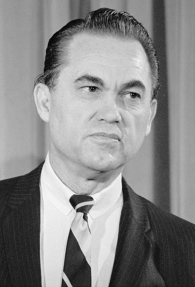
George Wallace
Wikipedia
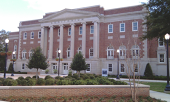
Foster Auditorium
Wikipedia
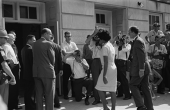
Vivian Malone
Wikipedia
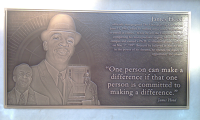
James Hood
Wikipedia
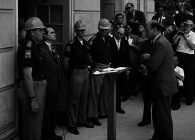
Stand in the Schoolhouse Door
Wikipedia

National Guard
Wikipedia

Civil rights movement
Wikipedia

List of governors of Alabama
Wikipedia

Alabama
Wikipedia

George Wallace
Wikipedia

Stand in the Schoolhouse Door
Wikipedia

Foster Auditorium
Wikipedia

University of Alabama
Wikipedia

Vivian Malone Jones
Wikipedia

James Hood
Wikipedia

National Guard
Wikipedia

Racial segregation
Wikipedia

Nicholas Katzenbach
Wikipedia
What Else Happened on June 11

The ancient Greek scholar Eratosthenes calculated that the city of Troy fell in 1184 BC, a date that has become the conventional dating for the event described …

Alexander the Great died in the palace of Nebuchadnezzar II in Babylon on June 10 or 11, 323 BC, at the age of 32. The cause of death has been debated for over …
A Roman army, cut off and dying of thirst in Moravia, was saved by a thunderstorm. That's the official story. But Marcus Aurelius, a Stoic philosopher who spent…
Tang China was paying ransom for its own people — prisoners taken during the chaos of a civil war that had ended years earlier. Emperor Taizong sent envoys nort…
Eighty thousand people came home because of a gift basket. Emperor Taizong didn't send armies north to the Xueyantuo — he sent diplomats carrying gold and silk,…
Two rival empires showed up at the same door on the same day and nearly started a war over who knocked first. The Abbasid Arabs and Uyghur Turks had both travel…
Talk to History
Have a conversation with historical figures who witnessed this era. Ask questions, explore perspectives, and bring history to life.