

Rani Lakshmibai Falls in Battle: India's Warrior Queen
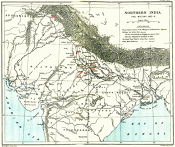
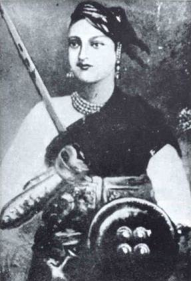
Rani Lakshmibai of Jhansi was killed in battle near Gwalior on June 17, 1858, fighting on horseback against British forces during the Indian Rebellion of 1857. She was twenty-nine years old. British General Hugh Rose, who led the campaign against her, reportedly said she was "the most dangerous of all the rebel leaders" and the bravest person his troops had encountered in the entire rebellion. Lakshmibai became Rani of Jhansi through marriage to Maharaja Gangadhar Rao in 1842. When the maharaja died in 1853, the British East India Company refused to recognize their adopted son as heir and annexed Jhansi under the Doctrine of Lapse, a policy that absorbed Indian states lacking a direct male heir into British territory. Lakshmibai attempted to negotiate, petitioning British authorities to reverse the annexation. Her appeals were rejected. When the broader rebellion erupted in 1857, she initially tried to maintain order in Jhansi, but the murder of British officers in the city by sepoys forced her into the rebel camp. Lakshmibai proved a capable military leader. She organized the defense of Jhansi against a British siege in March-April 1858, personally commanding troops on the walls until the city fell. She escaped through British lines at night on horseback, carrying her adopted son on her back, and joined rebel forces under Tatya Tope. Together they captured the strategically important fortress at Gwalior in early June. The British counterattack came quickly. Rose's forces engaged the rebels outside Gwalior, and Lakshmibai led a cavalry charge in the fighting. She was struck by a saber or gunshot, accounts vary, and died on the battlefield. British soldiers reportedly found her dressed in cavalry uniform. Lakshmibai became the most celebrated figure of the 1857 rebellion and remains one of India's most revered national heroes, a symbol of resistance to colonial rule.
June 17, 1858
168 years ago
Key Figures & Places


What Else Happened on June 17
A pope was arrested for refusing to say Christ had only one will. That was the crime. Martin I had convened the Lateran Council in 648, gathering 105 bishops to…
King Louis IX ordered the public incineration of twenty-four carriage loads of Talmudic manuscripts in Paris, following a rigged trial against Jewish scholars. …
Finland's most important medieval church almost didn't happen in Turku at all. Bishop Magnus I had been working for decades to establish a permanent cathedral f…
One woman ruled three kingdoms without ever holding the title of queen. Margaret I engineered the Kalmar Union in 1397, binding Denmark, Norway, and Sweden unde…
Vlad III rode straight into the Ottoman camp with 7,000 men at night, hunting one specific person: Mehmed II, the conqueror of Constantinople. He got close. Not…
King Henry VII’s royal army crushed the Cornish rebels at Deptford Bridge, ending their march on London. By dismantling this tax-driven uprising, the King secur…
Talk to History
Have a conversation with historical figures who witnessed this era. Ask questions, explore perspectives, and bring history to life.