

Bruce Wins Bannockburn: Scotland Secures Independence
Robert the Bruce's Scottish army defeated a much larger English force under Edward II at the Battle of Bannockburn on June 23-24, 1314. Bruce chose his ground carefully, positioning his 6,000 men on boggy terrain near the Bannock Burn where English cavalry and archers could not deploy effectively. Scottish schiltron formations, dense hedgehog clusters of spearmen, repelled repeated English cavalry charges. When the English army broke, hundreds drowned trying to cross the burn in their heavy armor. Edward II barely escaped capture. The victory secured Scottish independence and Bruce's throne, though England did not formally recognize Scottish sovereignty until the Treaty of Edinburgh-Northampton in 1328. Bannockburn is commemorated annually as one of the defining moments of Scottish national identity.
June 24, 1314
712 years ago
Key Figures & Places
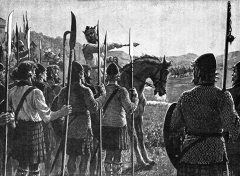
First War of Scottish Independence
Wikipedia
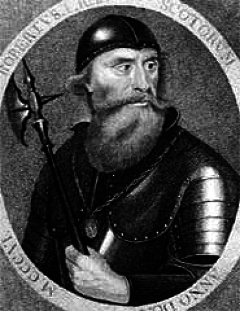
Robert the Bruce
Wikipedia
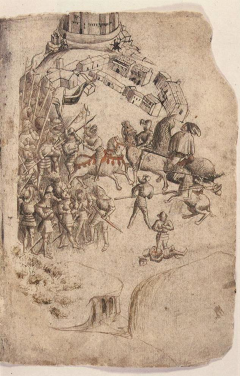
Battle of Bannockburn
Wikipedia
Scottish people
Wikipedia

First War of Scottish Independence
Wikipedia

Battle of Bannockburn
Wikipedia

Robert the Bruce
Wikipedia
Scotland
Wikipedia

Wars of Scottish Independence
Wikipedia

his father the king
Wikipedia
English people
Wikipedia
What Else Happened on June 24
Mursili II marched his Hittite army into the highlands to crush the Kingdom of Azzi-Hayasa, ending years of border skirmishes that threatened his northern front…
Lake Bracciano had fed Rome's right bank for centuries through crude channels. Trajan fixed that in 109 AD with 40 kilometers of engineered stone, delivering cl…
Glycerius had been emperor for less than a year when Julius Nepos sailed from Dalmatia with enough soldiers to make the point without a battle. No siege. No blo…
The largest battle in Irish history was decided by a king who may have lost his mind before it even started. Domnall II, High King of Ireland, faced a coalition…
Three longships appeared in the Loire River on a Sunday — the feast day of St. John the Baptist, June 24, 843. Terrible timing for Nantes. The cathedral was pac…
Poland didn't have an army — it had a duke with something to prove. Mieszko I lured the Saxon forces of Hodo deep into a forest trap near Cedynia in 972, lettin…
Talk to History
Have a conversation with historical figures who witnessed this era. Ask questions, explore perspectives, and bring history to life.