

Amistad Rebels Seize Ship: A Fight for Freedom
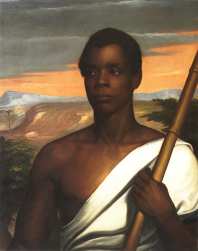
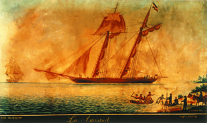
Fifty-three West Africans led by a rice farmer named Sengbe Pieh, known to Americans as Joseph Cinque, broke free from their chains aboard the slave ship La Amistad off the coast of Cuba and seized the vessel. They killed the captain and cook but spared two crew members, ordering them to sail east toward Africa. The crew secretly navigated north instead, and the ship was intercepted off Long Island. The resulting trial traveled all the way to the Supreme Court, where former President John Quincy Adams argued for the Africans' freedom. The 1841 ruling declared them free people who had been kidnapped, not property, establishing a landmark precedent that energized the abolitionist movement across the Atlantic.
July 2, 1839
187 years ago
Key Figures & Places
What Else Happened on July 2
Valentinian III turned eighteen in 437, old enough to rule the Western Roman Empire alone. His mother Galla Placidia officially stepped back from her fifteen-ye…
Two brothers died in an ambush at the palace's north gate, arrows finding their marks before they could draw swords. Li Shimin killed them himself on July 2, 62…
Six bodies, three generations, one hillside. Emperor Zhongzong moved them all to Mount Liang in 706—his father Gaozong, his mother Wu Zetian (China's only femal…
Robert the Strong falls at Brissarthe, shattering Frankish control over Neustria and leaving the region vulnerable to Viking raids for decades. This defeat forc…
The soldiers wouldn't wait for Constantinople's approval. On July 2, 963, the imperial army surrounded their brilliant general Nicephorus Phocas on the Cappadoc…
Albert I of Habsburg defeated Adolf of Nassau-Weilburg at the Battle of Göllheim, ending Adolf’s reign as King of the Romans. This victory secured the Habsburg …
Talk to History
Have a conversation with historical figures who witnessed this era. Ask questions, explore perspectives, and bring history to life.