

Grunwald: Polish-Lithuanian Alliance Crushes Teutonic Knights
The largest battle in medieval European history destroyed the Teutonic Knights as a major military power and established the Polish-Lithuanian alliance as the dominant force in northeastern Europe for the next three centuries. The Battle of Grunwald, fought on July 15, 1410, pitted the combined armies of Poland and the Grand Duchy of Lithuania against the Teutonic Order in a sprawling engagement that may have involved 60,000 combatants on both sides. The Teutonic Knights had spent two centuries building a monastic military state along the Baltic coast, conquering and forcibly converting the pagan Prussians, Lithuanians, and other Baltic peoples. Their crusading mission lost legitimacy after Lithuania's conversion to Christianity in 1386, but the Order continued raiding Lithuanian territory and challenging Polish sovereignty over contested border regions. King Władysław II Jagiełło of Poland and his cousin Grand Duke Vytautas of Lithuania assembled a massive coalition that included Poles, Lithuanians, Ruthenians, Bohemians, Moldavians, and Tatar auxiliaries. The armies met near the villages of Grunwald and Tannenberg in what is now northeastern Poland. Grand Master Ulrich von Jungingen commanded roughly 27,000 Teutonic knights, sergeants, and mercenaries. The Polish-Lithuanian force numbered approximately 39,000. Vytautas's Lithuanian cavalry opened the battle with a charge against the Teutonic left that was repulsed, and the Lithuanian withdrawal threatened to turn into a rout. The Polish heavy cavalry engaged the Teutonic center in brutal hand-to-hand fighting that lasted for hours. When the Lithuanians regrouped and returned to the field, the Knights were enveloped. The Teutonic Order was annihilated. Grand Master von Jungingen was killed along with most of the Order's senior leadership and an estimated 8,000 soldiers. Another 14,000 were captured. The Order survived as a political entity but never recovered its military strength. The Peace of Thorn in 1411 imposed heavy reparations, and the Order gradually declined until secularization in 1525. Grunwald became the foundational national myth for both Poland and Lithuania, a symbol of Slavic resistance to Germanic expansion that carried intense political resonance through the world wars and into the twenty-first century.
July 15, 1410
616 years ago
Key Figures & Places
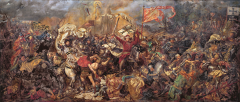
Battle of Grunwald
Wikipedia
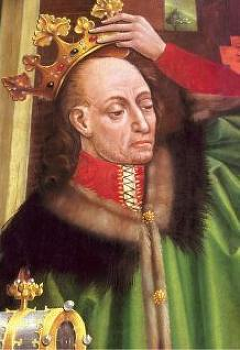
Kingdom of Poland of the Jagiellons
Wikipedia
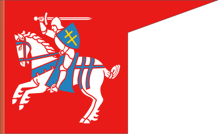
Grand Duchy of Lithuania
Wikipedia
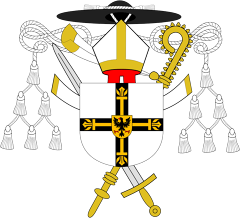
Teutonic Order
Wikipedia
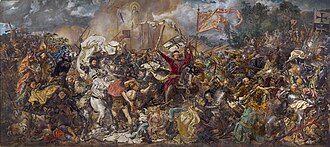
Polish–Lithuanian–Teutonic War
Wikipedia
Battle of Grunwald
Wikipedia

History of Poland during the Jagiellonian dynasty
Wikipedia

Grand Duchy of Lithuania
Wikipedia

Teutonic Order
Wikipedia

List of Polish monarchs
Wikipedia

Władysław II Jagiełło
Wikipedia

Ulrich von Jungingen
Wikipedia

Masuren
Wikipedia

Crown of the Kingdom of Poland
Wikipedia
What Else Happened on July 15
Rome dedicated the Temple of Castor and Pollux in the Forum to honor the divine twins who allegedly helped the Republic secure victory at the Battle of Lake Reg…
Titus and his Roman legions smashed through Jerusalem's breached walls, ending the city's desperate defense and sealing the fate of the Second Temple. This brut…
The Imperial Guards wouldn't march another step until she died. Yang Guifei, Emperor Xuanzong's beloved consort, was strangled by his chief eunuch on July 15, 7…

Three years of marching, starvation, plague, and slaughter across two continents ended on the walls of Jerusalem on July 15, 1099, when Crusader soldiers poured…
The Crusaders built their church directly over what they believed was Christ's tomb—while still fighting for control of the streets outside. Fifty years after c…
King John expelled the monks of Canterbury Cathedral after they backed Stephen Langton’s appointment as Archbishop against the King’s wishes. This confrontation…
Talk to History
Have a conversation with historical figures who witnessed this era. Ask questions, explore perspectives, and bring history to life.