

Visigoths Sack Rome: Empire Crumbles After 800 Years
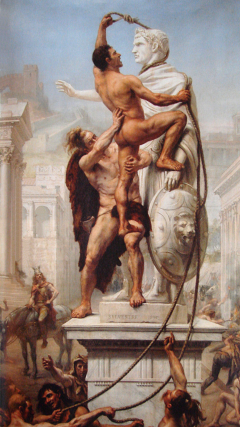
Alaric I led his Visigothic army through the Salarian Gate on August 24, 410 AD, and sacked Rome for three days. It was the first time the city had fallen to a foreign enemy in nearly 800 years. The Visigoths stripped gold and silver from temples, looted wealthy homes, and carried off Emperor Honorius' sister Galla Placidia as a hostage. But they didn't burn the city, and many churches were spared. The psychological impact far exceeded the physical damage. Saint Jerome, writing from Bethlehem, declared: "The city which had taken the whole world was itself taken." Saint Augustine wrote The City of God in direct response, arguing that Rome's fall proved earthly kingdoms were transient. The Western Empire survived another 66 years, but the myth of Roman invincibility was dead.
August 27, 410
1616 years ago
Key Figures & Places


What Else Happened on August 27
The Persians had invaded Greece twice before Plataea. At Marathon, Athens stopped them alone. At Thermopylae, a small Spartan force held long enough for the fle…
The combined Tang Chinese and Silla Korean fleets crushed the Baekje-Japanese alliance on the Geum River, destroying over 400 ships and ending Japan's first att…
Henry the Young King and Margaret of France were crowned in a lavish ceremony at Winchester Cathedral, an attempt by Henry II to secure the succession by crowni…
The Formulary of Adjudications — Goseibai Shikimoku — was a 51-article legal code issued by Hojo Yasutoki in 1232, the first comprehensive written law for Japan…
Shikken Hojo Yasutoki promulgated the Goseibai Shikimoku on August 27, 1232, establishing Japan's first written legal code specifically for the samurai class. T…
The allied Aragonese and Venetian fleets crush the Genoese navy at Alghero, capturing most enemy ships and securing dominance in the Mediterranean. This decisiv…
Talk to History
Have a conversation with historical figures who witnessed this era. Ask questions, explore perspectives, and bring history to life.