

Treaty of Paris Signed: America Gains Independence
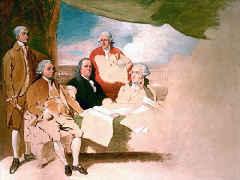
John Adams, Benjamin Franklin, and John Jay signed the Treaty of Paris at the Hotel d'York on September 3, 1783, with British negotiator David Hartley representing King George III. The treaty recognized American independence, established boundaries from the Atlantic to the Mississippi, granted Americans fishing rights off Newfoundland, and required Congress to recommend that states restore confiscated Loyalist property. The boundary lines were drawn on an inaccurate map, creating disputes that persisted for decades. Britain ceded more territory than the Americans had militarily won, partly because the French alliance made London eager to conclude peace quickly and partly because British negotiators hoped generous terms would keep America from becoming a permanent French ally.
September 3, 1783
243 years ago
Key Figures & Places

What Else Happened on September 3
Agrippa's fleet destroyed Sextus Pompeius's armada at Naulochus off the coast of Sicily, sinking or capturing nearly all 300 enemy ships in a single afternoon. …

Marinus, a Christian stonemason from the island of Rab (in modern Croatia), fled to Monte Titano on the Italian peninsula in 301 AD to escape Roman persecution …
Gregory didn't want the job. He'd been living as a monk, and when the previous pope died of plague, Gregory tried to flee Rome to avoid being chosen. He was cau…
Visigothic King Wamba marched his army into southern Gaul and crushed the rebellion of Hilderic, the governor of Nimes who had seized power with local support. …
The Arab emir Umar al-Aqta had been raiding deep into Byzantine Anatolia for years, and the Byzantines had had enough. At the Lalakaon River in 863, a Byzantine…

Richard I was crowned King of England at Westminster Abbey on September 3, 1189, in a ceremony marred by anti-Jewish pogroms that broke out when Jewish leaders …
Talk to History
Have a conversation with historical figures who witnessed this era. Ask questions, explore perspectives, and bring history to life.