

Wallace Triumphs at Stirling Bridge: English Destroyed
William Wallace and Andrew Moray exploited a narrow wooden bridge across the River Forth to annihilate a much larger English army at Stirling on September 11, 1297. The English commander, the Earl of Surrey, allowed his troops to cross the bridge in small groups rather than seeking a wider ford. When roughly half the English army had crossed, Wallace attacked, trapping them in a loop of the river where they couldn't retreat or form proper battle lines. An estimated 5,000 English soldiers were killed, including the hated tax collector Hugh de Cressingham, whose skin was allegedly stripped from his body by the Scots. The victory made Wallace the Guardian of Scotland and inspired a nationwide rebellion against English occupation.
September 11, 1297
729 years ago
Key Figures & Places

England
Wikipedia
Scottish people
Wikipedia
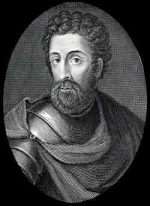
William Wallace
Wikipedia
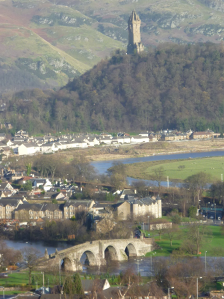
Battle of Stirling Bridge
Wikipedia
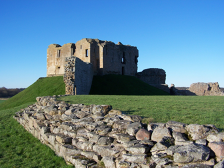
Andrew Moray
Wikipedia

Battle of Stirling Bridge
Wikipedia

William Wallace
Wikipedia
Andrew Moray
Wikipedia
Scotland
Wikipedia

Parliament
Wikipedia
England
Wikipedia
Braveheart
Wikipedia

Mel Gibson
Wikipedia

English Channel
Wikipedia

France
Wikipedia

Henri Queuille
Wikipedia

British
Wikipedia

World War II
Wikipedia

Autogyro
Wikipedia

Helicopter
Wikipedia

Piedmont
Wikipedia

Wars of Scottish Independence
Wikipedia

Histoire de l'Écosse
Wikipedia

Scottish Parliament
Wikipedia

Beirut, Lebanon
Wikipedia

Muhammad Ali of Egypt
Wikipedia

Syria
Wikipedia
What Else Happened on September 11
Three Roman legions — roughly 20,000 soldiers — walked into the Teutoburg Forest and didn't walk out. Germanic chieftain Arminius had served in the Roman army, …
Three Roman legions vanish into the Germanic woods, shattering Augustus's dream of a unified empire east of the Rhine. This catastrophic defeat compels Rome to …
Bishops of Visigothic Gaul gathered at the Council of Agde to codify forty-seven canons governing church discipline and clerical conduct. By standardizing rules…

Isaac II Angelos killed the imperial bodyguard Stephen Hagiochristophorites on September 11, 1185, triggering a popular uprising that overthrew the tyrannical E…
Before 1226, the Eucharist was kept in locked tabernacles — venerated privately, not displayed publicly in parishes. King Louis VIII of France requested the pra…
A powerful earthquake struck southern Great Britain, leveling the original St. Michael’s Church atop Glastonbury Tor and claiming multiple lives. The collapse f…
Talk to History
Have a conversation with historical figures who witnessed this era. Ask questions, explore perspectives, and bring history to life.