

Kilby's Chip: The Birth of Modern Computing
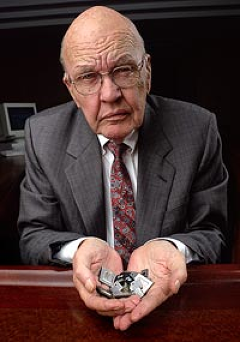
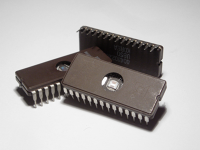
Jack Kilby demonstrated the first working integrated circuit to his colleagues at Texas Instruments on September 12, 1958, showing them a piece of germanium roughly half an inch long with protruding wires. When he applied current, an oscilloscope displayed a sine wave, proving that a transistor, capacitor, and resistor could all be fabricated on a single semiconductor chip. Robert Noyce at Fairchild Semiconductor independently developed a superior silicon version using planar processing months later. Kilby received the Nobel Prize in Physics in 2000; Noyce, who had died in 1990, did not share it. The integrated circuit is the foundation of every modern electronic device, from smartphones to spacecraft, and its invention launched the digital revolution.
September 12, 1958
68 years ago
Key Figures & Places
What Else Happened on September 12
Athenian and Plataean hoplites crushed the first Persian invasion force at the Bay of Marathon, proving that the mighty Achaemenid Empire was not invincible. Th…
Jin Xiaowudi was 10 years old when he inherited the Eastern Jin throne — a dynasty already reduced to ruling only southern China while the north fractured into …
Andronikos I Komnenos had seized the Byzantine throne through a coup, had the previous emperor — a child — strangled, and spent two years executing anyone he co…
Peter II of Aragon had 4,000 knights. Simon de Montfort had around 1,000. The math looked straightforward until Peter rode into battle with his identity deliber…
James I of Aragon was 21 years old when he landed at Santa Ponça with roughly 15,000 troops and 150 ships. Majorca had been under Moorish control for three cent…
King Denis of Portugal and King Ferdinand IV of Castile signed the Treaty of Alcañices to finalize their shared frontier and seal a lasting friendship. This pap…
Talk to History
Have a conversation with historical figures who witnessed this era. Ask questions, explore perspectives, and bring history to life.