

Hoover Dam Powers Up: Electricity for the Southwest
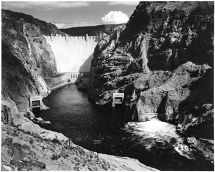
The first hydroelectric generator at Boulder Dam, later renamed Hoover Dam, began producing power on October 9, 1936, sending electricity 266 miles across the desert to Los Angeles through the largest transmission line ever built. The dam itself was an engineering marvel: 726 feet high, containing 3.25 million cubic yards of concrete that would take 125 years to cool naturally. Engineers embedded cooling pipes throughout the structure to speed the process. Construction had killed 96 workers during the five-year build. The cheap electricity it produced powered the aluminum smelters, aircraft factories, and military installations that fueled Southern California's wartime boom. Las Vegas, 30 miles away, grew from a railroad stop to a city on Hoover Dam power. Lake Mead behind the dam became America's largest reservoir.
October 9, 1936
90 years ago
Key Figures & Places

What Else Happened on October 9
Pepin the Short died in 768 and split his kingdom between his two sons. Carloman got the center. Charlemagne got a crescent of territory wrapping around it — ha…

Leif Erikson sailed west from Greenland around 1000 AD and established a Norse settlement at a place he called Vinland. The sagas describe three areas he explor…
James I of Aragon captured the city of Valencia from the Almohad Caliphate, ending five centuries of Islamic rule in the region. By establishing the Kingdom of …
Alfonso X of Castile captured the strategic city of Jerez, ending over five centuries of Muslim rule in the region. This victory dismantled a key stronghold of …
The Prague astronomical clock was first mentioned in 1410, making it the oldest working clock of its kind. It displays Babylonian time, Old Czech time, German t…
King Sejong published hangul, an alphabet designed from scratch for Korean. The writing system before that was Chinese characters, which took years to master an…
Talk to History
Have a conversation with historical figures who witnessed this era. Ask questions, explore perspectives, and bring history to life.