

Moby-Dick Published: Melville's Tale Emerges
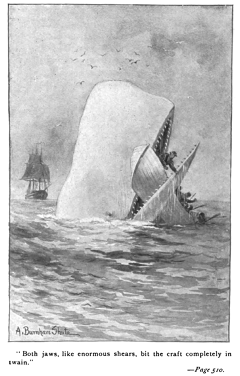
Herman Melville published Moby-Dick on October 18, 1851, under the title The Whale in London. The British edition sold poorly. The American edition, published in November with the now-famous title, sold worse: roughly 3,000 copies in Melville's lifetime. Critics called it rambling and incoherent. Melville had staked his career on the book after modest successes with Typee and Omoo. The failure devastated him financially and professionally. He spent the next 40 years working as a customs inspector on the New York waterfront. The novel was rediscovered in the 1920s during the 'Melville Revival' and is now considered the great American novel. 'Call me Ishmael' is among literature's most recognizable opening lines. Captain Ahab's monomania has become a metaphor so universal that people who've never read the book understand it.
October 18, 1851
175 years ago
Key Figures & Places




What Else Happened on October 18
Agrippina the Elder starved herself to death on the island of Pandateria after Emperor Tiberius banished her for mourning her sons Nero and Drusus. Her final ac…
Pappus of Alexandria recorded a solar eclipse on this day, using the rare celestial event to refine his mathematical commentary on Ptolemy’s Almagest. His metic…
King Chlothar II issued the Edict of Paris, protecting the rights of Frankish nobles and limiting royal power over the church and aristocracy. It also banned Je…
Dagobert I became King of the Franks at age 33 in 629. His father had given him Austrasia to rule at age 10. Dagobert spent his reign consolidating Frankish ter…
Caliph Al-Hakim bi-Amr Allah ordered the Church of the Holy Sepulchre destroyed in 1009. His workers hacked down to bedrock, trying to obliterate the site Chris…
Cnut the Great crushed the English army at the Battle of Assandun, ending Anglo-Saxon resistance to his rule. This decisive victory forced King Edmund Ironside …
Talk to History
Have a conversation with historical figures who witnessed this era. Ask questions, explore perspectives, and bring history to life.