

Railroads Standardize Time: Five Zones Unite North America
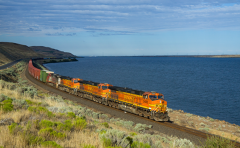
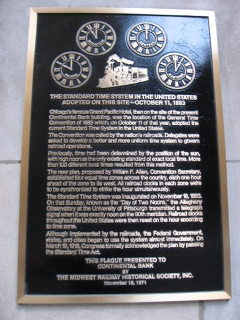
On November 18, 1883, American and Canadian railroads imposed five standardized time zones, replacing a chaos of roughly 300 local times based on the sun's position at each city's meridian. Before 'Railroad Time,' a traveler from Washington to San Francisco would pass through over 200 different local times. Train schedules were impossible to coordinate: Pittsburgh had six different local times used by various railroads. The plan, devised by William Frederick Allen, secretary of the General Time Convention, divided the continent into Eastern, Central, Mountain, Pacific, and Intercolonial zones separated by exact one-hour intervals. Railroads synchronized their clocks at noon on November 18. Most cities adopted the new times immediately, though Congress didn't make standard time federal law until the Standard Time Act of 1918.
November 18, 1883
143 years ago
Key Figures & Places


What Else Happened on November 18
Elisha P. Ferry was inaugurated as the first governor of Washington State, just days after it was admitted to the Union as the 42nd state. Ferry, a Republican w…
Emperor Constantine's massive basilica over St. Peter's burial site was consecrated after nearly two decades of construction. The church became the spiritual ce…
The Visigoths under King Alaric I surged over the Alps to strike deep into northern Italy, a bold maneuver that shattered Roman defenses in the region. This inv…
Pope Urban II ignited a religious war at the Council of Clermont, urging European nobles to reclaim Jerusalem from Muslim rule. This call to arms mobilized tens…
Maginulfo was installed as Antipope Sylvester IV by the Holy Roman Emperor's faction during the Investiture Controversy. His brief, contested papacy reflected t…
Roman aristocrats elected Maginulfo as Antipope Sylvester IV, directly challenging the authority of Pope Paschal II. This move intensified the Investiture Contr…
Talk to History
Have a conversation with historical figures who witnessed this era. Ask questions, explore perspectives, and bring history to life.