

Somme Ends: One Million Casualties for Seven Miles
The Battle of the Somme ended on November 18, 1916, after 141 days of fighting that produced over one million combined British, French, and German casualties. The British alone suffered 420,000 casualties for an advance of roughly seven miles. On the first day, July 1, 1916, the British Army suffered 57,470 casualties, including 19,240 killed, the worst single day in its history. The plan had been simple: a week-long artillery bombardment would destroy German defenses, and infantry would walk across no-man's-land to occupy the ruins. The bombardment failed to cut the wire or destroy the deep German bunkers. Soldiers laden with 60 pounds of equipment walked into machine gun fire. The battle introduced tanks to warfare when 49 Mark I tanks went into action on September 15, but mechanical failures limited their impact.
November 18, 1916
110 years ago
Key Figures & Places

France
Wikipedia
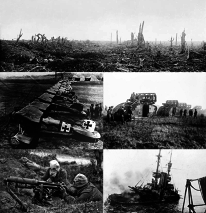
World War I
Wikipedia
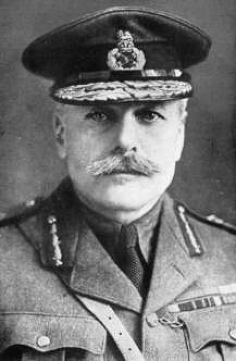
Douglas Haig, 1st Earl Haig
Wikipedia
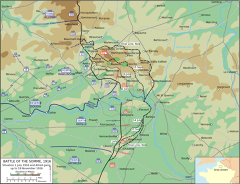
Battle of the Somme (1916)
Wikipedia
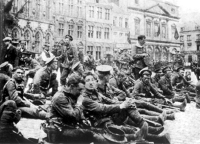
British Expeditionary Force (World War I)
Wikipedia

World War I
Wikipedia

Battle of the Somme
Wikipedia
British Expeditionary Force (World War I)
Wikipedia

Douglas Haig, 1st Earl Haig
Wikipedia

Paul von Hindenburg
Wikipedia

Weimarer Nationalversammlung
Wikipedia

Dolchstoßlegende
Wikipedia

First Battle of Ypres
Wikipedia
Força Expedicionária Britânica
Wikipedia
What Else Happened on November 18
Elisha P. Ferry was inaugurated as the first governor of Washington State, just days after it was admitted to the Union as the 42nd state. Ferry, a Republican w…
Emperor Constantine's massive basilica over St. Peter's burial site was consecrated after nearly two decades of construction. The church became the spiritual ce…
The Visigoths under King Alaric I surged over the Alps to strike deep into northern Italy, a bold maneuver that shattered Roman defenses in the region. This inv…
Pope Urban II ignited a religious war at the Council of Clermont, urging European nobles to reclaim Jerusalem from Muslim rule. This call to arms mobilized tens…
Maginulfo was installed as Antipope Sylvester IV by the Holy Roman Emperor's faction during the Investiture Controversy. His brief, contested papacy reflected t…
Roman aristocrats elected Maginulfo as Antipope Sylvester IV, directly challenging the authority of Pope Paschal II. This move intensified the Investiture Contr…
Talk to History
Have a conversation with historical figures who witnessed this era. Ask questions, explore perspectives, and bring history to life.