

Lincoln Redefines America: The Gettysburg Address
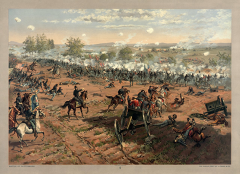
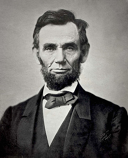
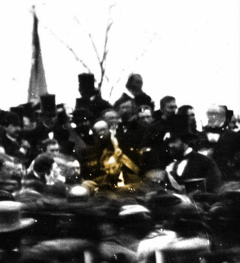
Lincoln delivered the Gettysburg Address on November 19, 1863, in about two minutes. The featured speaker, Edward Everett, had spoken for two hours before him. Lincoln used 272 words. Everett wrote to Lincoln the next day: 'I should be glad if I could flatter myself that I came as near to the central idea of the occasion in two hours as you did in two minutes.' The speech redefined the purpose of the war: not just to preserve the Union, but to fulfill the Declaration of Independence's promise that all men are created equal. Lincoln never said 'Union' or 'Constitution.' He said 'a new nation, conceived in liberty.' Five manuscript copies exist in Lincoln's handwriting, each slightly different. The speech was largely ignored by newspapers at the time. Its reputation grew over decades until it became the most quoted speech in American history.
November 19, 1863
163 years ago
Key Figures & Places

What Else Happened on November 19
Pope Urban VIII consecrated the current Saint Peter’s Basilica, finalizing a construction project that spanned over a century and involved masters like Michelan…
Ricimer didn't want the throne. He wanted something better — the man sitting on it. When Libius Severus was declared Western Roman Emperor in 461, Ricimer, the …
Arab forces shattered the Sassanian army at the Battle of Qadisiya, ending Persian control over Mesopotamia. This victory dismantled the Sassanian defense of th…
Urban II didn't command kings. He commanded crowds. At Clermont, he preached to thousands gathered in an open field — the church couldn't hold them — and report…
Christopher Columbus went ashore on an island he named San Juan Bautista during his second voyage, claiming it for the Spanish Crown. The island, later renamed …

A prisoner known only by a number died in the Bastille on November 19, 1703, after decades of imprisonment during which his face was always concealed behind a m…
Talk to History
Have a conversation with historical figures who witnessed this era. Ask questions, explore perspectives, and bring history to life.