

Lucy Discovered in Ethiopia: 3 Million Years of Evolution
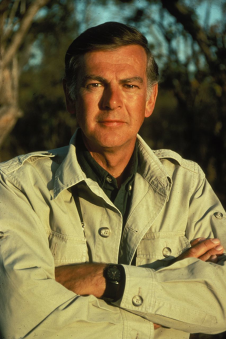
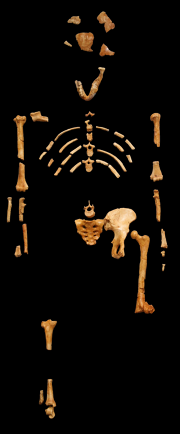
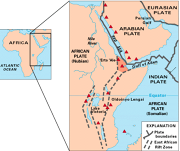
Donald Johanson discovered the fossil skeleton he named Lucy in the Afar Depression of Ethiopia on November 30, 1974. The 3.2-million-year-old Australopithecus afarensis skeleton was roughly 40% complete, making it the most complete early hominin fossil found at that time. The team named her Lucy because 'Lucy in the Sky with Diamonds' was playing on repeat at camp that night. Standing about 3 feet 7 inches tall, Lucy's pelvis, femur, and tibia showed she walked upright, proving bipedalism preceded significant brain expansion by over a million years. Her brain was roughly the size of a chimpanzee's. The discovery forced paleoanthropologists to rethink the relationship between walking upright and intelligence: humans evolved legs before they evolved minds. Lucy is housed at the National Museum of Ethiopia in Addis Ababa.
November 30, 1974
52 years ago
Key Figures & Places




What Else Happened on November 30
Ancient scribes in what is now Ireland recorded what is believed to be the earliest documented eclipse in human history. The observation reveals that even prehi…
Abu al Abbas paraded through Baghdad to celebrate crushing the Zanj Rebellion, the largest slave revolt in the Arab world. This brutal suppression ended a decad…
Holy Roman Emperor Otto II abandoned his siege of Paris after failing to secure a decisive victory against King Lothair of France. This retreat ended the immedi…
An outnumbered Swedish army of 8,500 soldiers under Charles XII exploited a sudden blizzard to overwhelm a Russian siege force of nearly 40,000 at Narva, shatte…
British forces abandoned their month-long siege of Pensacola, failing to dislodge the Spanish from their strategic foothold in Florida. This retreat solidified …
A stray bullet struck King Charles XII in the head while he inspected trenches at the siege of Fredriksten, ending his life and Sweden’s status as a dominant Ba…
Talk to History
Have a conversation with historical figures who witnessed this era. Ask questions, explore perspectives, and bring history to life.