

Galileo Reaches Jupiter: Probe Reveals Ocean Moons
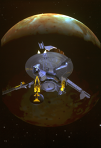
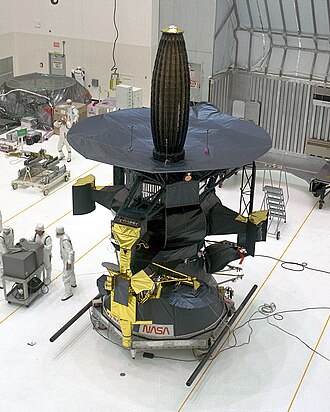
NASA's Galileo spacecraft entered Jupiter's orbit on December 7, 1995, after a six-year journey that included gravity assists from Venus and Earth. Five months earlier, Galileo had released an atmospheric probe that plunged into Jupiter's atmosphere at 106,000 mph, surviving deceleration forces of 228 g before parachuting through the cloud layers and transmitting data for 57 minutes. The probe found less water and lightning than expected. Over its eight-year orbital mission, Galileo made 34 orbits of Jupiter and discovered evidence of liquid water oceans beneath the icy surfaces of Europa, Ganymede, and Callisto. These findings made Europa a prime candidate in the search for extraterrestrial life. Galileo was deliberately crashed into Jupiter's atmosphere in 2003 to prevent it from contaminating Europa with Earth microbes.
December 7, 1995
31 years ago
Key Figures & Places



What Else Happened on December 7
The soldiers found him in his litter, fleeing to the coast. Cicero stuck his head out — told them to get it over with. They cut off his head and both hands. Mar…
Soldiers intercepted Marcus Tullius Cicero near his Formia villa, decapitating the orator on orders from Marcus Antonius. By silencing the Republic’s most vocal…
Byzantine Emperor Justin II, wracked by recurring seizures of insanity, adopted his general Tiberius and proclaimed him Caesar on this day in 574 AD. This sudde…
Justin II's mind shattered in waves. The seizures came without warning — violent fits where the Byzantine emperor would thrash, scream, rage at phantoms only he…
Qarmatian forces crush the Sajid emir Yusuf ibn Abi'l-Saj near Kufa, dragging him into captivity after a decisive defeat. This victory shatters Sajid control ov…
Connecticut's third-oldest highway wasn't built for cars — it was carved for settlers pushing inland from the coast. In 1696, colonial authorities authorized a …
Talk to History
Have a conversation with historical figures who witnessed this era. Ask questions, explore perspectives, and bring history to life.