

Oxford English Dictionary Published: Defining Language
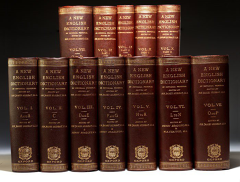
The first volume of what would become the Oxford English Dictionary was published on February 1, 1884, covering only the words from A to Ant. The project had begun in 1857 when the Philological Society of London declared existing dictionaries inadequate and appointed Herbert Coleridge to create a new one. Coleridge died of tuberculosis two years later. His successor Frederick Furnivall proved a better recruiter than editor. The real transformation came when James Murray took charge in 1879, building a corrugated iron 'Scriptorium' in his Oxford garden where he processed millions of quotation slips sent by volunteer readers worldwide. One of the most prolific contributors, W.C. Minor, was a criminally insane American surgeon confined to Broadmoor asylum who submitted over 10,000 citations. The dictionary was not completed until 1928, seventy-one years after it began. It has never stopped being updated.
February 1, 1884
142 years ago
Key Figures & Places

What Else Happened on February 1
King Huneric forced Catholic and Arian bishops into a tense theological debate in Carthage to consolidate Vandal control over North Africa. By attempting to coe…
Edward III was crowned at fourteen. His mother Isabella and her lover Mortimer ran everything. They'd murdered Edward's father by shoving a red-hot poker throug…
King John of Bohemia was blind. He'd lost his sight in battle years earlier but still led armies across Europe. In 1329, he took Medvėgalis, a Lithuanian fortre…
The Teutonic Knights and the Polish-Lithuanian alliance signed the First Peace of Thorn, formally ending the Polish–Lithuanian–Teutonic War. By forcing the Knig…
General Koxinga forced the surrender of the Dutch East India Company at Fort Zeelandia, ending 38 years of colonial rule on Taiwan. By securing the island as a …
Charles XII of Sweden refused to leave Ottoman territory for five years after losing at Poltava. The sultan got tired of paying for his 1,000-man entourage and …
Talk to History
Have a conversation with historical figures who witnessed this era. Ask questions, explore perspectives, and bring history to life.