

Immigration Act of 1917: Nativism Bans Asian Entry
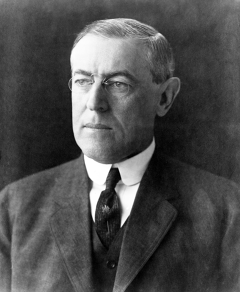
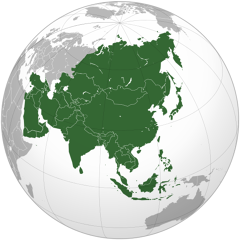
Congress overrode President Wilson's veto to enact the Immigration Act of 1917 on February 5, creating an 'Asiatic Barred Zone' that prohibited immigration from virtually all of Asia, including India, Southeast Asia, and the Pacific Islands. The law also imposed a literacy test requiring all immigrants over sixteen to demonstrate reading ability in any language, a provision designed to reduce Southern and Eastern European immigration. The act represented the culmination of decades of nativist agitation that had begun with the Chinese Exclusion Act of 1882 and expanded to target increasingly broad categories of 'undesirable' immigrants. Wilson vetoed the bill twice on the grounds that the literacy test was un-American, but Congress overrode him both times with supermajorities. The 1917 Act established the legal framework for even more restrictive quotas in 1921 and 1924 that effectively shut America's doors to most of the world for forty years.
February 5, 1917
109 years ago
Key Figures & Places



What Else Happened on February 5
The Roman Senate bestowed the title pater patriae upon Caesar Augustus, officially cementing his status as the father of his country. This honor transformed his…
The earthquake hit Pompeii seventeen years before Vesuvius buried it. February 5, 62 AD. The forum collapsed. The Temple of Jupiter cracked open. Hundreds died …
An earthquake hit Pompeii seventeen years before Vesuvius buried it. The tremors knocked down temples, cracked aqueducts, and collapsed the forum. Intensity IX …
An Lushan declared himself Emperor of China, shattering the stability of the Tang Dynasty and launching the brutal An Lushan Rebellion. This violent power grab …
An Lushan commanded 164,000 troops — nearly half the Tang Dynasty's entire army. The emperor had given him that power. Trusted him completely. An Lushan was a f…
Guy Foulques ascended to the papacy as Clement IV, inheriting a fractured Europe embroiled in the conflict between the Holy Roman Empire and the Angevin dynasty…
Talk to History
Have a conversation with historical figures who witnessed this era. Ask questions, explore perspectives, and bring history to life.