

Historical Figure
Isaac Newton
1643–1726
English polymath (1642–1727)
Talk to Isaac Newton
Have a conversation with this historical figure through AI
Biography
Sir Isaac Newton was an English polymath who was a mathematician, physicist, astronomer, alchemist, theologian, author and inventor. He was a key figure in the Scientific Revolution and the Enlightenment that followed. His book Philosophiæ Naturalis Principia Mathematica, first published in 1687, achieved the first great unification in physics and established classical mechanics. Newton also made seminal contributions to optics, and shares credit with the German mathematician Gottfried Wilhelm Leibniz for formulating infinitesimal calculus, although he developed calculus years before Leibniz. Newton contributed to and refined the scientific method, and his work is considered the most influential in bringing forth modern science.
In Their Own Words (5)
I do not know what I may appear to the world, but to myself I seem to have been only like a boy playing on the sea-shore, and diverting myself in now and then finding a smoother pebble or a prettier shell than ordinary, whilst the great ocean of truth lay all undiscovered before me.
Memoirs of the Life, Writings, and Discoveries of Sir Isaac Newton (1855) by Sir David Brewster (Volume II. Ch. 27). Compare: "As children gath'ring pebbles on the shore", John Milton, Paradise Regained, Book iv. Line 330 , 1855
If I have seen further it is by standing on ye sholders of Giants.
Letter to Robert Hooke (15 February 1676) [dated as 5 February 1675 using the Julian calendar with March 25th rather than January 1st as New Years Day, equivalent to 15 February 1676 by Gregorian reckonings.] A facsimile of the original is online at The digital Library. The quotation is 7-8 lines up from the bottom of the first page. The phrase is most famous as an expression of Newton's but he was using a metaphor which in its earliest known form was attributed to Bernard of Chartres by John of Salisbury: "Bernard of Chartres used to say that we [the Moderns] are like dwarves perched on the shoulders of giants [the Ancients], and thus we are able to see more and farther than the latter. And this is not at all because of the acuteness of our sight or the stature of our body, but because we are carried aloft and elevated by the magnitude of the giants." See also: Michael Foster , 1676
I keep the subject constantly before me, and wait 'till the first dawnings open slowly, by little and little, into a full and clear light.
Reply upon being asked how he made his discoveries, as quoted in "Biographia Britannica: Or the Lives of the Most Eminent Persons who Have Flourished in Great Britain from the Earliest Ages Down to the Present Times, Volume 5 ", by W. Innys, (1760), p. 3241. Fuller quote: , 1760
A good watch may serve to keep a recconing at Sea for some days and to know the time of a Celestial Observ[at]ion: and for this end a good Jewel watch may suffice till a better sort of Watch can be found out. But when the Longitude at sea is once lost, it cannot be found again by any watch.
Letter to Josiah Burchett (1721), quoted in Longitude (1995) by Dava Sobel, p. 60 , 1721
One [method] is by a Watch to keep time exactly. But, by reason of the motion of the Ship, the Variation of Heat and Cold, Wet and Dry, and the Difference of Gravity in different Latitudes, such a watch hath not yet been made.
Written in remarks to the 1714 Longitude committee; quoted in Longitude (1995) by Dava Sobel, p. 52 (i998 edition) ) , 1995
Timeline
The story of Isaac Newton, told in moments.
Born premature on Christmas Day (Old Style calendar) at Woolsthorpe Manor, Lincolnshire. Small enough to fit in a quart mug, his mother said. His father, a farmer who couldn't sign his own name, died three months before.
The plague closes Cambridge. Newton retreats to Woolsthorpe for two years. Alone on the family farm, he develops calculus, experiments with prisms to split white light into colors, and begins thinking about gravity. He is 23. He tells no one.
Edmond Halley visits Newton in Cambridge and asks what shape a planet's orbit would take under an inverse-square law of gravity. Newton answers immediately: an ellipse. He'd solved it years ago and lost the paper. Halley persuades him to write it up.
Publishes the Principia. Three volumes. Halley pays for the printing out of his own pocket after the Royal Society spent its budget on a history of fish. The book unifies terrestrial and celestial mechanics into a single framework. It will dominate physics for over two centuries.
Suffers a nervous breakdown. Sends paranoid letters to friends accusing them of conspiracies. Stops doing science almost entirely. Some historians suspect mercury poisoning from his decades of alchemy experiments. Hair samples taken centuries later confirm toxic levels of mercury.
Leaves Cambridge for London to become Warden of the Royal Mint. Then Master. He personally hunts counterfeiters, interrogates suspects, and sends men to the gallows. He is ruthlessly effective at the job.
Publishes Opticks after waiting decades. He'd done the experiments in the 1660s and 70s. He delayed publication until Hooke was dead. Hooke had criticized his theory of light for thirty years.
Dies in his sleep in Kensington, London. He is 84. He never married. Never traveled abroad. Likely died a virgin. His body lay in state in Westminster Abbey for a week before burial. Voltaire, visiting England, attended the funeral and later wrote that Newton was buried "like a king who had done well by his subjects."
Show full timeline (12 entries)
Elected President of the Royal Society. He'll hold the position for 24 years, until his death. He uses it to settle scores, particularly against Robert Hooke and Gottfried Leibniz in the calculus priority dispute.
Knighted by Queen Anne at Trinity College, Cambridge. The first scientist to receive the honor.
Spends more time on alchemy and biblical chronology than physics. His unpublished alchemical writings total over a million words. He tries to calculate the date of the apocalypse. He settles on no earlier than 2060.
A handwritten copy of the Principia sells at auction for .7 million. Newton wrote fewer than 500 copies for the first edition. About 200 survive.
Artifacts (10)
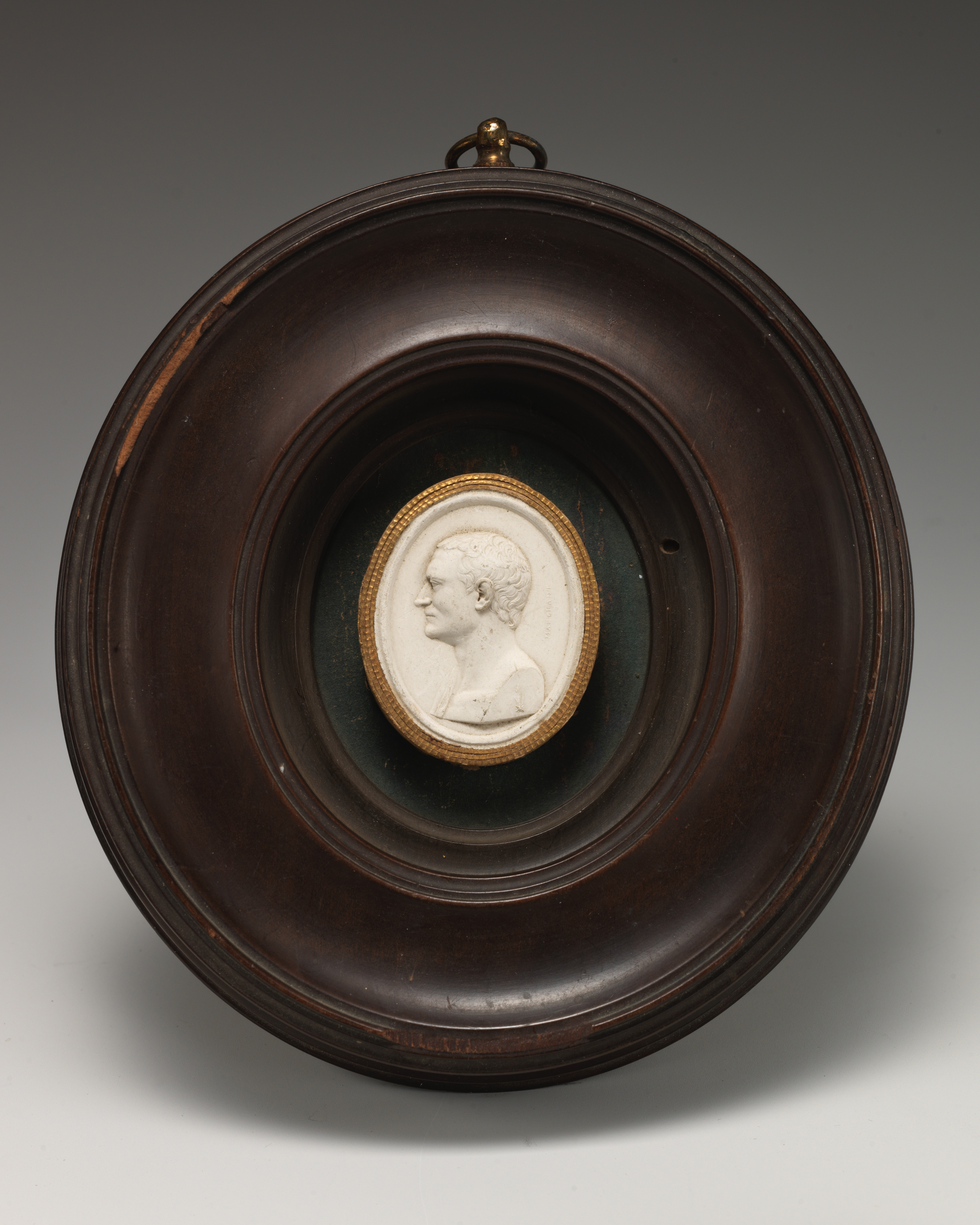
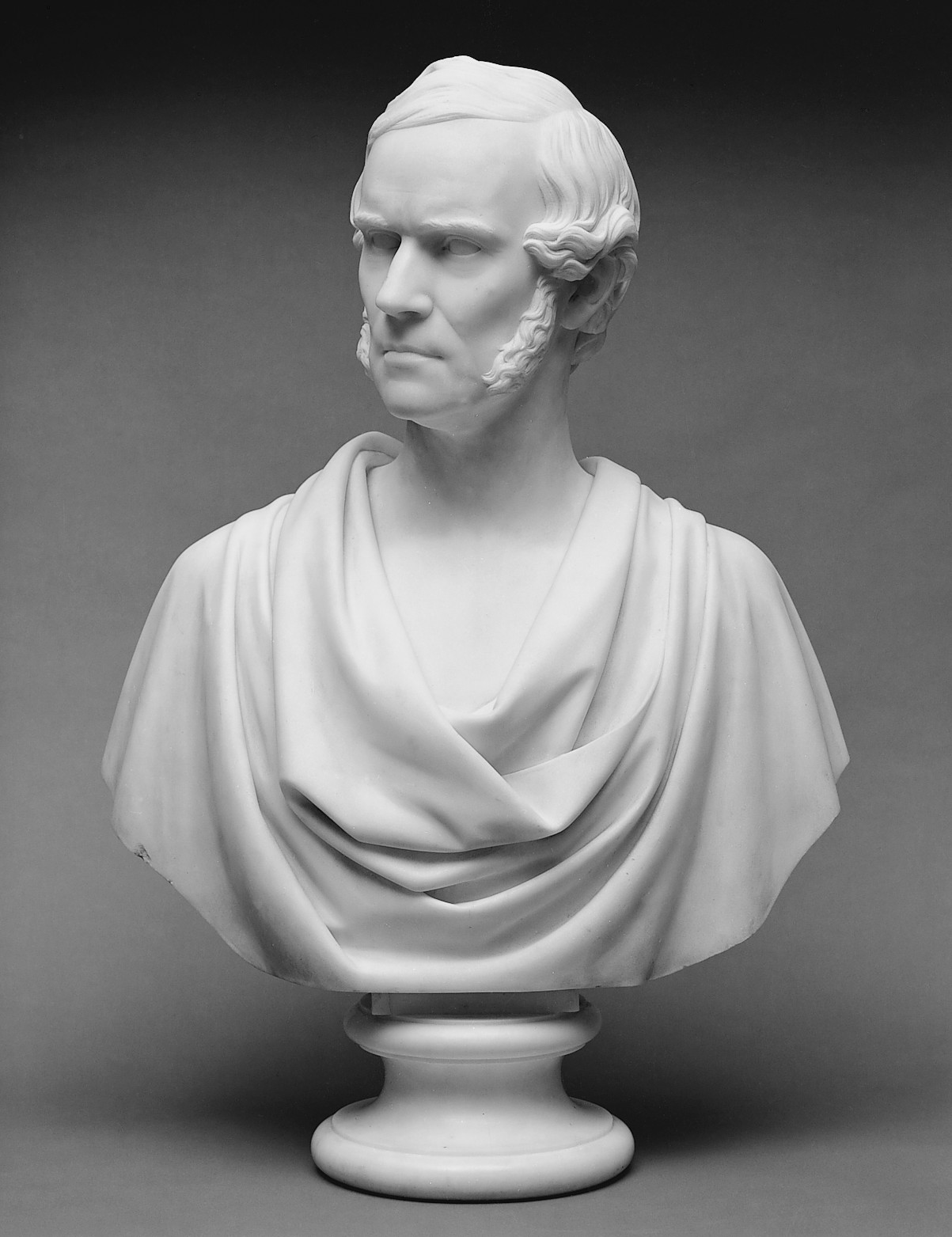

Sir Isaac Newton (1642–1727) (one of a pair)
Ralph Wood the Younger
More from the Early Modern


Explore what happened on the days that shaped Isaac Newton's life. Today In History connects historical figures with the events, births, and deaths that defined their era. Browse all historical figures or explore today's events.