

Historical Figure
James Madison
1751–1836
Founding Father, U.S. president from 1809 to 1817
Talk to James Madison
Have a conversation with this historical figure through AI
Biography
James Madison was an American statesman, diplomat, and Founding Father who served as the fourth president of the United States from 1809 to 1817. Madison was popularly acclaimed as the "Father of the Constitution" for his pivotal role in drafting and promoting the Constitution of the United States and the Bill of Rights.
Timeline
The story of James Madison, told in moments.
Arrives at the Constitutional Convention with a plan. He's read every book on republics he can find. Jefferson ships him crates of them from Paris. Madison drafts the Virginia Plan. Most of the Constitution's architecture is his.
Introduces 19 proposed amendments to the House. He thinks a Bill of Rights is unnecessary. The Constitution already limits government, he argues. But he promised the anti-Federalists he'd write one. Ten amendments survive. They become the Bill of Rights.
Serves as Jefferson's Secretary of State for eight years. He handles the Louisiana Purchase. He also marries Dolley Payne Todd, a Quaker widow 17 years younger who'll redefine what a First Lady does.
Signs the declaration of war against Britain. The War Hawks in Congress have pushed him into it. The impressment of American sailors is the official reason. The British burn the White House in 1814. Dolley saves the portrait of Washington.
Dies at Montpelier at 85. The last surviving signer of the Constitution. His final advice: 'The advice nearest to my heart and deepest in my convictions is that the Union of the States be cherished and perpetuated.' He left behind debts and 100 enslaved people.
In Their Own Words (20)
A popular Government without popular information, or the means of acquiring it, is but a Prologue to a Farce or a Tragedy, or perhaps both. Knowledge will forever govern ignorance: And a people who mean to be their own Governors, must arm themselves with the power which knowledge gives.
Letter to W.T. Barry (4 August 1822), in The Writings of James Madison (1910) edited by Gaillard Hunt, Vol. 9, p. 103; these words, using the older spelling "Governours", are inscribed to the left of the main entrance, Library of Congress James Madison Memorial Building., 1910
In order to judge of the form to be given to this institution, it will be proper to take a view of the ends to be served by it. These were, — first, to protect the people against their rulers, secondly, to protect the people against the transient impressions into which they themselves might be led.
Remarks on the institution of the Senate, in debates in the Constitutional Convention, Philadelphia, Pennsylvania (26 June 1787) Journal of the Federal Convention, edited by E. H. Scott (1893), pp. 241 – 242, 1893
Perhaps it is a universal truth that the loss of liberty at home is to be charged to provisions agst. danger real or pretended from abroad.
Letter to Thomas Jefferson (13 May 1798); published in Letters and Other Writings of James Madison (1865), Vol. II, p. 141, 1865
Religion & Govt. will both exist in greater purity, the less they are mixed together.
Letter to Edward Livingston (10 July 1822), 1822
It is impossible for the man of pious reflection not to perceive in it the finger of that Almighty Hand which has been so frequently and signally extended to our relief in the critical stages of the Revolution.
As quoted in The Federalist (Philadelphia: Benjamin Warner, 1818), p. 194, James Madison, Federalist #37., 1818
Artifacts (15)

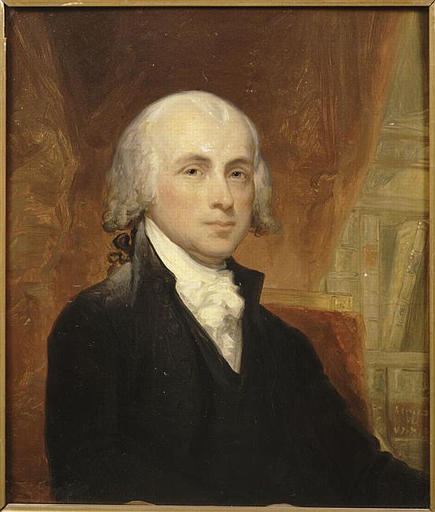
Portrait of a Man, Said to Be James Madison (1751–1836)
Annibal Christian Loutherbourg

Portrait of a Man, Said to Be James Madison (1751–1836) MET 50689
Annibal Christian Loutherbourg

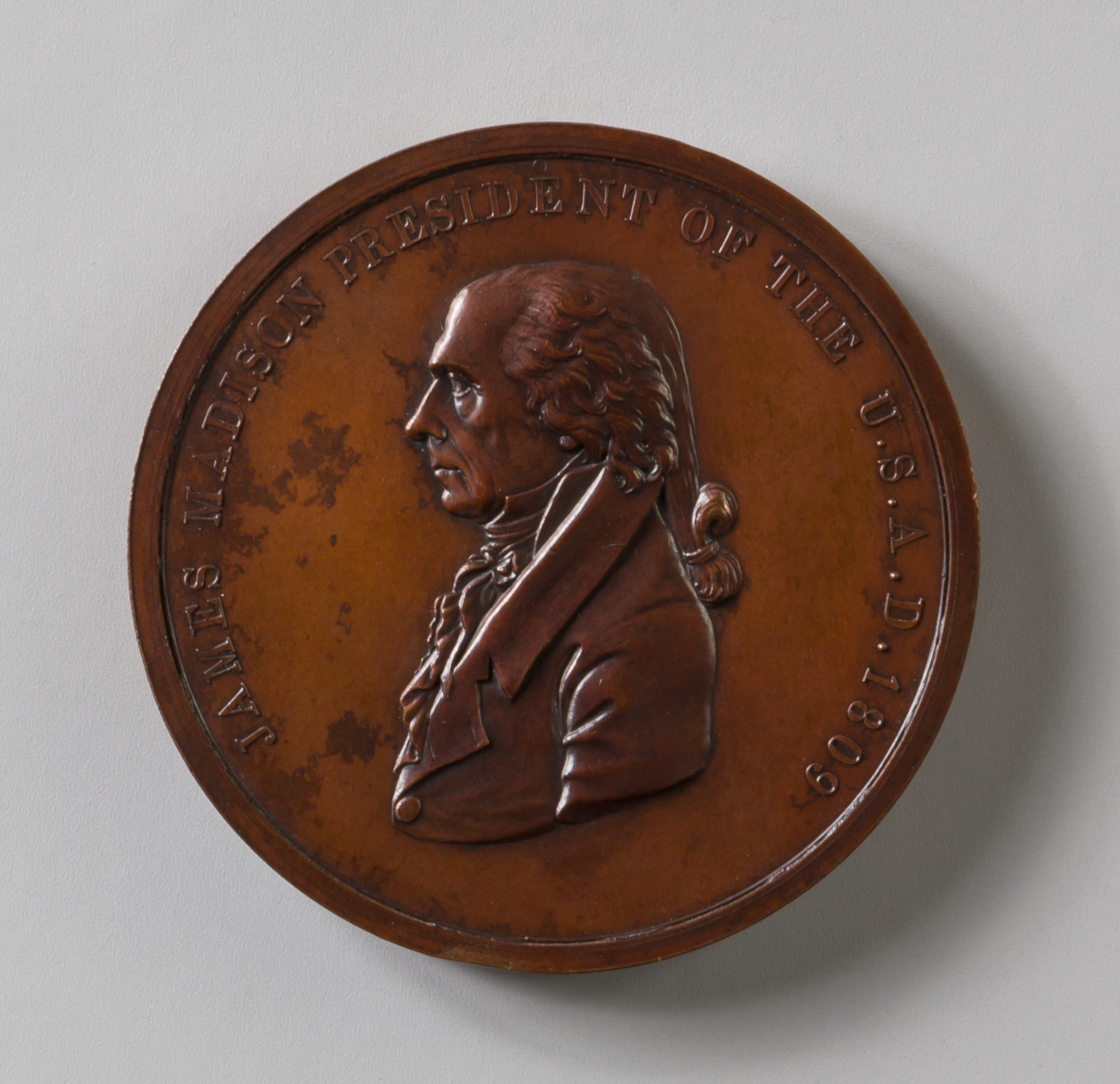

James Madison Broom
Charles Balthazar Julien Févret de Saint-Mémin




More from the Enlightenment


Explore what happened on the days that shaped James Madison's life. Today In History connects historical figures with the events, births, and deaths that defined their era. Browse all historical figures or explore today's events.