

National Gallery Opens: Art Unites a Nation
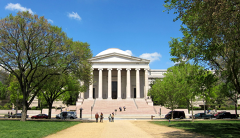
President Franklin Roosevelt officially opened the National Gallery of Art in Washington, D.C., on March 17, 1941, accepting a gift that financier Andrew Mellon had conceived as his legacy to the American people. Mellon had secretly assembled one of the world's finest private art collections, including 21 masterworks purchased from the Soviet government during Stalin's sell-off of Hermitage paintings in the early 1930s. Among these were Raphael's Alba Madonna and Jan van Eyck's Annunciation. Mellon died in 1937 before the gallery opened. The building itself, designed by John Russell Pope in neoclassical style, remains one of the largest marble structures in the world. Mellon stipulated that the gallery not bear his name, anticipating that other collectors would donate only if they could be equally recognized. His strategy worked: the Widener, Kress, Dale, and Rosenwald collections followed within years. The National Gallery charges no admission, a condition Mellon insisted upon to ensure that art would be accessible to every American regardless of wealth.
March 17, 1941
85 years ago
Key Figures & Places
What Else Happened on March 17

Caesar's best general turned against him, and it nearly killed him. Titus Labienus had served under Caesar for eight years in Gaul, knew every one of his tactic…
Marcus Aurelius succumbed to illness in Vindobona, ending the era of the Five Good Emperors. His death elevated his son, Commodus, to sole power, abruptly halti…
He was Rome's first emperor born into the purple — literally raised in the palace — and Marcus Aurelius knew it was a mistake. The philosopher-emperor spent his…
He murdered the emperor, then forced the widow to marry him — all within days. Petronius Maximus bribed enough senators to claim the Western Roman throne in Mar…
Petronius Maximus seized the Western Roman throne with the Senate’s backing just one day after orchestrating the assassination of Valentinian III. His reign las…

Patrick died on March 17, 461, at Saul, County Down, where he had built his first church after returning to Ireland as a missionary bishop. He had arrived aroun…
Talk to History
Have a conversation with historical figures who witnessed this era. Ask questions, explore perspectives, and bring history to life.