

Joliot-Curie Dies: Nobel Physicist Claimed by Radiation
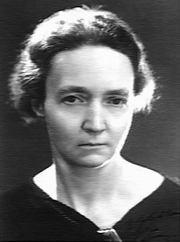
Irene Joliot-Curie died of acute leukemia on March 17, 1956, at age fifty-eight, almost certainly caused by decades of radiation exposure during her research, the same fate that had killed her mother Marie Curie twenty-two years earlier. Irene and her husband Frederic had discovered artificial radioactivity in 1934 by bombarding aluminum with alpha particles to produce a radioactive isotope of phosphorus that did not exist in nature. This breakthrough earned them the 1935 Nobel Prize in Chemistry and opened the path to nuclear medicine, enabling the production of radioactive isotopes used in cancer diagnosis and treatment. Irene was also politically active: she served as Undersecretary of State for Scientific Research in Leon Blum's Popular Front government in 1936, one of the first women to hold a cabinet position in France. She worked at the Curie Institute her mother had founded, maintaining the family's extraordinary scientific dynasty while knowingly exposing herself to the radiation that would kill her.
March 17, 1956
70 years ago
Key Figures & Places


What Else Happened on March 17

Caesar's best general turned against him, and it nearly killed him. Titus Labienus had served under Caesar for eight years in Gaul, knew every one of his tactic…
Marcus Aurelius succumbed to illness in Vindobona, ending the era of the Five Good Emperors. His death elevated his son, Commodus, to sole power, abruptly halti…
He was Rome's first emperor born into the purple — literally raised in the palace — and Marcus Aurelius knew it was a mistake. The philosopher-emperor spent his…
He murdered the emperor, then forced the widow to marry him — all within days. Petronius Maximus bribed enough senators to claim the Western Roman throne in Mar…
Petronius Maximus seized the Western Roman throne with the Senate’s backing just one day after orchestrating the assassination of Valentinian III. His reign las…

Patrick died on March 17, 461, at Saul, County Down, where he had built his first church after returning to Ireland as a missionary bishop. He had arrived aroun…
Talk to History
Have a conversation with historical figures who witnessed this era. Ask questions, explore perspectives, and bring history to life.